
Service History
The Lysander entered Royal Air Force service in June 1938 with No. 16 Squadron at Old Sarum, initially fulfilling its designed role of army cooperation and reconnaissance. However, the aircraft's exceptional short-field performance soon found it a new purpose that would define its legacy. By 1941, RAF No. 138 and No. 161 Squadrons were using Lysanders for some of the war's most dangerous missions: inserting and extracting Special Operations Executive agents behind enemy lines in occupied Europe.
The aircraft served with distinction across multiple theaters. No. 225 Squadron operated Lysanders in the Western Desert campaign of 1940, while the Royal Canadian Air Force's No. 110 Squadron became the first Canadian squadron to serve overseas in February 1940. The type also saw service in India, where No. 5 Squadron conducted tropical trials in 1938.
Production and Variants
Between 1938 and 1943, approximately 1,652 aircraft rolled off production lines in England and Canada. Westland Aircraft Limited at Yeovil built 1,427 examples, including prototypes, while National Steel Car Corporation Limited (later Victory Aircraft Limited) in Malton, Ontario, manufactured 225 under license for the Royal Canadian Air Force.
The aircraft evolved through several marks during production. The initial Mk I saw 116 examples built, followed by 442 Mk II aircraft. The most numerous variant was the Mk III, with 517 built between England and Canada, powered by the Bristol Mercury XX engine. The final operational variant, the Mk IIIA, incorporated lessons from combat experience with an additional machine gun in the rear cockpit and the more powerful Mercury 30 engine. When the type became obsolete for front-line reconnaissance by 1940, 100 aircraft were converted to the TT.Mk IIIA configuration for target-towing duties.
The Manufacturer
Westland Aircraft Limited traced its origins to Petters Ltd., founded in 1915 and renamed Westland Aircraft Works in 1917. Based in Yeovil, Somerset, the company specialized in military aircraft throughout both world wars. After World War II, Westland pioneered early helicopter development, becoming a leading rotorcraft manufacturer. The company underwent several transformations, including acquisition by GKN in 1994 and integration into BAE Systems in 2000. Today, the helicopter division continues under Leonardo S.p.A. as Leonardo Helicopters.
Engine and Technical Innovation
The heart of the Lysander was the Bristol Mercury radial engine, a nine-cylinder air-cooled powerplant that epitomized reliability. The Mercury XX variant produced 870 horsepower at 649 kilowatts, enabling the aircraft's remarkable eight-hour endurance capability. Bristol Aeroplane Company manufactured over 24,000 Mercury engines between 1925 and 1945, with the poppet-valve design allowing high RPM operation at 2,650 revolutions per minute at 4,500 feet altitude.
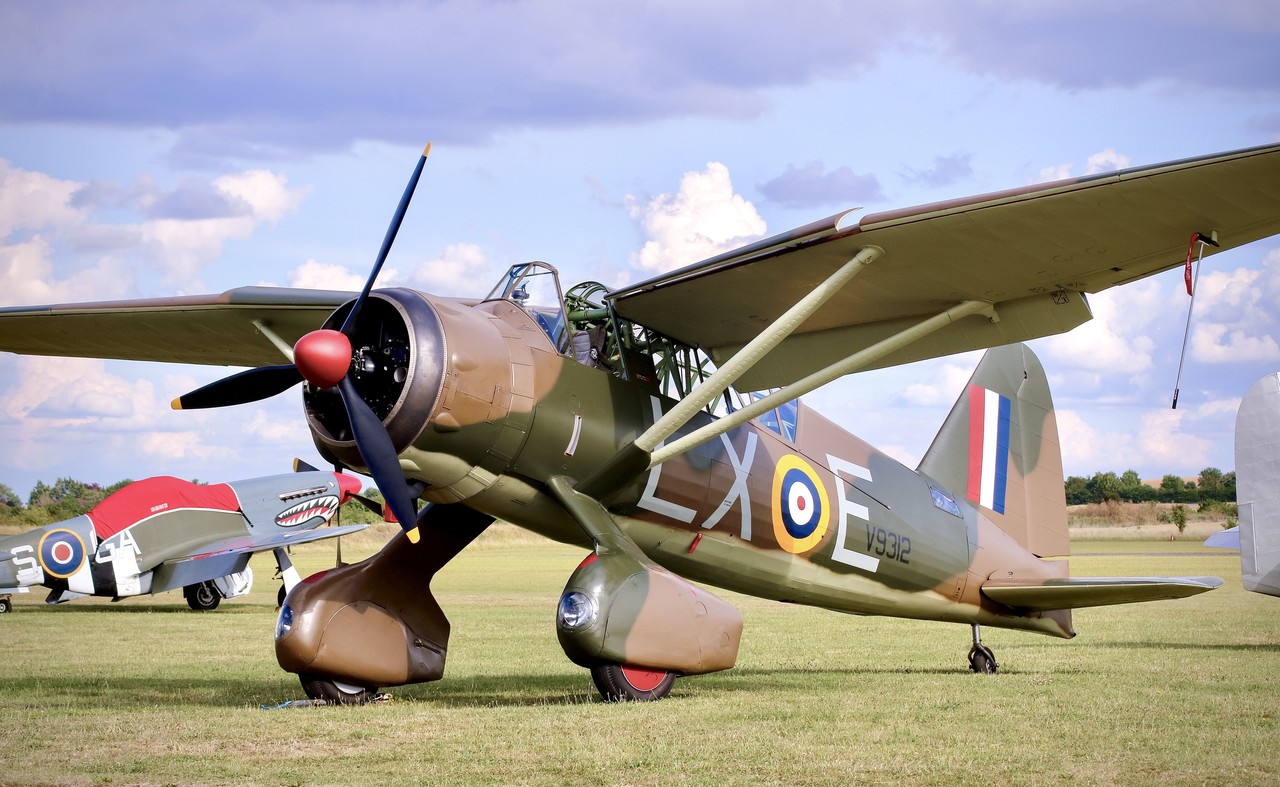
Designer Arthur E. Hagg and his Westland team created the aircraft to meet Air Ministry Specification G.4/31, which called for exceptional short-field performance. The high-aspect-ratio wing design provided the necessary lift at low speeds, while the distinctive ventral skid protected the aircraft during operations from rough, unprepared airstrips. These innovations allowed the Lysander to operate from fields that would challenge modern aircraft.
Operational Performance
With a maximum speed of 212 miles per hour and a range of 600 miles, the Lysander prioritized utility over raw performance. The aircraft could reach a service ceiling of approximately 22,000 feet, though its primary mission profile kept it much lower. Its ability to take off and land in spaces as short as 240 yards made it invaluable for covert operations, where agents could be inserted into small fields under cover of darkness.
The two-person crew typically consisted of a pilot and observer, though during special operations missions, the observer's position was often occupied by the agent being transported. The aircraft's docile handling characteristics and forgiving nature made it suitable for operations by pilots with varying experience levels.
Global Operations
Beyond British service, the Lysander found operators worldwide. The Royal Canadian Air Force operated 329 aircraft, including both license-built and British-manufactured examples. Other operators included the Royal Australian Air Force, along with the air forces of Egypt (20 aircraft), Finland (9), France (24 with Free French forces), Ireland (6), Portugal (8), Turkey (36), and the United States (3).
Legacy and Preservation
By 1946, the Lysander had been retired from active service, its specialized role superseded by more modern aircraft. However, its contribution to clandestine warfare and short-field operations influenced post-war liaison aircraft design. Today, at least two examples remain airworthy as of 2019. V9312, built by Westland in 1940, was restored by the Aircraft Restoration Company at Imperial War Museum Duxford and returned to flight in August 2018, wearing No. 225 Squadron markings. Notable museum examples include R9003 at the Canada Aviation and Space Museum, which represents a composite rebuild completed in 1967, and R9125 at the RAF Museum, built in 1940 under contract 23637/39.