
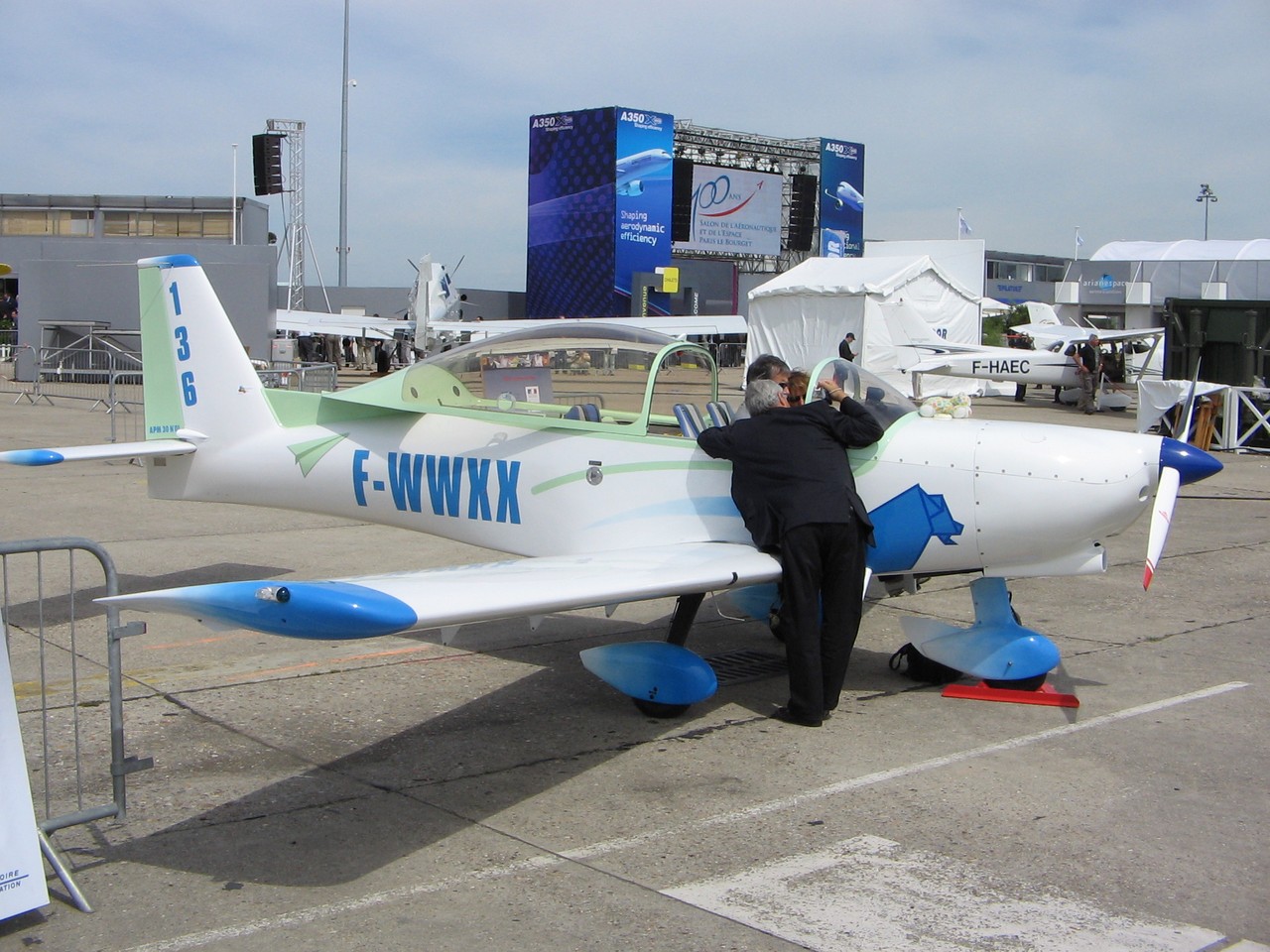
Development and Design Philosophy
The APM-30 Lion emerged from decades of French innovation in composite aircraft construction, tracing its lineage to Wassmer Aviation's groundbreaking WA51 Pacific—the world's first certified composite airplane in 1969. Philippe Moniot, who had served as technical director at Issoire Aviation during the Wassmer era, established APM (Avions Philippe Moniot) after acquiring Issoire Aviation through his REX Composites company in 1995. The Lion project began as an evolution of the smaller APM-20 Lionceau, scaling up the design to accommodate three occupants while maintaining the fully composite construction philosophy.
Manufacturing Heritage
Issoire Aviation's history began on February 1, 1978, initially established to manufacture gliders and provide support for Wassmer Aviation products following that company's closure in 1977. Under Moniot's leadership, the company transformed from a glider manufacturer into a producer of sophisticated composite aircraft. The REXiAA Group, established by Moniot in 1986, expanded dramatically over two decades, increasing workshop capacity by a factor of 30 while acquiring complementary subsidiaries specializing in composite materials, precision tooling, and metal components.
Technical Innovation
The Lion's airframe showcases advanced composite construction techniques throughout its structure. The cantilever wing spans 28 feet 5 inches with an area of 102 square feet, employing a NACA 63-618 airfoil section optimized for training and personal transport roles. The wing incorporates flaps to enhance low-speed handling characteristics, contributing to a remarkably low stall speed of just 50 mph. The aircraft's empty weight of 922 pounds demonstrates the efficiency of composite construction, allowing a maximum gross weight of 1,620 pounds with useful load capacity exceeding 700 pounds.
Powerplant and Performance
Powering the Lion is the proven Rotax 912S, a 101-horsepower four-stroke engine combining liquid cooling for the cylinders with air cooling for the heads. This Austrian-manufactured powerplant provides the Lion with a maximum speed of 165 mph and cruise speed of 130 mph, while delivering an impressive rate of climb of 890 feet per minute. The aircraft's 21-gallon fuel capacity enables extended training missions and cross-country flights, essential for both flight training operations and personal transportation.
Certification and Market Position
The APM-30 Lion achieved type certification under European CS-VLA (Certification Specification for Very Light Aircraft) standards, allowing it to be delivered complete and ready-to-fly rather than as a kit aircraft. This certification positioned the Lion in the professional training market alongside personal aviation applications. By 2011, at least 27 individual aircraft had been registered with French civil aviation authorities, with documented examples continuing to operate as of 2022.
Operational Characteristics
The Lion's design prioritizes pilot training and personal transportation efficiency. Its tricycle landing gear configuration with streamlined wheel pants reduces pilot workload during ground operations while minimizing drag in flight. The bubble canopy provides exceptional visibility for training operations, while the three-seat configuration allows for instructor, student, and observer arrangements. Wing loading of just 15.9 pounds per square foot contributes to gentle handling characteristics appropriate for ab-initio pilot training.
Production Legacy
Production of the APM-30 Lion commenced around 2007 and continued through at least 2015, representing sustained market demand for composite training aircraft. The Lion stands as the intermediate member of APM's aircraft family, positioned between the two-seat APM-20 Lionceau and the larger APM-41 Simba. This product line demonstrates the successful commercialization of composite aircraft technology that began with Wassmer's pioneering efforts in the 1960s, continuing through Issoire Aviation's evolution under Moniot's technical leadership into the 21st century.