
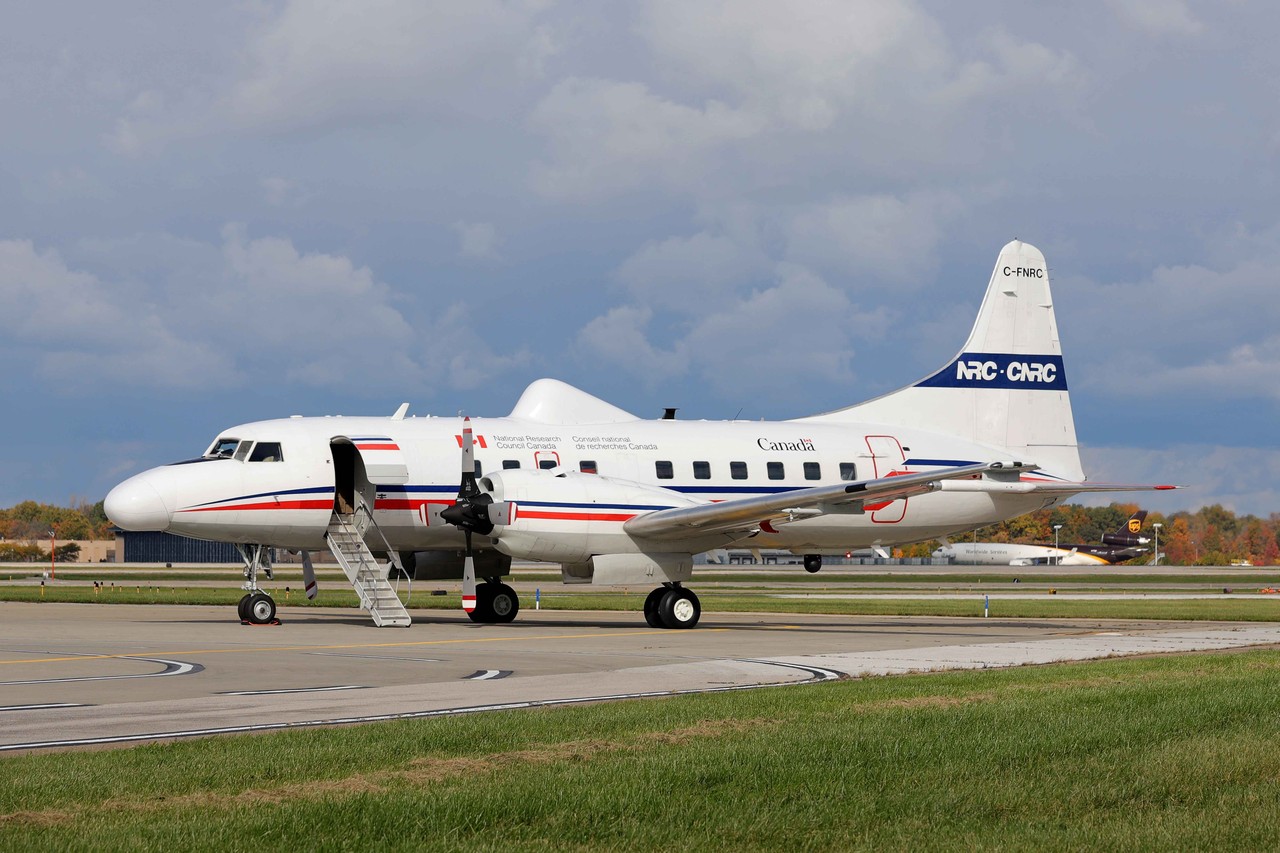
Service History
The C-131 Samaritan dominated military transport and medical evacuation roles across multiple branches of the U.S. armed forces from the mid-1950s through 1990. The United States Air Force primarily employed the aircraft for aeromedical casualty evacuation, with the basic C-131A capable of accommodating 27 stretchers or 37 sitting casualties through its large loading doors. The U.S. Navy initially designated these aircraft as R4Y until the 1962 standardization redesignated them as C-131s, operating them primarily as Operational Support Aircraft for Air National Guard flying wings and as naval air station "station aircraft."
Military Variants and Operations
The C-131H designation specifically identified aircraft converted from earlier models for VIP transport duties, carrying the formal designation VC-131H in staff transport configuration. The U.S. Coast Guard operated C-131 variants until 1983, while Air National Guard and Navy units continued flying these aircraft until 1990, nearly four decades after the type's introduction.
Beyond conventional transport duties, the C-131 achieved several notable firsts in military aviation. In 1959, a C-131 became the first aircraft used as a reduced-gravity trainer for astronaut preparation during Project Mercury, earning the infamous "vomit comet" nickname. Four years later, a C-131B (serial number 53-7820) pioneered aerial gunship tactics during "Project Tailchaser" at Eglin Air Force Base, Florida, equipped with a General Electric SUU-11A/A 7.62mm Gatling-style Minigun for successful over-water and overland live-fire testing.
The Manufacturer
Convair (Consolidated Vultee Aircraft Corporation) developed the C-131 series in response to American Airlines' requirement for a pressurized airliner to replace the aging Douglas DC-3 fleet. The company's CV-240 design featured twin engines and 40-passenger capacity, with the first prototype flying on March 16, 1947, and production aircraft reaching American Airlines on February 28, 1948. This commercial success provided the foundation for military adaptation, with the first C-131A Samaritan delivered to the USAF in 1954.
Engine and Technical Innovation
The C-131H utilized two Pratt & Whitney R-2800 "Double Wasp" 18-cylinder air-cooled radial engines, each producing 2,100 horsepower. Earlier C-131A variants generated more power with 2,500-horsepower versions of the same proven R-2800 powerplant. This engine selection provided reliable performance across the aircraft's operational envelope, supporting a service ceiling of 16,000 feet and operational range between 1,200 and 1,800 miles depending on configuration and mission requirements.
The pressurized cabin design represented advanced technology for military transports of the era, allowing comfortable high-altitude operations while maintaining the structural integrity needed for medical evacuation missions. The aircraft's 26-foot 11-inch height accommodated standard military loading equipment while preserving the civilian airliner heritage that emphasized passenger comfort.
Performance and Pilot Perspective
Operators appreciated the C-131H's combination of airliner comfort with military utility, achieving a maximum speed of 315 mph while maintaining the docile handling characteristics inherited from its commercial airliner ancestry. The three-person crew requirement reflected the aircraft's sophisticated systems and mission flexibility, with dedicated positions for pilot, copilot, and flight engineer or mission specialist depending on configuration.
Production and Legacy
Convair manufactured the entire C-131 series between 1954 and 1956, though exact production numbers for the C-131H variant remain unclear in available records. The type's longevity in service demonstrated its fundamental soundness, with nearly all C-131s departing active USAF inventory in the late 1970s as newer specialized aircraft assumed their roles.
The C-9 Nightingale replaced C-131s in regular USAF medical evacuation service, while the Air National Guard transitioned to C-130 Hercules aircraft for operational support missions. The Navy adopted C-12 Huron aircraft for similar utility transport duties. Despite replacement by more modern designs, the C-131 series established important precedents for military adaptation of civilian aircraft, demonstrating how commercial reliability could enhance military logistics and specialized mission capabilities.
The related T-29 "Flying Classroom" variant, based on the same Convair 240 foundation, trained USAF navigators and USN Naval Flight Officers from first deliveries in 1950 through early 1955, with both services operating these training aircraft until 1976. This parallel program highlighted the versatility of Convair's basic design in meeting diverse military requirements beyond simple transport missions.