
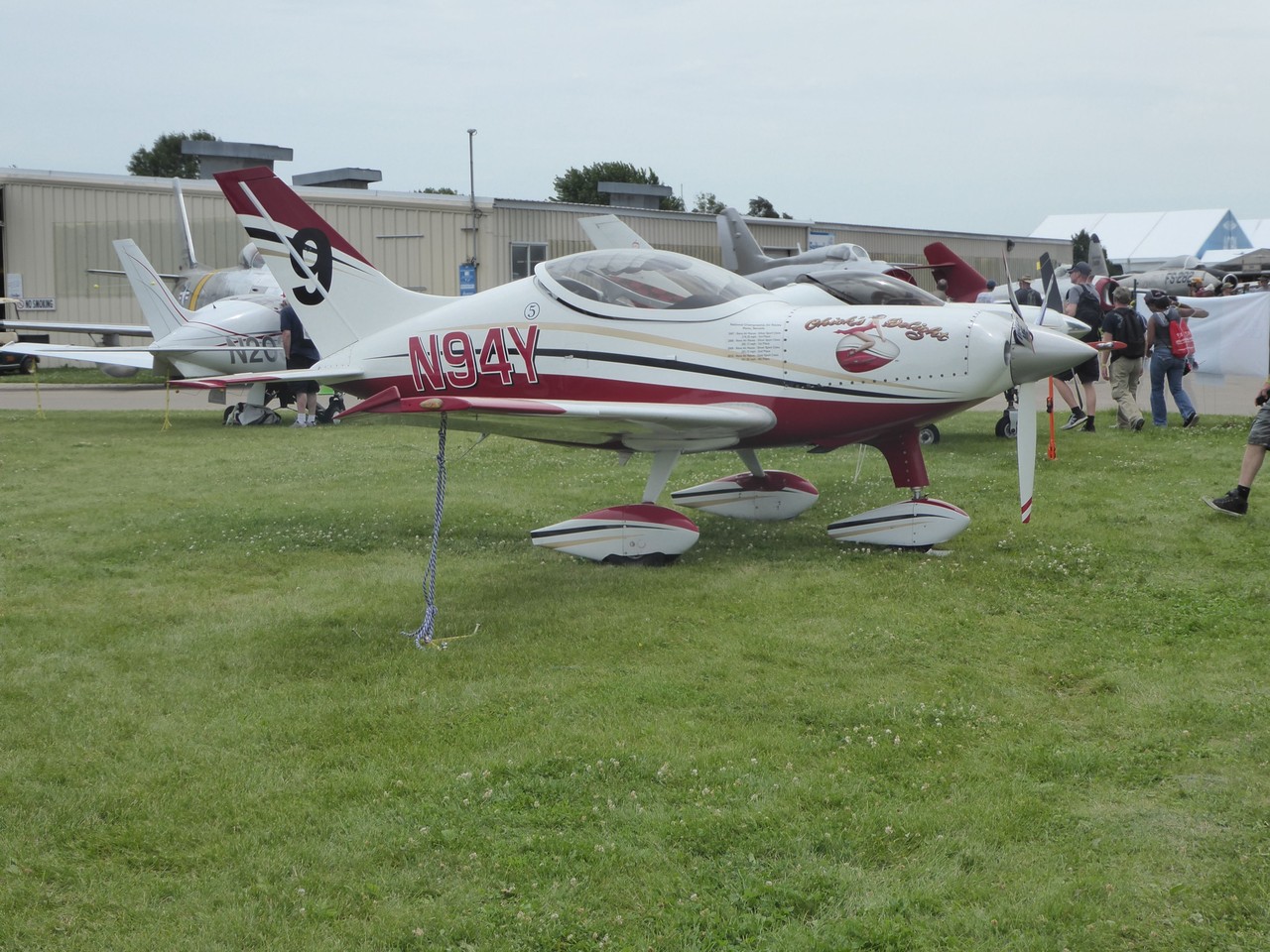
Design Genesis and Engineering Innovation
The Venture emerged from the collaboration between Edward MacDonough, who conceived the project and formed Questair Inc., and James Griswold, a Piper Aircraft engineer who translated the vision into reality. Griswold's design incorporated advanced technology derived from the Piper Malibu program, including an artificial-feel control system that provided handling characteristics typically found in much larger aircraft. The engineering objective was ambitious: create the fastest possible cross-country aircraft within the smallest streamlined airframe, optimizing both performance and range.
The prototype's maiden flight on July 1, 1987, marked the beginning of what would become one of experimental aviation's most exclusive clubs. The aircraft featured pre-formed multi-curvature aluminum panels and specialized wing sections—23017 at the root tapering to 23010 at the tip—that contributed to its exceptional aerodynamic efficiency.
Record-Breaking Performance
The Venture quickly established itself as a speed demon in the experimental aircraft world. Aircraft N8057J, equipped with the upgraded 350-horsepower PMA 550-TTV engine, set twelve FAI Class C.1b records and achieved a remarkable speed of 401.79 mph during a Chicago to Boston flight on January 26, 1993. This performance placed the tiny two-seater among the fastest piston-powered aircraft ever built.
With its standard Continental IO-550-G powerplant producing 280 horsepower, the Venture maintained a stall speed of approximately 58 knots while delivering cruise speeds that rivaled much larger aircraft. The fuel capacity of 212 liters in standard configuration, expandable to 44.5 gallons per wing in wet-wing variants, provided the range necessary for serious cross-country operations.
Manufacturing Challenges and Limited Production
Questair Inc. offered the Venture as either four separate component kits or a single complete package, with the engine as an optional addition. The complexity of construction, combined with the aircraft's sophisticated systems, resulted in exceptionally long build times that deterred many potential builders. By 2001, only approximately 30 kits had reached completion, making the Venture one of the most exclusive aircraft in the homebuilt community.
The manufacturing approach included several innovative features that added to construction complexity. The retractable tricycle landing gear system utilized electric motors—one common motor for main gear and flaps, and an independent motor for the nose gear. The aircraft's 24-volt electrical system with 60-amp alternator supported these advanced systems, but the integration challenges contributed to the extended build times.
Variants and Development
Questair developed two primary variants: the standard Venture with fully retractable tricycle gear, and the Spirit, which featured fixed main landing gear with only the nose wheel retracting. The Spirit prototype flew in 1991 and offered an optional third seat, targeting builders seeking slightly reduced complexity and cost. However, even this simplified variant failed to significantly increase production numbers.
International Operations and Notable Aircraft
The Venture's appeal extended beyond American borders, with VH-NYS becoming the first example registered in Australia on June 21, 2010. Originally N876V with construction number 64, this aircraft operated from Bacchus Marsh, Victoria, until suffering substantial damage in a landing accident on April 17, 2014, when wet runway conditions caused the aircraft to flip during rollout.
Another notable example, N4QV (serial 43), underwent extensive modifications by Windham Aviation in North Windham, Connecticut, receiving the powerful PMA-550-TTV engine installation on June 27, 1994. These engine upgrades demonstrated the airframe's capability to handle significant power increases while maintaining structural integrity.
Safety Challenges and Design Limitations
The Venture's pursuit of maximum performance created operational challenges that contributed to several notable accidents. The aircraft's tiny retractable nose wheel, while aerodynamically efficient, proved difficult for pilots transitioning from conventional aircraft. The unique control systems, while sophisticated, required extensive familiarization.
The most significant structural failure occurred with N360 (serial 75) on September 13, 2002, at Reno-Stead Airport, Nevada. The aircraft experienced complete failure of both horizontal stabilizers and elevators, resulting in one fatality. At the time of the accident, the airframe had accumulated 421 total hours, raising questions about structural design margins in high-performance operations.
Legacy and Current Status
Today, the surviving Ventures represent some of the most exclusive aircraft in private ownership. The original prototype holds a place of honor at the EAA Air Venture Museum in Oshkosh, Wisconsin, where it serves as a testament to the ambitious engineering that characterized experimental aviation in the 1980s and 1990s.
The Venture's legacy lies not in production numbers but in its demonstration that small-scale manufacturers could achieve performance levels previously reserved for military or specialized racing aircraft. While Questair Inc. ultimately ceased operations, the influence of Griswold's design philosophy continues to inspire contemporary high-performance homebuilt aircraft development.