
Service History
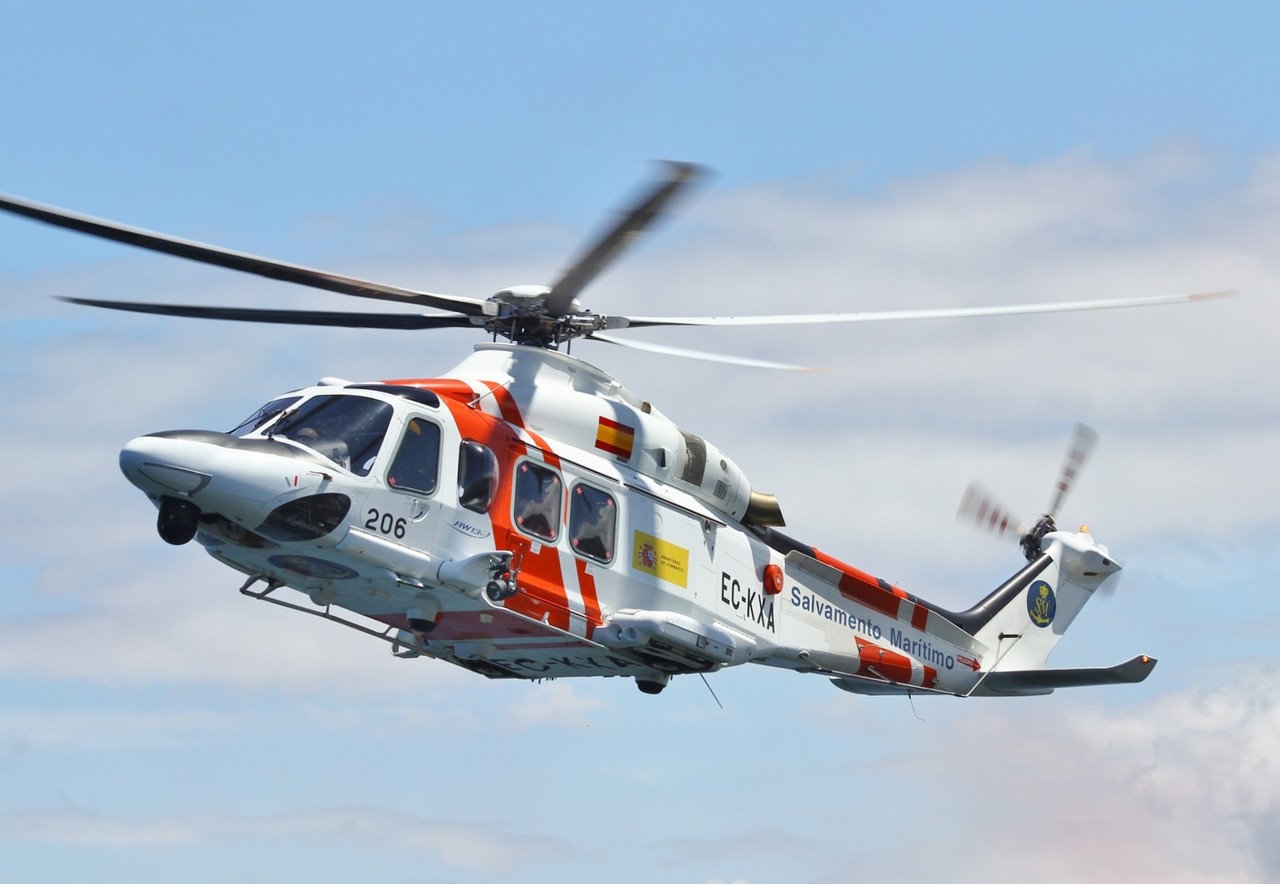
The AW139 established market dominance within its first decade of service, with over 280 customers ordering more than 1,200 aircraft by 2020. Bristow Helicopters placed the first order in September 2000, recognizing the helicopter's potential for offshore operations. By July 2024, production had exceeded 1,200 units across multiple manufacturing facilities, making it one of the most successful medium-lift helicopters of the 21st century. The global fleet accumulated over 3.3 million flight hours by December 2022, demonstrating exceptional operational reliability.
Offshore oil and gas companies became the AW139's primary customers, drawn to its ability to transport 12 passengers over 305 kilometers while maintaining category A performance standards. The helicopter's design specifically addressed the demanding requirements of offshore operations, including all-weather capability and extended overwater flights.
Military Service
The Italian Air Force became the first military operator, followed by the United States Air Force's adoption of the MH-139 Grey Wolf variant. In March 2023, the USAF awarded a $285 million Low-Rate Initial Production contract for the first 13 MH-139s, selecting the AW139 derivative to replace its aging UH-1N Huey fleet. Flight testing for the military variant began in 2020, with production commencing shortly after the Milestone C decision.
The military version incorporates enhanced defensive systems and mission-specific equipment while retaining the civilian model's proven reliability and performance characteristics.
The Manufacturer
The AW139 originated as a joint venture between Italy's Agusta and Bell Helicopter of the United States, announced at the 1998 Farnborough Air Show. Agusta led development while Bell provided complementary expertise, initially marketing the aircraft as the Agusta-Bell AB139. However, Bell withdrew from the partnership in November 2005, leading to the redesignation as AW139 beginning with the 55th aircraft.
AgustaWestland, later acquired by Leonardo, established a global production network. The primary facility in Vergiate, Italy, was supplemented by a Philadelphia plant in 2007, achieving 40 units annually by 2014. Additional production occurred in Poland through PZL-Świdnik for airframes, and in Russia via HeliVert, a joint venture with Rostvertol established in 2012.
Engine & Technical Details
Two Pratt & Whitney Canada PT6C-67C turboshaft engines power the AW139, each delivering reliable performance in demanding conditions. The powerplant demonstrated exceptional durability during a November 2015 test where AgustaWestland operated an AW139's main gearbox for 60 minutes without oil—30 minutes longer than any other certified rotorcraft at the time.
The helicopter features a conventional single-rotor configuration with a four-blade main rotor system. A long-nose variant provides additional space for avionics and mission equipment, built at facilities in both Italy and the United States. The aircraft received European JAA certification in June 2003 and FAA type certification in December 2004.
Performance Characteristics
The AW139's performance envelope places it firmly in the medium-lift category, with a maximum gross weight of seven tonnes achieved in 2015 configurations. This capability enables the helicopter to carry 12 passengers over 305 kilometers while maintaining single-engine safety performance. The aircraft's range and payload combination made it particularly attractive to offshore operators requiring reliable passenger transport to remote platforms.
Pilots appreciate the AW139's handling characteristics and advanced avionics systems. The helicopter incorporates modern flight management systems while maintaining traditional helicopter control responses that experienced pilots expect.
Production & Legacy
Production reached 90 aircraft annually by 2011 across all manufacturing locations, with sustained demand from both commercial and military customers. The 1,000th AW139 rolled out in September 2019, marking a significant milestone for Leonardo's helicopter division. By September 2014, the fleet had accumulated over one million flight hours, demonstrating the type's operational maturity.
The AW139's success spawned the AW149, an enlarged military variant that first flew on November 13, 2009. This derivative maintains the AW139's proven systems while offering greater payload and mission flexibility for military applications.
Today, AW139s continue operating worldwide, with 20 aircraft currently airborne according to recent tracking data, operated by 16 different organizations. The helicopter's combination of Italian design excellence and international manufacturing capabilities created a product that set new standards for medium-lift rotorcraft performance and reliability.