
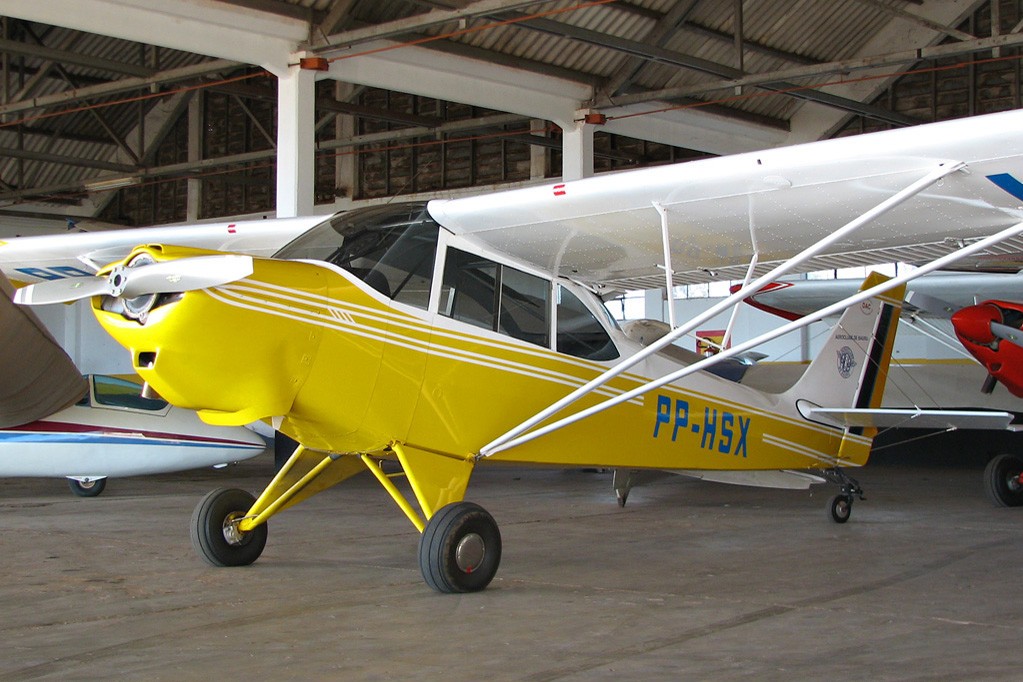
A South American Success Story
The AB-180 emerged as Aero Boero's answer to the growing demand for a larger, more capable aircraft than their popular three-seat AB-95. By incorporating aerodynamic refinements from the AB-115 and installing the proven Lycoming O-360-A1A engine, the company created an aircraft that would dominate utility aviation in Argentina and neighboring countries for the next 31 years.
Production began in 1969 with the first serial aircraft leaving the factory, establishing a manufacturing run that would continue uninterrupted until 2000. The aircraft's robust construction, featuring a welded steel tube fuselage and fabric covering, proved ideally suited to the demanding conditions of South American operations, from the high-altitude airstrips of the Andes to the remote agricultural regions of the Pampas.
Military Service
While primarily a civilian aircraft, the AB-180 found limited but important military applications. The Argentine Air Force operated several variants, including two AB-180RV long-range models and one AB-180RVR, using them primarily for utility transport and liaison duties. Brazil's Air Force also recognized the type's capabilities, operating two examples under the designation G-180. Though never seeing combat, these military variants demonstrated the aircraft's reliability in government service.
The Manufacturer's Legacy
Aero Boero SA represented Argentina's most successful general aviation manufacturer, building on experience gained from the AB-95 series that began production in 1959. The company's focus on practical, rugged designs suited to South American conditions made them a dominant force in regional aviation. However, by 2000, changing market conditions and competition from international manufacturers led to the end of AB-180 production, with the company's current status remaining unclear.
Engine and Performance
The heart of the AB-180 was the Textron Lycoming O-360-A1A, a four-cylinder, air-cooled engine producing 180 horsepower through a two-bladed propeller. This powerplant, widely regarded as one of general aviation's most reliable engines, gave the AB-180 a maximum speed of 140 mph and a cruise speed of 125 mph at sea level. The aircraft's impressive service ceiling of 23,000 feet made it particularly valuable for operations in mountainous terrain.
The AB-180RVR variant, with its 200-liter fuel capacity, achieved a remarkable range of 730 miles, making it suitable for cross-country flights across South America's vast distances. Its stall speed of just 45 mph with flaps extended, combined with fixed tricycle landing gear, made it forgiving for pilots transitioning from smaller aircraft.
Specialized Variants
Aero Boero developed numerous variants to meet specific market needs. The AB-180Ag agricultural version featured a 270-liter belly tank for crop spraying operations, while the unique AB-180SP sesquiplane incorporated chemical tanks in its lower wings, reducing stall speed to just 35 mph for precise agricultural work. The AB-180 Condor, of which only four were built, featured a turbocharged engine for high-altitude operations in the thin air of the Andes.
For training applications, the AB-180PSA offered a simplified two-seat configuration, while gliding clubs like Club de Planeadores Rosario in Argentina utilized standard variants for glider towing operations. This versatility across multiple roles demonstrated the soundness of the basic design.
Pilot's Perspective
Pilots praised the AB-180 for its honest handling characteristics and robust construction. The high-wing configuration provided excellent visibility and inherent stability, while the swept-forward tailplane leading edges enhanced control authority. With a rate of climb exceeding 1,000 feet per minute, the aircraft offered respectable performance for its class, though its fixed landing gear limited cruise speed compared to retractable-gear competitors.
Production and Current Status
Constructor's numbers indicate that at least 156 AB-180s were completed during the 31-year production run, though the actual total may be higher. This substantial production run for a specialized regional aircraft testified to the type's success in its intended markets.
Today, numerous examples remain airworthy across South America, though exact numbers are unavailable. The aircraft's simple construction and use of common engines and components have aided maintainability, allowing many to continue serving in their original utility roles decades after leaving the factory. The AB-180's legacy lives on as a testament to practical aircraft design tailored to specific regional needs.