
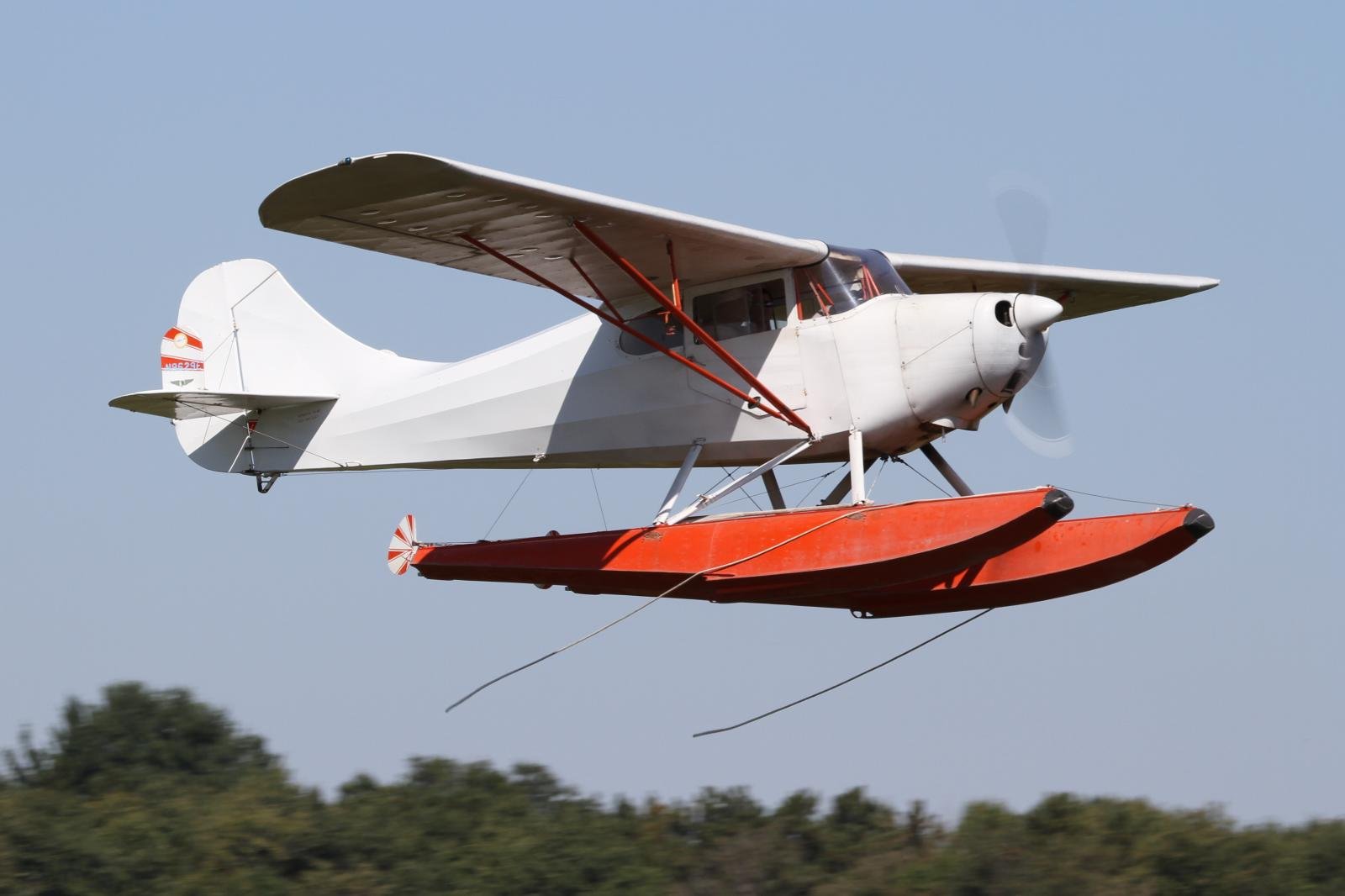
Post-War General Aviation Pioneer
The Chief emerged during the explosive growth of American general aviation following World War II, when thousands of military-trained pilots sought affordable aircraft for civilian flying. Aeronca positioned the Chief as a "step up" from their tandem-seat Champion, offering the more civilized side-by-side configuration preferred by flight schools and private owners. Despite this market positioning, the Champion outsold the Chief by nearly four to one, reflecting the price-conscious nature of the post-war aviation market.
Manufacturing Innovation
Aeronca Aircraft Corporation pioneered efficient light aircraft manufacturing techniques with the Chief and Champion lines. The company implemented one of the first moving conveyor assembly systems in general aviation, with each production stage requiring approximately 30 minutes to complete. To control costs and inventory, Aeronca engineered 70 to 80 percent parts commonality between the Chief and Champion models, a revolutionary approach that reduced manufacturing complexity while maintaining distinct aircraft characteristics.
Production centered at Dayton Municipal Airport in Vandalia, Ohio, with component fabrication occurring at Aeronca's headquarters in Middletown, Ohio. As production wound down, final assembly operations returned to Middletown before ending entirely in 1950.
Technical Evolution
The original 11AC Chief featured a Continental A-65 engine producing 65 horsepower, delivering a maximum speed of 100 mph and a gentle stall speed of just 38 mph. This benign handling characteristic earned the Chief recognition as "a basic gentle flyer with good manners," making it ideal for primary flight training and recreational flying.
Recognizing market demands for improved performance, Aeronca introduced the 11BC Chief in June 1947 with an upgraded 85-horsepower Continental C-85 engine. This variant also featured enhanced directional stability through the addition of a dorsal fin. The evolution continued in 1948 with the 11CC Super Chief, incorporating balanced elevator controls for smoother handling and upgraded interior appointments for enhanced comfort.
A cost-reduced Scout variant (11ACS) appeared in 1947, priced at $2,475 to match the Champion's price point. However, only 100 Scout models sold before deteriorating market conditions forced its discontinuation. Aeronca also developed seaplane versions, expanding the Chief's operational versatility.
The Aeronca Legacy
Aeronca Aircraft Corporation represented a significant force in American light aircraft manufacturing, producing more than 17,000 aircraft across all models before ceasing light aircraft production in 1951. The company's focus on practical, affordable designs served the burgeoning training and personal flying markets throughout the 1940s.
Following Aeronca's exit from aviation, the Chief design rights passed through multiple owners. E.J. Trytek acquired the designs and licensed production to Hindustan Aircraft of India, which built 154 examples of the HUL-26 'Pushpak' variant between 1958 and 1968. Bellanca Aircraft Corporation subsequently acquired the rights in the early 1970s before American Champion Aircraft Corporation became the current design holder.
Pilot Experience
The Chief's conventional landing gear configuration and forgiving flight characteristics made it an excellent primary trainer. Its high-wing design provided inherent stability and good ground visibility, while the side-by-side seating arrangement facilitated effective instruction. With an empty weight of 820 pounds and maximum takeoff weight of 1,350 pounds, the Chief offered reasonable payload capability for its power class.
The yoke control system, rather than the stick controls found in the Champion, appealed to pilots transitioning from military aircraft or those planning to advance to more complex civilian aircraft. This configuration choice reflected Aeronca's understanding of their target market's preferences and operational requirements.
Enduring Impact
While production ended in 1950 after four years and 2,300+ aircraft, the Chief's influence extended well beyond its American origins. The Indian-built Pushpak variants demonstrated the design's international appeal, with several examples still flying today, particularly in the United Kingdom. This longevity testifies to the fundamental soundness of Aeronca's engineering approach.
The Chief represents a crucial chapter in the democratization of American aviation, providing an accessible entry point for the thousands of pilots emerging from World War II military service. Its emphasis on manufacturing efficiency, parts commonality, and gentle handling characteristics established principles that continue to influence light aircraft design today. American Champion's continued ownership of the design rights ensures this important general aviation heritage remains preserved for future generations.