
Service History
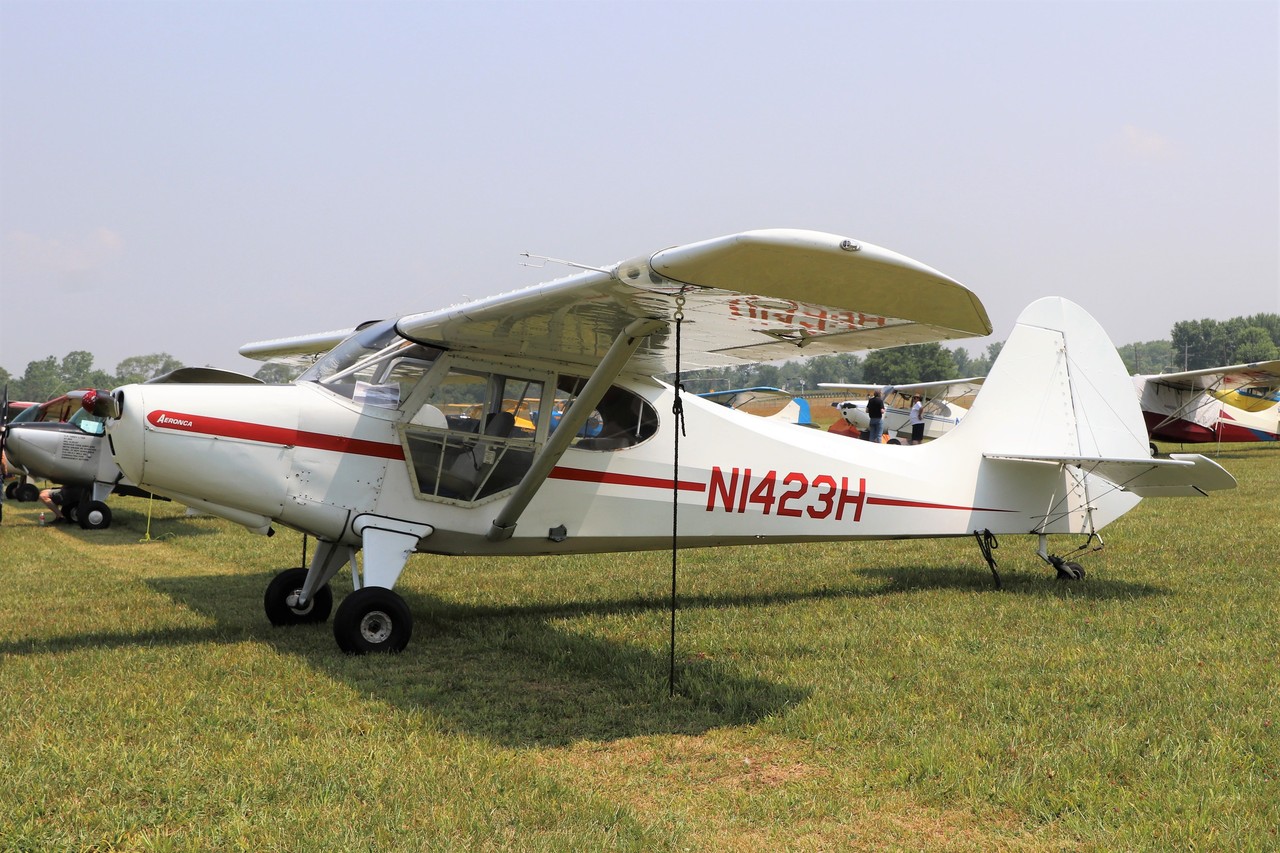
The Aeronca 15AC Sedan carved out a unique niche in post-war general aviation through its exceptional utility rather than speed. While competitors like the Cessna 170 and Piper Pacer emphasized performance, the Sedan dominated backcountry operations across the United States, Canada, and Alaska. Operating on wheels, skis, and floats, the aircraft became a workhorse in remote regions where its short takeoff and landing capabilities proved invaluable. The float-equipped variant, designated S15AC, featured dual entry doors and served bush pilots who required maximum cargo flexibility in challenging environments.
With 561 aircraft produced during its three-year production run, the Sedan represented nearly 15 percent of Aeronca's total civilian aircraft output. Priced at $4,795, it offered exceptional value for operators requiring four-seat capacity and substantial cargo volume.
The Manufacturer
Aeronca Manufacturing Corporation, originally the Aeronautical Corporation of America, operated from 1928 to 1951 as one of America's pioneering light aircraft manufacturers. Founded at Lunken Airport in Cincinnati, the company later relocated to Middletown, Ohio, where it established its primary production facilities. During World War II, Aeronca contributed significantly to military aviation by producing the L-3/O-58D Defender observation aircraft, manufacturing hundreds of these crucial reconnaissance platforms.
The company's decision to exit civilian aircraft production in 1951 marked the end of an era, as Aeronca transitioned to aerospace components manufacturing. Today, the company operates as a subsidiary of Magellan Aerospace, a Canadian corporation, continuing its legacy in aviation manufacturing through specialized aerospace systems.
Engine & Technical Details
The Sedan's powerplant consisted of a Continental C-145-2 engine producing 145 horsepower, though early planning had called for the less powerful C-125. Engineers recognized that the aircraft's 2,050-pound gross weight required additional power for adequate performance. Alternative engine options included the Franklin 6A4-165-B3 with 165 horsepower and the Franklin 6A4-150-B3 with 150 horsepower, providing operators with flexibility based on mission requirements.
Design work commenced in 1947 with specific objectives to minimize production costs while maximizing utility. The engineering team adapted proven components from Aeronca's successful Champion series, including the engine cowling design and cabin door configuration. The Sedan's innovative all-metal wing represented a significant departure from Aeronca's traditional fabric-covered wing construction, utilizing a single-strut bracing system that simplified manufacturing while maintaining structural integrity.
Pilot Perspective
Pilots praised the Sedan's forgiving handling characteristics and exceptional load-carrying capability. The aircraft's cruise speed of 105 mph, while modest compared to competitors, provided adequate performance for its intended utility role. With a service ceiling of 12,400 feet and range of 430 nautical miles, the Sedan offered sufficient performance for regional operations and backcountry access.
The conventional landing gear arrangement featured steel tube main gear with bungee cord shock absorption rather than more expensive oleo struts, contributing to the aircraft's affordable maintenance costs. The steerable tailwheel configuration provided excellent ground handling characteristics on improved and unimproved surfaces alike.
Production & Legacy
Production began in mid-1948 following type certification in September of that year. The Middletown, Ohio factory completed 561 aircraft before production ceased in March 1951, with the final example assembled seven months later from remaining spare parts inventory. This represented the conclusion of Aeronca's civilian aircraft manufacturing, making the Sedan historically significant as both the company's first four-seat design and its final civilian product.
As of 2019, approximately 260 Sedans remained airworthy, testament to the aircraft's robust construction and continued utility. The National Aeronca Association provides ongoing support for owners and enthusiasts, maintaining technical resources and promoting the aircraft's unique characteristics.
Remarkably, the Sedan has experienced a modern revival through Burl's Aircraft, LLC, which began producing new AeroSedan Model 15AC aircraft in the 21st century. These contemporary versions maintain the original's design philosophy while incorporating modern powerplants, including a 180-horsepower Lycoming O-360-A1F6 engine, constant-speed propellers, and disc brake systems. This modern production validates the enduring appeal of the Sedan's practical design approach, proving that utility and versatility remain valuable characteristics in general aviation nearly 75 years after the original's first flight.