
Service History and Market Dominance
The AS-350's commercial success was unprecedented in the light helicopter market. By 1978, just months after certification, Aérospatiale had secured 459 orders, forcing the company to double monthly production from 10 to 20 aircraft by 1980. Within a decade of entering service, the AS-350 fleet had accumulated 2.4 million flight hours across 520 operators in 55 countries. By 2011, approximately 5,000 aircraft had been delivered to operators in 98 countries, accumulating over 21 million total flight hours.
The helicopter's versatility made it indispensable across multiple industries. Petroleum Helicopters Inc. became an early major customer, ordering 20 aircraft in February 1977 for offshore oil platform support. Emergency medical services adopted the type extensively, while law enforcement, search and rescue, and utility companies found the AS-350's combination of performance and economy ideal for their operations.
Development and Design Innovation
The AS-350 project emerged in the early 1970s under the direction of Fernand Carayon, industrial director of Aérospatiale's helicopter division, with Chief Engineer René Mouille leading overall development. The design team sought to replace the aging Alouette II with a more modern, efficient helicopter incorporating advanced manufacturing techniques and rotor technology.
The first prototype, designated AS350C and powered by a Lycoming LTS101-600A engine, made its maiden flight on June 27, 1974, at Marignane, France, with test pilot Daniel Bauchart and flight engineer Bernard Certain. The second prototype, equipped with a Turbomeca Arriel 1A engine, followed on February 14, 1975, establishing the two primary powerplant options that would define the aircraft's market strategy.
Key design innovations included the revolutionary Starflex main rotor system and rolled sheet metal construction techniques adapted from automotive manufacturing. The Starflex rotor eliminated traditional bearings and hinges, using composite materials to provide flexibility while reducing maintenance requirements and improving reliability. Hydraulic accumulators in the flight control system provided emergency backup power, enhancing safety margins.
Engine Variants and Market Strategy
Aérospatiale developed two distinct variants to optimize market penetration. The AS350C, marketed as the AStar in North America, featured the Lycoming LTS101 turboshaft engine specifically chosen for American certification requirements and maintenance preferences. The AS350B, known as the Écureuil (Squirrel) elsewhere, utilized the Turbomeca Arriel 1B turbine, reflecting European powerplant preferences and global support networks.
Both versions received certification in 1977: the AS350B on October 27 from French authorities, and the AS350C on December 21 from the FAA. Deliveries commenced in March 1978 for the Écureuil and April 1978 for the AStar, with Helicopter Associates of Phoenix, Arizona, becoming the first AS350C customer.
Manufacturing and Production Evolution
Production began at Aérospatiale's Marignane facility near Marseille, employing approximately 7,800 people in the helicopter division. The factory's rapid expansion reflected market demand, with production rates increasing dramatically through the late 1970s. Licensed production was also established through Helibras in Brazil, extending manufacturing capability to South America.
In 2013, production expanded to Eurocopter's Columbus, Mississippi facility for U.S. market deliveries, bringing final assembly closer to American customers and reducing delivery costs. This strategic move reflected the AS-350's continued commercial importance decades after initial production.
Military Applications and Variants
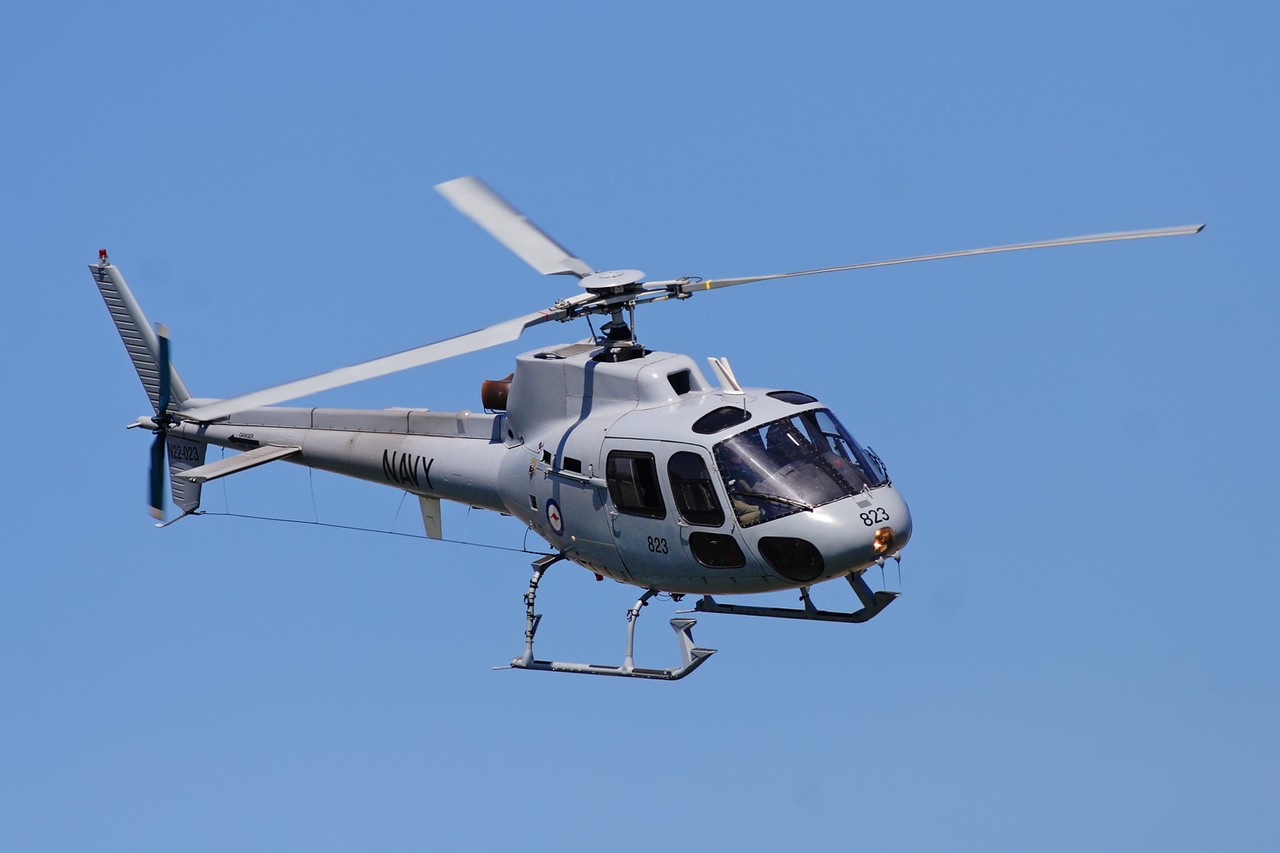
While primarily successful in civilian markets, the AS-350 found significant military applications. The Brazilian Air Force, Pakistan Army Aviation, and Royal Jordanian Air Force became major military operators, utilizing the helicopter for transport, reconnaissance, and light attack missions. The military variant AS550 Fennec incorporated defensive systems and military-specific equipment while retaining the proven civilian airframe.
Military operators appreciated the AS-350's reliability, maintainability, and performance in demanding environments. Its ability to operate from unprepared landing sites and in adverse weather conditions made it valuable for military transport and liaison duties.
Continuous Development and Legacy
The AS-350 family expanded through continuous development. The AS355 Écureuil 2, first flying September 27, 1979, provided twin-engine safety for demanding operations. The AS350 B3 variant, introduced March 1, 1997, featured the more powerful Turbomeca Arriel 2B engine, improving high-altitude performance significantly.
An experimental AS350Z variant tested a Fenestron shrouded tail rotor system on February 6, 1987, with test pilot Pierre Loranchet, though production aircraft retained conventional tail rotors for cost and complexity reasons.
Today, the design continues as the Airbus Helicopters H125, incorporating modern avionics, improved engines, and enhanced safety systems while maintaining the fundamental design excellence that made the original AS-350 one of aviation's most enduring success stories. The helicopter's nickname "Squirrel" reflects both its agility and the affection pilots worldwide hold for this remarkably versatile aircraft.