
Service Dominance
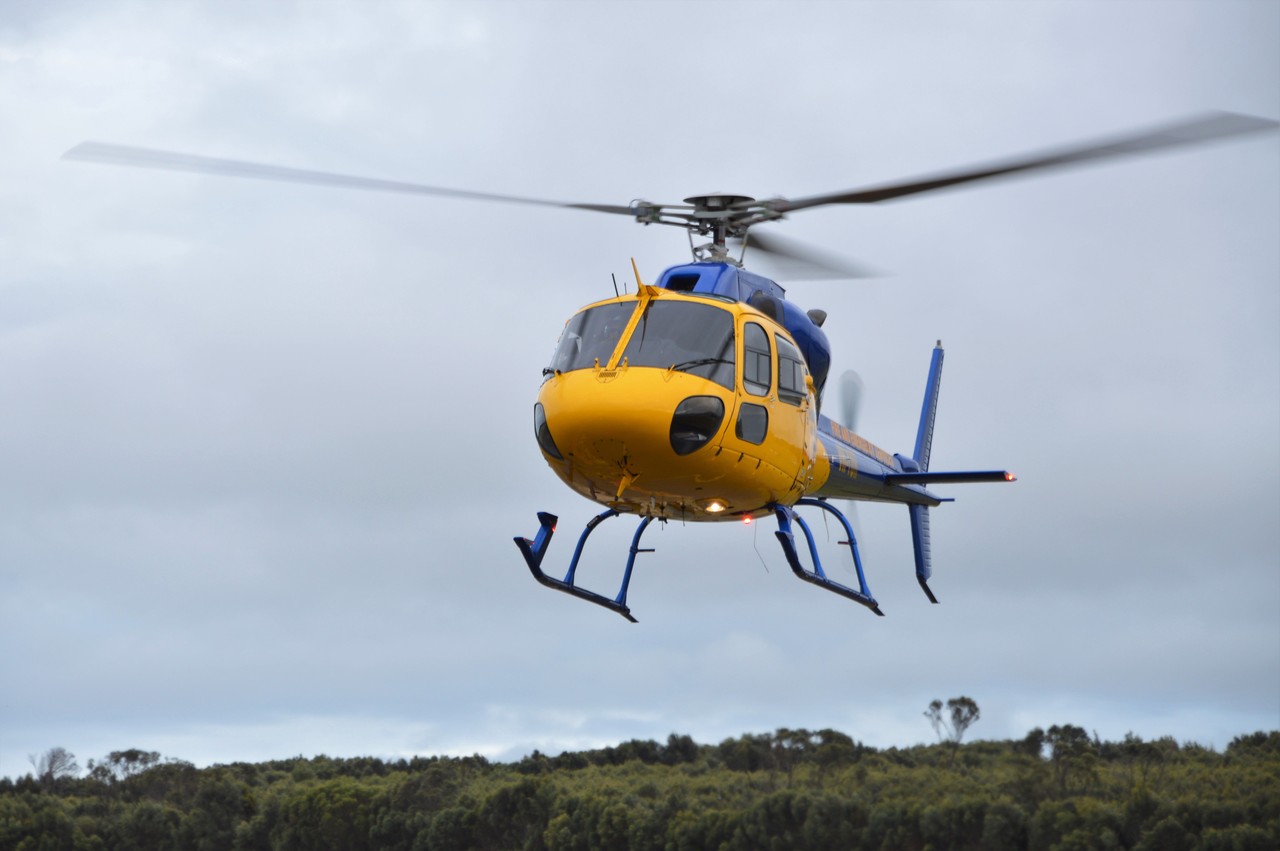
The AS355 Écureuil 2 established itself as the backbone of European light twin-engine helicopter operations throughout the 1980s and 1990s. More than 1,200 aircraft were delivered across 37 years of production, serving roles from executive transport to emergency medical services. In North America, where it was marketed as the TwinStar, the aircraft captured significant market share against established American competitors like the Bell 222.
The helicopter's twin-engine configuration provided crucial safety redundancy that single-engine aircraft could not match, making it particularly valuable for operations over water, mountainous terrain, or urban areas where autorotation landing sites were limited. By the early 2000s, AS355 variants operated on every continent except Antarctica, though Brazilian Navy HB355 helicopters later supported Antarctic logistics missions as recently as May 2020.
Military and Paramilitary Operations
Military variants, designated AS555 Fennec 2, served with over 20 armed forces worldwide. The French Air Force operated the AS555AN from 1984, using the aircraft for pilot training and light transport duties. The Royal Air Force employed AS355s from 1993 to 2006 for training helicopter pilots at RAF Shawbury.
Law enforcement agencies became major operators, with the aircraft's twin-engine reliability proving essential for police aviation. New Zealand Police operated two AS355 helicopters for 30 years until replacing them with Bell 429s in July 2019. The Royal Malaysian Police incorporated AS355s into their fleet from 1990, while French Customs (Douane) has operated the type since 1985 for border surveillance and maritime patrol missions.
Manufacturer Evolution
Aérospatiale developed the AS355 as part of France's strategy to compete with American helicopter manufacturers Bell and Hughes. The company traced its helicopter heritage to Sud Aviation and earlier French aviation pioneers. During the 1990s, Aérospatiale merged its rotorcraft division with German MBB and Spanish CASA to form Eurocopter, creating Europe's largest helicopter manufacturer.
The merger allowed expanded production and global marketing reach. Helibras in Brazil manufactured the HB355F2 Esquilo variant under license from 1982, supporting Latin American military and civilian operators. When Eurocopter rebranded as Airbus Helicopters in 2014, the AS355 program was already winding down, with production termination announced in September 2015.
Engineering and Performance
Chief Engineer René Mouille led the AS355 development team, adapting the proven single-engine AS350 design for twin-engine operation. The aircraft employed rolled sheet metal construction techniques borrowed from automotive manufacturing, reducing production costs compared to traditional aircraft assembly methods. The innovative Starflex main rotor hub eliminated the need for conventional bearings and bushings, reducing maintenance requirements.
The twin Allison 250-C20F turboshaft engines each produced 420 shaft horsepower, providing sufficient power for single-engine operation even at maximum gross weight of 5,512 pounds. Later AS355N variants introduced Full Authority Digital Engine Control (FADEC) in 1992, automatically managing engine parameters and reducing pilot workload during critical phases of flight.
Pilot Experience
Pilots praised the AS355 for its predictable handling characteristics and excellent single-engine performance. The aircraft could maintain level flight on one engine at maximum gross weight, a critical safety advantage over many competing designs. Cruise speed of 144 mph made it competitive with larger helicopters while maintaining the operating economics of a light aircraft.
The spacious cabin accommodated seven passengers in high-density configuration or could be reconfigured for cargo, stretchers, or specialized mission equipment. Large sliding doors on both sides facilitated rapid passenger boarding or cargo loading, while the flat cabin floor simplified interior modifications for specific operational requirements.
Production Variants and Legacy
Production evolved through multiple variants addressing different market segments. The initial AS355E featured single hydraulic systems, while the AS355F introduced dual hydraulics for improved safety. Weight increases came with the AS355F1 in January 1984 and AS355F2 in December 1985, each adding 220 and 110 pounds of maximum gross weight respectively.
The final AS355NP variant, introduced in 2007, targeted the corporate transport market with enhanced avionics and interior appointments. However, increasing competition from newer designs like the Bell 429 and Airbus's own EC135 led to declining sales and the 2015 production termination announcement.
Today, hundreds of AS355 helicopters remain in active service worldwide. The aircraft's robust construction and continued parts support from Airbus Helicopters ensure many will continue flying for decades. The design's influence persists in current Airbus helicopter products, particularly in manufacturing techniques and rotor system technologies first proven on the Écureuil 2.