
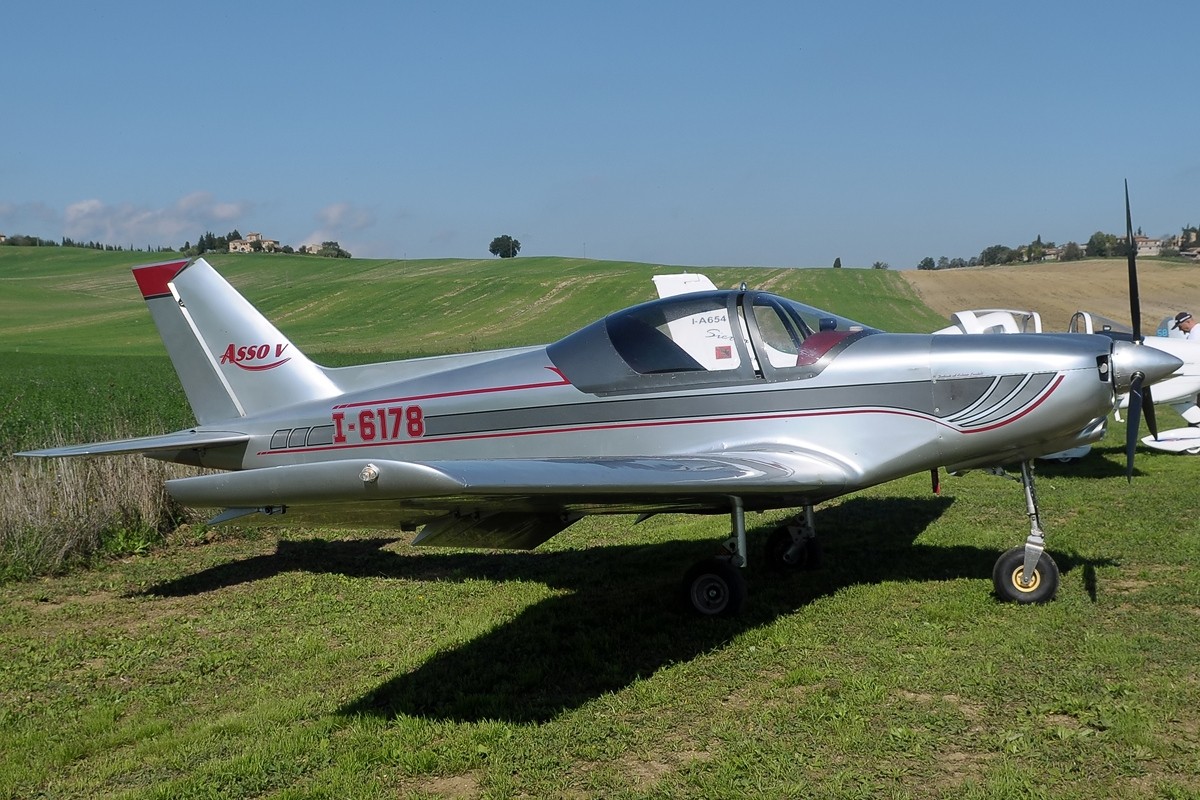
Design Philosophy and Development
Giuseppe "Bepi" Vidor developed the Asso X Jewel as an evolution of his successful Asso V Champion, incorporating a laminar flow wing design optimized for high-speed flight in the ultralight category. Vidor, a former carpenter who studied engineering through night school, founded Asso Aerei around 1980 with the goal of creating sophisticated wooden aircraft that amateur builders could construct at home. The Jewel represented the pinnacle of his wooden ultralight designs, featuring retractable nosewheel landing gear and detachable wings for transport convenience.
The aircraft emerged during the late 1990s as Italian aviation regulations under ENAC Chapter 223 provided simplified approval processes for ultralight designs. This regulatory environment allowed Vidor to push performance boundaries while maintaining the aircraft's ultralight classification, achieving speeds that rivaled certified general aviation aircraft.
Construction and Technical Innovation
The Asso X Jewel utilized traditional wooden construction techniques with modern aerodynamic refinement. The airframe featured all-wood primary structure covered with Dacron fabric, combining light weight with structural integrity. Wide-span ailerons and flaps provided excellent control authority across the aircraft's speed range, from a 64 km/h stall speed to its 330 km/h never-exceed velocity.
With an empty weight of just 282.5 kg and maximum takeoff weight of 472.5 kg, the Jewel achieved a remarkable power-to-weight ratio. The tandem seating arrangement optimized the fuselage for minimal drag while accommodating two occupants. Wing loading of 47 kg/m² across the 9.6 square meter wing area contributed to the aircraft's impressive performance envelope.
Powerplant and Performance
The standard powerplant consisted of the Rotax 912 series engine, available in 80-horsepower UL or 100-horsepower S/ULS variants. This four-cylinder, liquid and air-cooled engine provided reliable operation with fuel consumption between 12-16 liters per hour. Alternative engines included the Limbach 2000 EB and JPX 2325M, though the Rotax installation proved most popular among builders.
Cruise performance reached 286 km/h at typical operating weights, with a maximum range of 1,300 kilometers. The aircraft's high-speed capability positioned it uniquely in the ultralight market, offering performance comparable to certified aircraft while maintaining amateur-built status and associated regulatory advantages.
The Manufacturer's Legacy
Asso Aerei operated from approximately 1980 until Giuseppe Vidor's death on September 23, 2013, at age 72. During this 33-year span, Vidor designed numerous aircraft including scale replicas such as the Asso VIII Centauro (based on the Fiat G.55) and the Asso XIV Spitfire. The company's focus remained consistently on wooden construction, reflecting Vidor's background and philosophy that traditional materials could achieve modern performance standards.
The Asso series progressed chronologically from the Asso I in 1980 through the Asso XI Sprint in 2003, with the Jewel representing the mature development of Vidor's design concepts. Each aircraft in the series addressed specific market needs while maintaining the signature wooden construction that distinguished Asso Aerei products.
Operational History and Service
The Asso X Jewel found its primary market among European amateur builders and sport pilots seeking high-performance recreational aircraft. Notable operators included the Fly Fano Team, which operated aircraft I-D232 at events including the Royal International Air Tattoo at Fairford, UK, and Italian aviation gatherings such as Baracca Day 2019.
Marketed primarily as plans and kits rather than completed aircraft, exact production numbers remain unknown. This distribution method aligned with European amateur-built regulations and made the design accessible to builders seeking alternatives to composite construction techniques that dominated the ultralight market by the 2000s.
Safety Record and Incidents
The type's operational history includes at least one significant accident when aircraft I-9407 crashed into a residence near Rome on May 16, 2019, resulting in the deaths of both occupants. This incident highlighted the performance capabilities that, while impressive, demanded appropriate pilot experience and training.
Influence on Modern Designs
The Asso X Jewel's design principles influenced subsequent developments including the Millennium Master (2006), Pelegrin Tarragon, and Blackshape Prime (2007), which adapted Vidor's concepts to composite construction methods. These successors maintained the high-performance philosophy while embracing modern materials and manufacturing techniques.
Today, the Asso X Jewel represents a unique chapter in ultralight aviation history, demonstrating that traditional wooden construction could achieve remarkable performance when combined with careful aerodynamic design and modern powerplants. While production ended with Asso Aerei's closure, surviving examples continue operating across Europe, testament to the soundness of Vidor's engineering approach.