
Development and Design
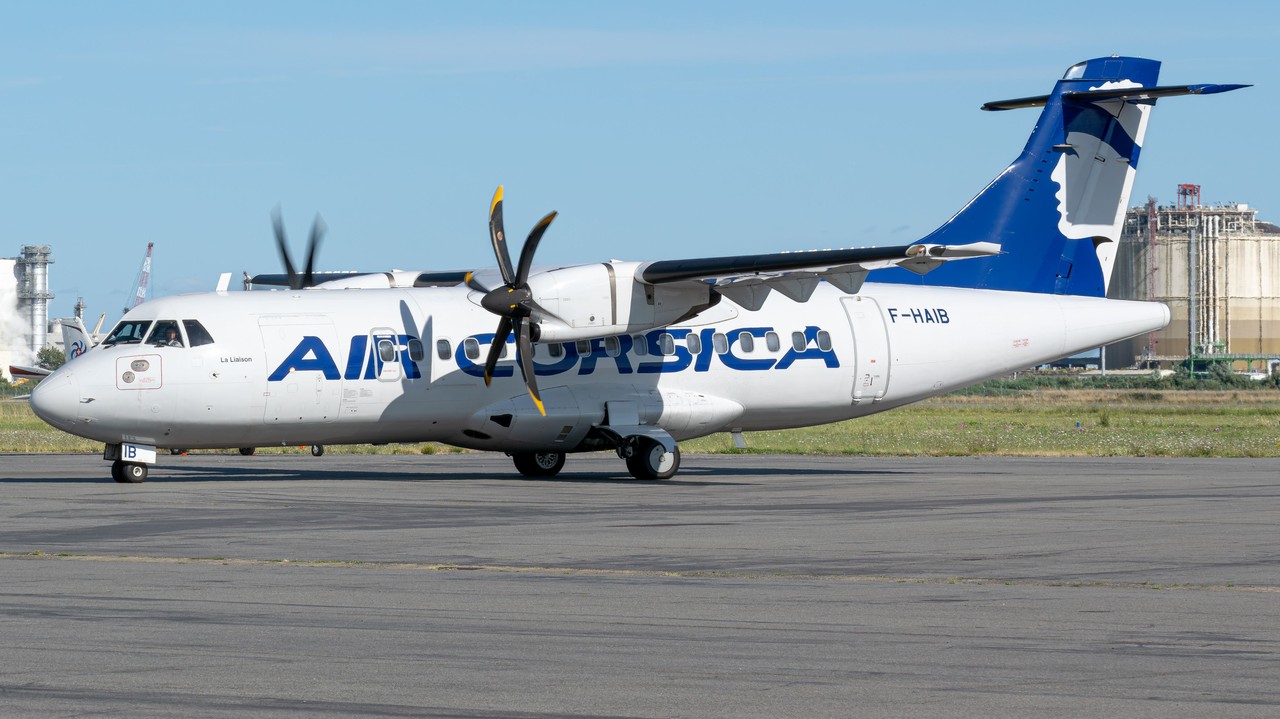
ATR announced development of the ATR-42-500 on June 14, 1993, as an enhanced variant of their successful regional aircraft family. The engineering team focused on addressing operational limitations of the earlier ATR 42-300, particularly in challenging hot-and-high airport conditions that restricted performance in mountainous regions and tropical climates.
The most significant upgrade involved installing new Pratt & Whitney Canada PW127E engines, each delivering 2,400 shaft horsepower—a substantial increase in power output. These turboprops drove newly designed six-bladed propellers that improved cruise speed and operational efficiency. The aircraft also received an entirely redesigned passenger cabin and increased maximum takeoff weight capacity.
Certification and Entry into Service
Following its maiden flight on September 16, 1994, the ATR-42-500 underwent extensive certification testing through 1995. Both the British Civil Aviation Authority and France's Direction Générale de l'Aviation Civile granted type certification in July 1995, clearing the way for commercial operations.
Air Dolomiti became the launch customer, taking delivery of the first production aircraft on October 31, 1995. The Italian regional carrier inaugurated revenue service on January 19, 1996, demonstrating the improved performance capabilities that justified the development program.
The Manufacturer's Success
ATR emerged from a Franco-Italian partnership established on November 4, 1981, between France's Aérospatiale and Italy's Aeritalia (later Leonardo S.p.A.). The joint venture specifically targeted the underserved market for fuel-efficient 40-50 seat turboprops, aiming to halve fuel consumption compared to existing aircraft like the Hawker Siddeley 748 and Fokker F.27.
The company established its customer service department by 1983 and continued expanding support capabilities. In 1998, ATR created an Asset Management Department, followed by in-house financing and leasing services in 2017. By October 2015, CEO Patrick de Castelbajac reported manufacturing capacity of 120 aircraft annually with a backlog of 300 orders.
Market Dominance
The ATR-42-500's introduction in 1995 coincided with the phase-out of the baseline ATR 42-300, which ended production in 1996. This transition positioned the -500 as ATR's primary 50-seat offering during a period of significant market expansion.
Major operators included American Eagle, which had ordered 41 ATR 42s on August 21, 1990, and various regional carriers across Europe, Africa, and Asia. The aircraft family achieved several production milestones, including the 500th ATR delivered to American Eagle on September 5, 1997, and the 1,000th aircraft delivered on May 3, 2012.
Technical Specifications and Performance
The PW127E engines represented a significant technological advancement over previous powerplants, providing the additional thrust needed for operations at high-altitude airports and in elevated temperature conditions. The six-bladed propeller system optimized both cruise efficiency and noise reduction compared to four-bladed designs.
ATR obtained 120-minute Extended Twin-Engine Operations (ETOPS) approval on November 19, 2000, allowing the aircraft to operate on routes up to two hours from suitable airports. This certification expanded operational flexibility for airlines serving remote destinations or overwater routes.
Production and Assembly
Final assembly of the ATR-42-500 takes place in Toulouse, France, on a shared production line with the larger ATR 72 series. This manufacturing approach allowed ATR to maintain economies of scale while producing both aircraft variants efficiently.
Exact production numbers for the -500 variant remain unspecified, though the combined ATR 42/72 program reached significant milestones throughout the 1990s and 2000s. The aircraft family's success made it the sole 50-seat regional aircraft remaining in production by 2015.
Legacy and Continuing Operations
By 2015, the ATR-42-500 and its variants had established market dominance in the 50-seat regional turboprop segment. The aircraft's combination of fuel efficiency, operational flexibility, and proven reliability made it the preferred choice for airlines serving thin routes and regional markets worldwide.
Hundreds of ATR 42 aircraft, including the -500 variant, remain in active commercial service as of 2025. The type continues serving airlines across six continents, with particularly strong presence in Europe, Africa, and Southeast Asia where short-haul regional connectivity remains economically viable with turboprop aircraft.