
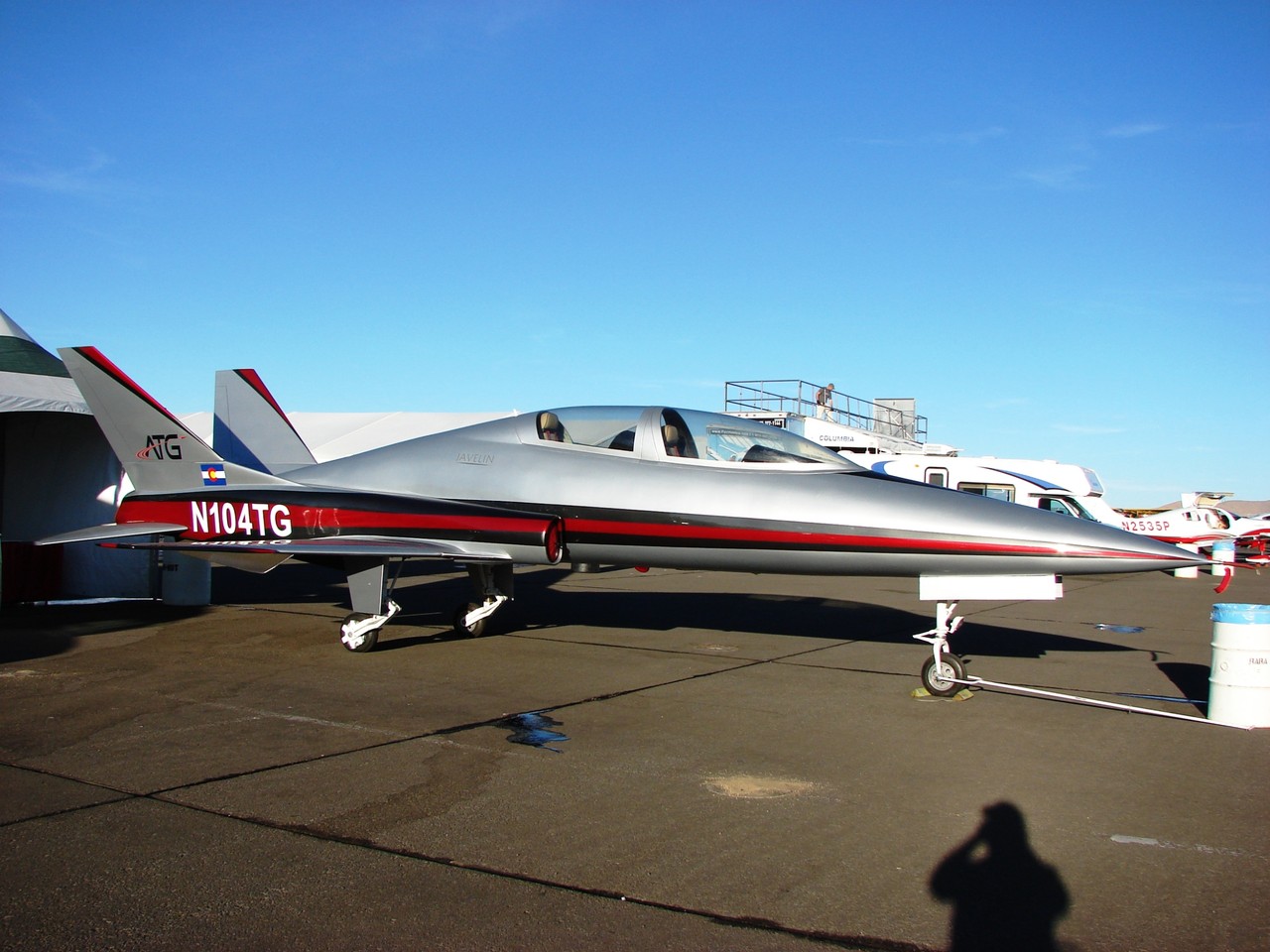
Development and Design Philosophy
Aviation Technology Group conceived the Javelin as a revolutionary bridge between military aviation technology and civilian sport flying. The company, incorporated in June 2000 after forming in 1998, established ambitious goals to deliver fighter-like performance in a personal aircraft package. The design team completed initial wind tunnel testing on February 28, 2001, following years of computational fluid dynamic analysis that shaped the aircraft's aerodynamic profile.
The Javelin's design incorporated military ejection seats and advanced avionics systems specifically intended to teach cognitive skills required for modern fighter aircraft operation. This approach reflected ATG's partnership with Israel Aircraft Industries, which planned to develop military trainer derivatives of the basic design. The collaboration suggested potential applications beyond the civilian market that initially drove the program.
The Maiden Flight
Vice President of Operations and Chief Test Pilot Robert Fuschino lifted the prototype from Centennial Airport in Colorado at precisely 7:50 AM Mountain Standard Time on October 1, 2005. The 35-minute inaugural flight exceeded expectations, with the aircraft reaching 12,000 feet altitude and achieving a maximum airspeed of 180 knots during the test program. The successful first flight validated years of design work and demonstrated the aircraft's exceptional initial climb rate of 2,800 feet per minute.
Fuschino reported that the FADEC-equipped Williams International turbofan engines proved exceptionally responsive throughout the flight envelope. The Full Authority Digital Engine Control systems represented advanced technology for the general aviation market, typically found only in larger commercial or military aircraft at the time.
Technical Specifications and Performance
The Javelin's twin Williams International turbofans enabled a maximum speed of 0.925 Mach, equivalent to 1,130 kilometers per hour at altitude. This performance placed the aircraft firmly in jet fighter territory while maintaining the two-seat configuration suitable for training or sport flying applications. The powerplant selection reflected careful consideration of both performance requirements and maintenance accessibility for civilian operators.
The aircraft's climb performance of 2,800 feet per minute rivaled military trainers, fulfilling ATG's promise to deliver military-grade capabilities. The advanced avionics suite integrated modern glass cockpit technology with systems designed to familiarize pilots with contemporary fighter aircraft interfaces and procedures.
Aviation Technology Group
ATG operated from a substantial 200-employee manufacturing facility in Albuquerque, New Mexico, representing significant investment in production capability. The company's formation specifically to develop the Javelin demonstrated the founders' commitment to the project, though this focus also created vulnerability when market conditions shifted.
The manufacturer announced the Javelin program in early 2001, generating considerable interest in the aviation community. By the time of the first flight in 2005, approximately 100 orders filled the company's books, with planned civilian deliveries beginning in 2008 and earlier availability for military trainer variants.
Market Response and Pricing
ATG initially priced the Javelin at $2.795 million, later adjusting the target to $2.5 million as the program progressed. This pricing positioned the aircraft in the upper tier of the general aviation market, competing with established turboprop aircraft and entry-level business jets. The military ejection seats and advanced avionics justified premium pricing while targeting customers seeking unique performance capabilities.
The order book of 100 aircraft represented strong initial market validation, suggesting genuine demand for high-performance sport jets. However, the extended development timeline between program announcement in 2001 and first flight in 2005 indicated the technical challenges inherent in the ambitious design goals.
Program Termination
Despite successful flight testing and accumulated orders, Aviation Technology Group filed for bankruptcy in 2008, terminating the Javelin program before any production aircraft reached customers. The financial collapse ended three years of flight testing and development that had validated the aircraft's design concepts and performance capabilities.
The bankruptcy eliminated the planned 2008 delivery schedule for civilian variants, disappointing customers who had placed deposits for aircraft. The military trainer derivatives developed with Israel Aircraft Industries also ceased development, ending potential defense market opportunities.
Legacy and Current Status
The single ATG-1 Javelin prototype remains the sole example of this ambitious design, with its current location and condition undocumented following ATG's bankruptcy. No examples survive in flying condition or museum collections, making the Javelin a footnote in aviation history rather than a successful product line.
The Javelin program demonstrated both the potential and challenges of introducing military-grade performance to civilian markets. While the aircraft successfully flew and met its design specifications, the commercial realities of aircraft manufacturing ultimately prevented the concept from reaching fruition.