
Service History
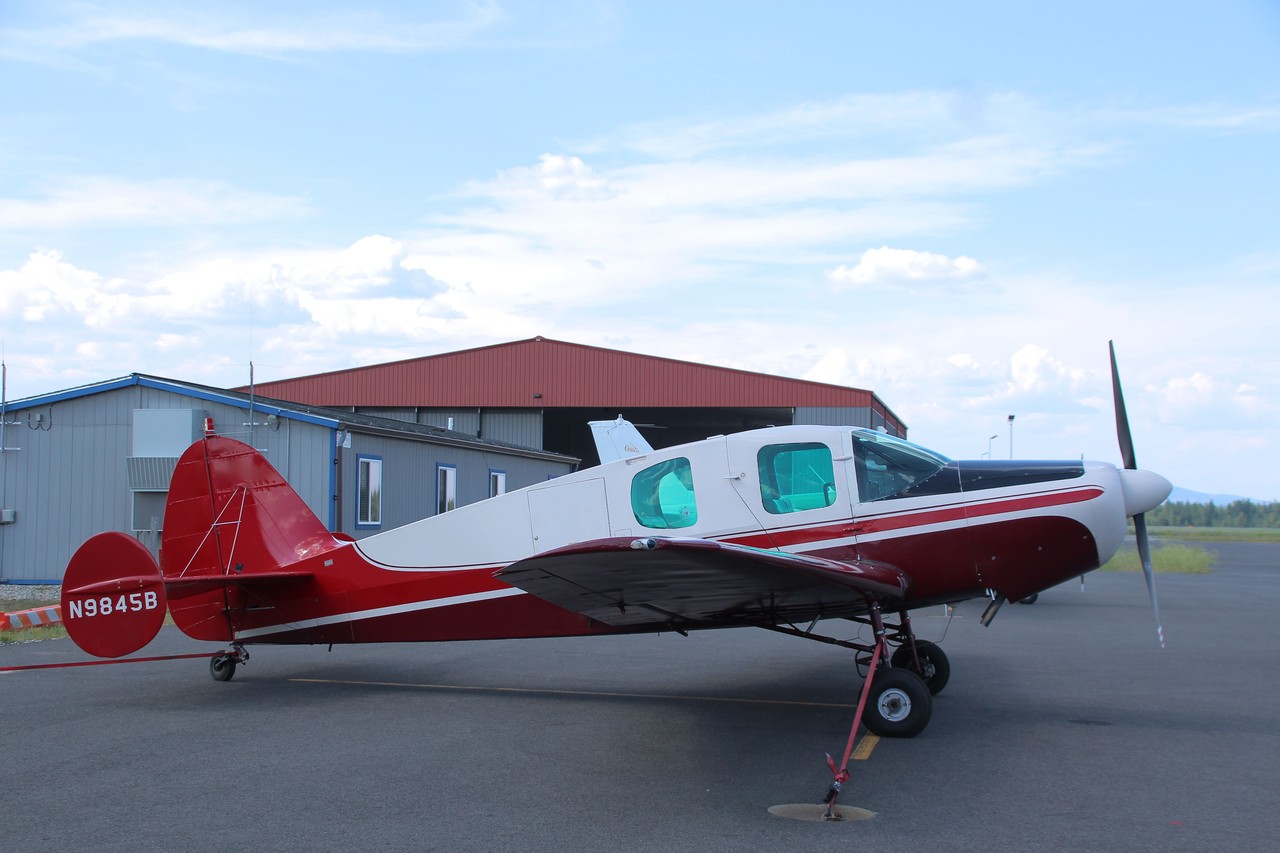
The Bellanca 14 series captured the attention of cost-conscious pilots seeking airline-like performance in personal aircraft. With approximately 600 Cruisair Seniors produced across nine variants between 1939 and 1958, the aircraft found its niche among pilot-owners who valued the combination of 150 mph cruise speeds and modest operating costs. The four-place cabin configuration, with removable rear seats in wagon variants, provided versatility for both passengers and cargo hauling missions throughout American general aviation.
The Manufacturer
Giuseppe Mario Bellanca established his aircraft company building on the success of earlier designs, including the 1927 Columbia monoplane that set a 51.5-hour endurance record. The Bellanca Aircraft Corporation operated from the 1920s through 1956, achieving notable success with the Pacemaker and Skyrocket series during the 1930s. During World War II, the company survived by performing subcontract work for manufacturers like Fairchild, halting civilian production until peace returned. Financial pressures from the postwar aircraft surplus ultimately forced Bellanca to cease operations in 1956, though various companies later acquired rights to produce derivatives.
Design Evolution
Giuseppe Mario Bellanca's design team methodically developed the 14 series from the initial 14-7 prototype through increasingly refined variants. The 14-9, introduced in 1939, became the first American light aircraft mass-produced with retractable landing gear, featuring main wheels that rotated aft into wing wells. Approximately 50 examples were built before World War II interrupted production. The enlarged 14-12 variant of 1941 introduced a four-place cabin with flaps, setting the stage for the postwar 14-13 that first flew on November 13, 1945.
Bellanca's design philosophy focused on extracting maximum performance from low-powered engines while maintaining modest purchase prices around $4,500. The wooden wing and fabric covering construction, though appearing anachronistic compared to emerging all-metal competitors, provided exceptional strength for utility operations while keeping manufacturing costs manageable.
Engine Specifications
The 14 series utilized various powerplants as the design matured. Early 14-9 models employed Ken-Royce 5F or 90-horsepower radial engines, while some variants used LeBlond 5E or Lenape radials. The breakthrough came with postwar variants adopting the 150-horsepower Franklin 6A4-150-B3 inline engine, enabling the advertised 150 mph cruise performance. The 14-19 Cruisemaster, approved by the FAA on September 26, 1949, stepped up to a 190-horsepower Lycoming O-435-A, while the final 14-19-2 variant utilized a 230-horsepower Continental O-470K engine.
Production Timeline
Type approvals marked key milestones in the series development. The 14-13 received certification on September 25, 1946, followed by the 14-13-2 on June 2, 1947, and the 14-13-3 on October 25, 1948. The 14-13-3 remained in production until 1956, representing the longest production run of any variant. The Cruisemaster variants had shorter production spans, with 99 examples of the 14-19 built between 1949 and 1951, and 104 examples of the 14-19-2 manufactured from 1957 to 1958 under successor company management.
Pilot Perspective
Pilots appreciated the Cruisair's ability to deliver impressive performance from relatively modest power. The retractable gear system, hydraulically operated on later models, contributed significantly to the clean aerodynamics enabling 150 mph cruise speeds. The strong wooden wing structure proved capable of handling utility operations that would challenge lighter aircraft, while the conventional tailwheel configuration remained familiar to pilots of the era.
Legacy and Preservation
Dozens of Bellanca Cruisairs continue flying today, maintained by enthusiasts who value their combination of vintage appeal and genuine performance capability. The Pima Air & Space Museum in Tucson, Arizona displays a 14-13-2 Cruisair Senior, while another example resides at the Tillamook Air Museum in Oregon. These survivors represent an important bridge between the pioneering retractable-gear light aircraft of the late 1930s and the modern general aviation fleet, demonstrating Giuseppe Bellanca's prescient vision of high-performance personal aircraft accessible to private pilots.