
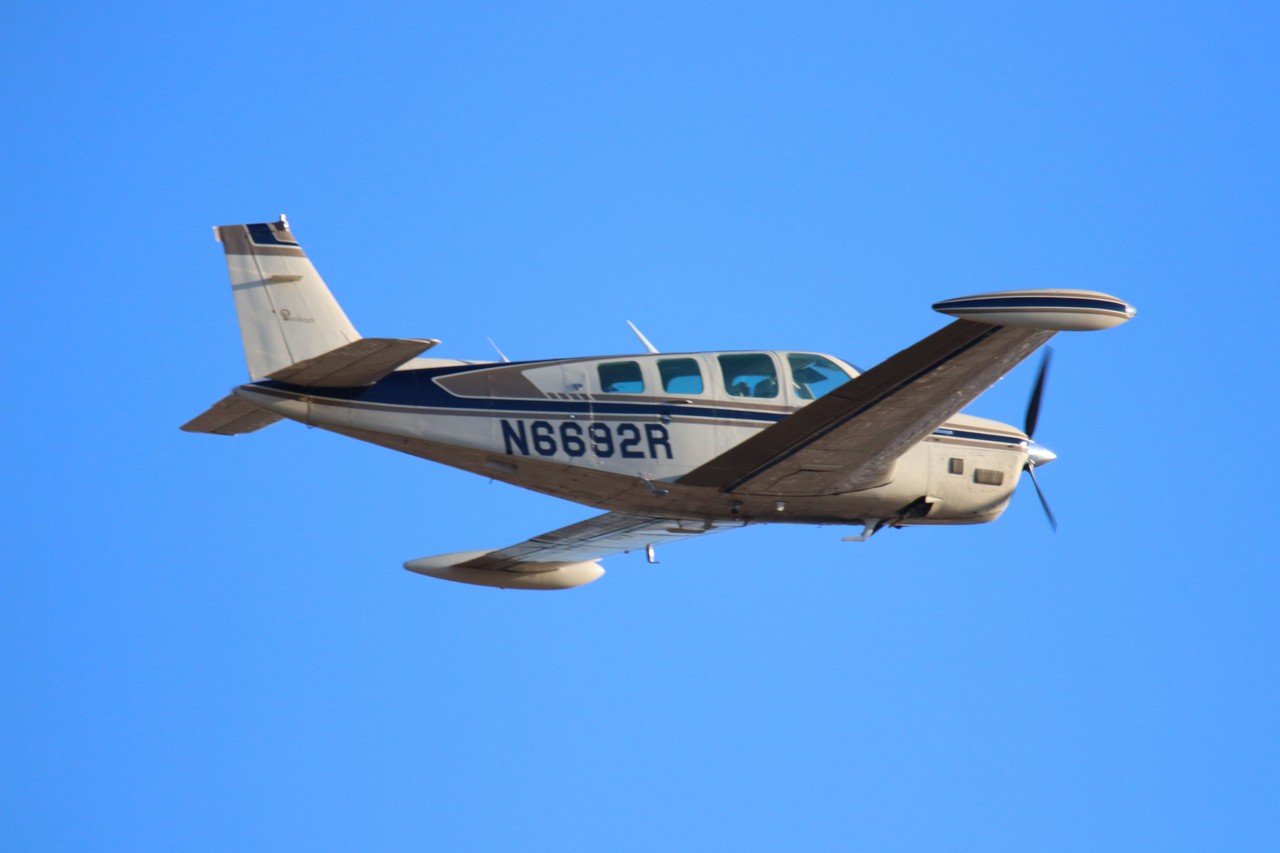
The Ultimate Single-Engine Performer
When Beechcraft introduced the Model 36 series in 1968, the company transformed its iconic V-tail Bonanza into a more practical utility aircraft with conventional empennage. The turbocharged B36TC variant, produced from 1981 to 2002, represented the apex of single-engine piston performance, delivering airliner-like capability in a six-seat package that dominated the high-end general aviation market.
Production Excellence
Beechcraft manufactured exactly 424 B36TC aircraft during its 21-year production run, with peak output occurring in the mid-1980s when annual production reached double digits. The preceding A36TC model, built from 1979 to 1981, added another 271 turbocharged Bonanzas to the fleet, with 126 aircraft delivered in 1980 alone. All production took place at Beechcraft's Wichita, Kansas facility, where skilled craftsmen assembled each aircraft to exacting standards that became synonymous with the Bonanza name.
Engineering Innovation
The B36TC's heart was the Continental TSIO-520-UB engine, a sophisticated 300-horsepower turbocharged powerplant that eliminated traditional cowl flaps in favor of an innovative louver cooling system. Continental Motors designed this six-cylinder engine specifically for high-altitude operations, enabling the B36TC to maintain sea-level power output well into the flight levels where naturally aspirated competitors struggled. The installation featured quadrant-style controls and turbine-type engine instrumentation that gave pilots a professional airline-like flying experience.
Design Philosophy
Ralph Cramer's original Bonanza design team created the Model 36 series to capture the air taxi and light cargo market while maintaining the luxury appointments that distinguished Beechcraft products. The B36TC featured a squared-off fuselage with four side windows per row and a large two-piece utility door that transformed cargo loading compared to earlier V-tail models. Engineers stretched the fuselage beyond the original Model 35 dimensions and incorporated longer wingtips that added six inches to the wingspan, improving both fuel capacity and high-altitude handling characteristics.
The Beechcraft Legacy
Beechcraft Corporation, founded by Walter H. and Olive Ann Beech in 1932, pioneered the postwar high-performance single-engine market segment. The company's commitment to quality and innovation made the Bonanza series the longest continuously produced aircraft line in aviation history, with more than 17,000 examples delivered across all variants. When Beechcraft merged with Raytheon in 1980, production continued uninterrupted, later transitioning through Hawker Beechcraft to today's Textron Aviation, which still manufactures the G36 Bonanza with modern glass cockpit technology.
Operational Superiority
Pilots praised the B36TC for its exceptional high-altitude performance and smooth handling characteristics that made complex instrument approaches routine rather than challenging. The turbocharged engine maintained full power output to significantly higher altitudes than competing aircraft, while the Bonanza's legendary speed and stability provided a margin of safety that professional pilots demanded. Flight schools and air taxi operators appreciated the aircraft's generous 3,900-pound gross weight and ability to carry six occupants with meaningful baggage loads.
Market Impact
The B36TC captured the premium segment of the single-engine market by delivering twin-engine-like performance with lower operating costs and insurance requirements. Its club seating configuration and luxury appointments attracted corporate operators who needed to transport executives efficiently, while the large cargo door appealed to operators requiring mixed passenger and freight capability. The model's high-altitude performance made it particularly valuable for operators in mountainous regions where density altitude challenges grounded lesser aircraft.
Enduring Legacy
Thousands of B36TC aircraft remain active in the global general aviation fleet, testament to Beechcraft's robust construction and the model's enduring appeal. The turbocharged Bonanza established performance benchmarks that influenced competitor designs throughout the 1980s and 1990s, while its combination of speed, comfort, and utility created the template for modern high-performance singles. Today's Bonanza G36, while naturally aspirated, traces its lineage directly to innovations pioneered in the B36TC program, ensuring that this remarkable aircraft's influence continues in the 21st century.