
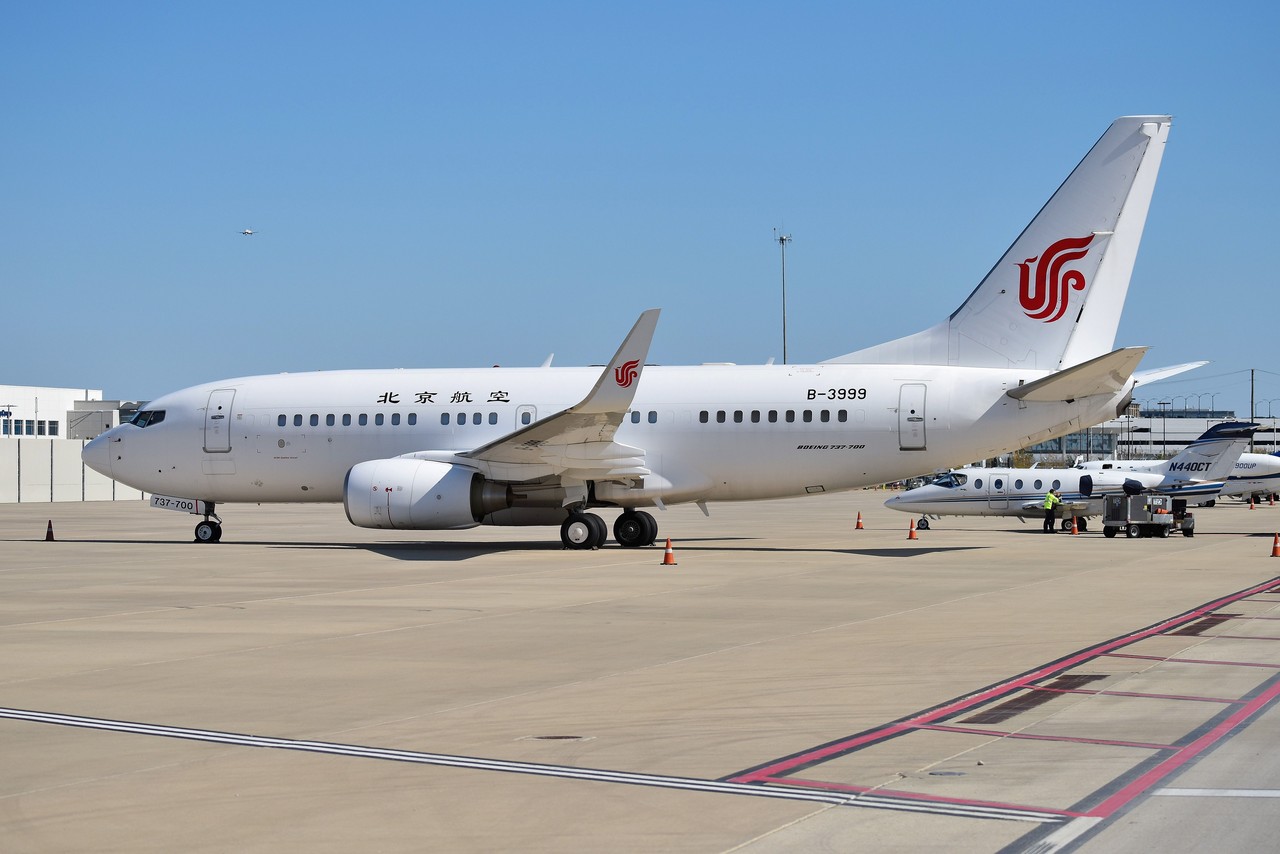
Development and Design
The 737 MAX 7 emerged from Boeing's ambitious plan to modernize its best-selling 737 family without developing an entirely new aircraft. Announced on August 30, 2011, the MAX program targeted airlines seeking significant fuel savings while maintaining operational familiarity with existing 737 fleets. Boeing's engineering team, initially led by Jim Albaugh until June 26, 2012, and subsequently by Ray Conner, focused on achieving 13-14% fuel efficiency gains over the 737 Next Generation series.
The most significant design challenge involved accommodating the larger-diameter LEAP-1B engines, which required flattening the aircraft's undercarriage and repositioning engine components. Boeing incorporated split-tip winglets and advanced aerodynamics alongside the new powerplants. The controversial MCAS (Maneuvering Characteristics Augmentation System) flight control software was added to address handling characteristics created by the engine modifications.
Construction of the first flight-test aircraft began on November 22, 2017, at Boeing's Renton facility in Washington. The initial 65-foot wing spar had entered production in October 2017, marking a crucial manufacturing milestone. The completed aircraft rolled out on February 5, 2018, culminating in its maiden flight on March 16, 2018, from Renton.
Manufacturing and Production
Boeing's global manufacturing network produces the 737 MAX 7 through a complex supply chain. Primary assembly occurs at the Renton Factory in Washington, while Spirit AeroSystems in Wichita, Kansas, constructs fuselage sections. Spirit completed the first MAX fuselage on August 13, 2015, establishing the production foundation for the entire MAX family. Boeing also operates a completion facility in Zhoushan, China, which delivered its first MAX aircraft to Air China on December 15, 2018, though this was a MAX 8 variant.
Despite this manufacturing capability, the MAX 7 has never entered full commercial production. Only the single flight-test aircraft has been completed as of late 2025, with certification delays pushing the first deliveries into 2026. The initial delivery is expected to be a Boeing Business Jet (BBJ) MAX 7 rather than a commercial passenger variant.
Engine Technology
CFM International, the 50/50 joint venture between GE Aerospace and Safran Aircraft Engines, developed the LEAP-1B specifically for the 737 MAX family. Flight testing of the LEAP-1B began on May 7, 2015, with production commencing around 2016. The engine incorporates revolutionary technologies including 3D-printed components and ceramic matrix composites, delivering 15% better fuel efficiency compared to the previous CFM56 engines.
The LEAP-1B's advanced design provides superior power-to-weight ratios while maintaining high reliability standards established during extensive testing phases. These improvements directly contribute to the MAX 7's promised efficiency gains and extended range capabilities.
Commercial Prospects and Challenges
Southwest Airlines emerged as the MAX 7's launch customer with an order for 234 aircraft, recognizing the variant's potential for high-frequency, short-haul operations. WestJet initially ordered 22 units but later converted these to the larger MAX 8 configuration. The aircraft's original service entry was scheduled for January 2019, but regulatory challenges following the MAX family's global grounding significantly delayed certification.
Southwest removed the MAX 7 from its near-term planning in January 2024 while maintaining its long-term commitment to the aircraft. The airline now anticipates deliveries beginning in 2026-2027, contingent on successful certification completion. This delay reflects broader challenges facing the MAX program following two fatal accidents involving the MAX 8 variant in 2018 and 2019.
Boeing Business Jet Variant
The BBJ MAX 7, unveiled in October 2016, targets the corporate aviation market with impressive capabilities. This variant offers a 7,000 nautical mile range while promising 10% lower operating costs compared to competing business jets. The enhanced range and efficiency make it particularly attractive for transcontinental and international corporate missions.
The Boeing Legacy
The Boeing Company traces its origins to 1916 when William E. Boeing founded the enterprise that would become a commercial aviation pioneer. Boeing revolutionized air travel with groundbreaking aircraft including the 707 in 1958 and the original 737 in 1967. The 1997 merger with McDonnell Douglas expanded Boeing's portfolio and capabilities significantly.
Today, The Boeing Company operates from its Arlington, Virginia headquarters, continuing to compete in the global commercial aircraft market. The 737 family has achieved remarkable success with over 10,000 aircraft built since 1967, making it the world's best-selling commercial airliner series.
Current Status and Future
As of November 2025, zero 737 MAX 7s serve in commercial operation, with only the single flight-test aircraft representing the entire fleet. This unique situation reflects the aircraft's prolonged certification process and the broader challenges facing Boeing's MAX program. Over 5,000 MAX family orders demonstrate continued market confidence, though the MAX 7's specific contribution to these numbers remains limited.
The aircraft's eventual entry into service will be crucial for Boeing's strategy against the competing Airbus A320neo family. Success will depend on achieving certification approval and convincing airlines that the promised efficiency improvements justify the extended development timeline.