
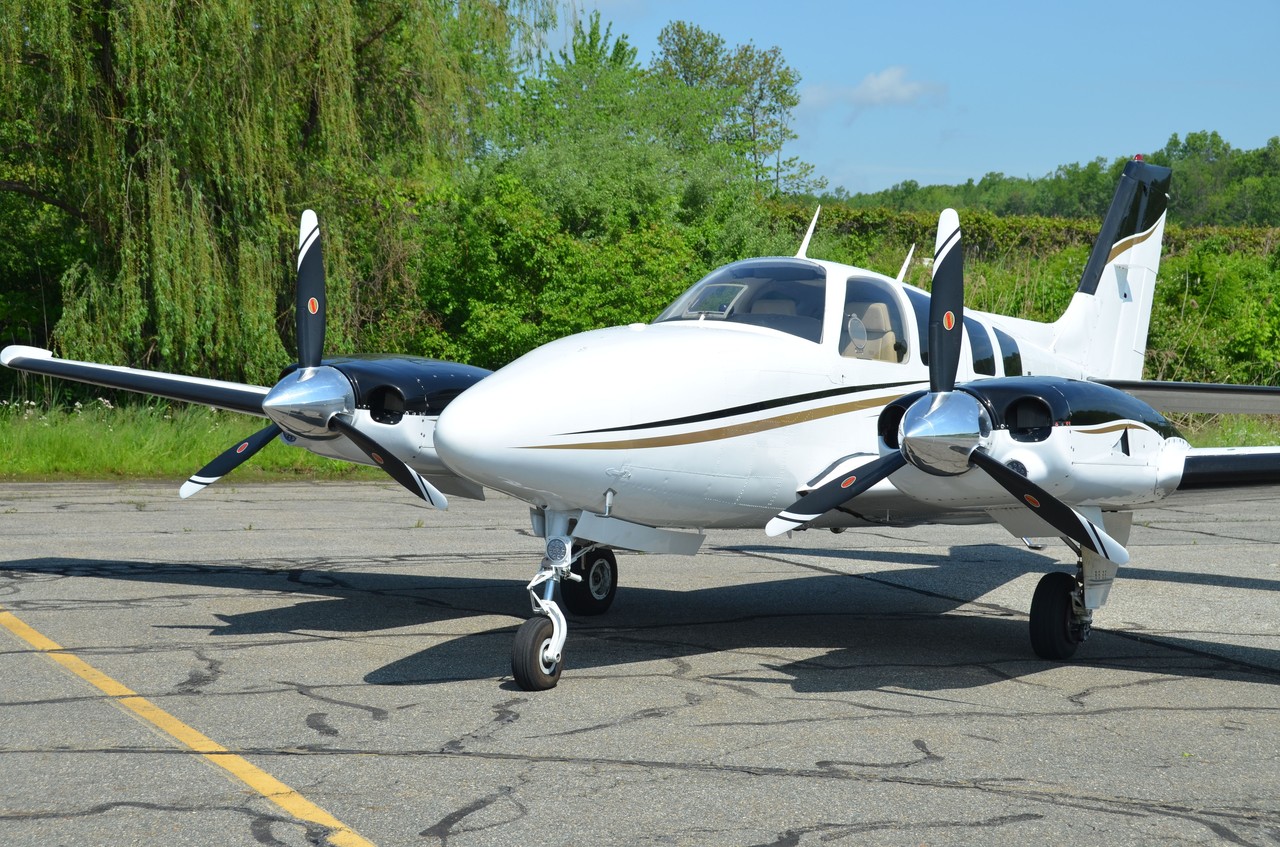
Service History
The 58P Baron carved out a specialized niche in corporate aviation during its nine-year production run. While the standard Baron 58 outsold the pressurized variant by nearly three to one, the 58P attracted operators requiring reliable over-weather capability without stepping up to turbine power. The aircraft served owner-pilots and charter operators who needed the flexibility to climb above weather systems while maintaining the familiar operating characteristics of piston engines.
Peak production occurred in 1980 when Beechcraft delivered 83 units, reflecting strong demand during the general aviation boom of that era. However, by 1983, production had plummeted to just 11 aircraft as economic conditions and high interest rates severely impacted the business aircraft market.
The Manufacturer
Beechcraft Aircraft Corporation, founded by Walter and Olive Ann Beech in 1932, established itself as a premier manufacturer of business and military aircraft from its headquarters in Wichita, Kansas. The company built the 58P at its Salina facility, which handled production of the Baron line while the main Wichita plant focused on larger aircraft like the King Air series.
Beechcraft's reputation for quality construction and attention to detail made the Baron family particularly attractive to pilots stepping up from single-engine aircraft. The company changed hands several times during the Baron's production era, becoming part of Raytheon in 1980 before eventually joining Textron Aviation, where the Baron legacy continues today with the modern G58.
Engine & Technical Innovation
Continental Motors' TSIO-520-L engines provided the 58P with its high-altitude capability through turbocharging technology that maintained sea-level power output up to the engine's critical altitude. Each 520-cubic-inch displacement engine featured fuel injection and produced 310 horsepower, enabling the aircraft to climb efficiently to altitudes where pressurization became essential.
The pressurization system maintained a maximum cabin differential of 3.9 pounds per square inch, allowing occupants to experience a cabin altitude of approximately 8,000 feet while cruising at 20,000 feet. This capability distinguished the 58P from the turbocharged but unpressurized 58TC variant introduced simultaneously in 1976.
Pilot Perspective
Pilots appreciated the 58P's combination of familiar piston-engine operations with jet-like altitude capability. The aircraft typically cruised at altitudes between 16,000 and 20,000 feet, above most weather and turbulence while remaining within oxygen-mask requirements for emergency descent procedures.
The Baron's docile handling characteristics made it popular among pilots transitioning to twin-engine aircraft. Its relatively benign single-engine performance and predictable flight characteristics built confidence, while the pressurization system opened up flight levels previously accessible only to turbine aircraft operators.
Operators valued the 58P's payload flexibility, as it could accommodate varying combinations of passengers and baggage while maintaining reasonable fuel loads for trips up to 800 nautical miles. The aircraft's ability to operate from shorter runways while providing cabin-class comfort made it particularly attractive for accessing smaller airports serving resort destinations or remote business locations.
Production & Legacy
The 58P's production history reflected broader trends in general aviation manufacturing during the late 1970s and early 1980s. Starting with 34 aircraft in its inaugural 1976 model year, production peaked at 83 units in 1980 before declining sharply as economic conditions deteriorated and product liability concerns mounted.
By 1985, when the final 27 examples rolled off the Salina production line, Beechcraft had built exactly 495 pressurized Barons. The aircraft's $473,000 base price in its final year reflected both inflation and the increasing complexity of avionics and systems required by business aircraft operators.
The 58P's legacy lives on in the used aircraft market, where well-maintained examples continue serving corporate operators and affluent owner-pilots. Many have been upgraded with modern avionics systems, extending their utility well beyond their original design parameters. While production ended nearly four decades ago, the 58P demonstrated that pressurized piston twins could provide a viable stepping stone between unpressurized aircraft and full turbine operations, a niche that remains relevant in today's business aviation market.
The knowledge gained from 58P operations influenced Beechcraft's later designs, particularly in cabin pressurization systems and engine installation techniques that would benefit subsequent Baron variants and other company products.