
Service History
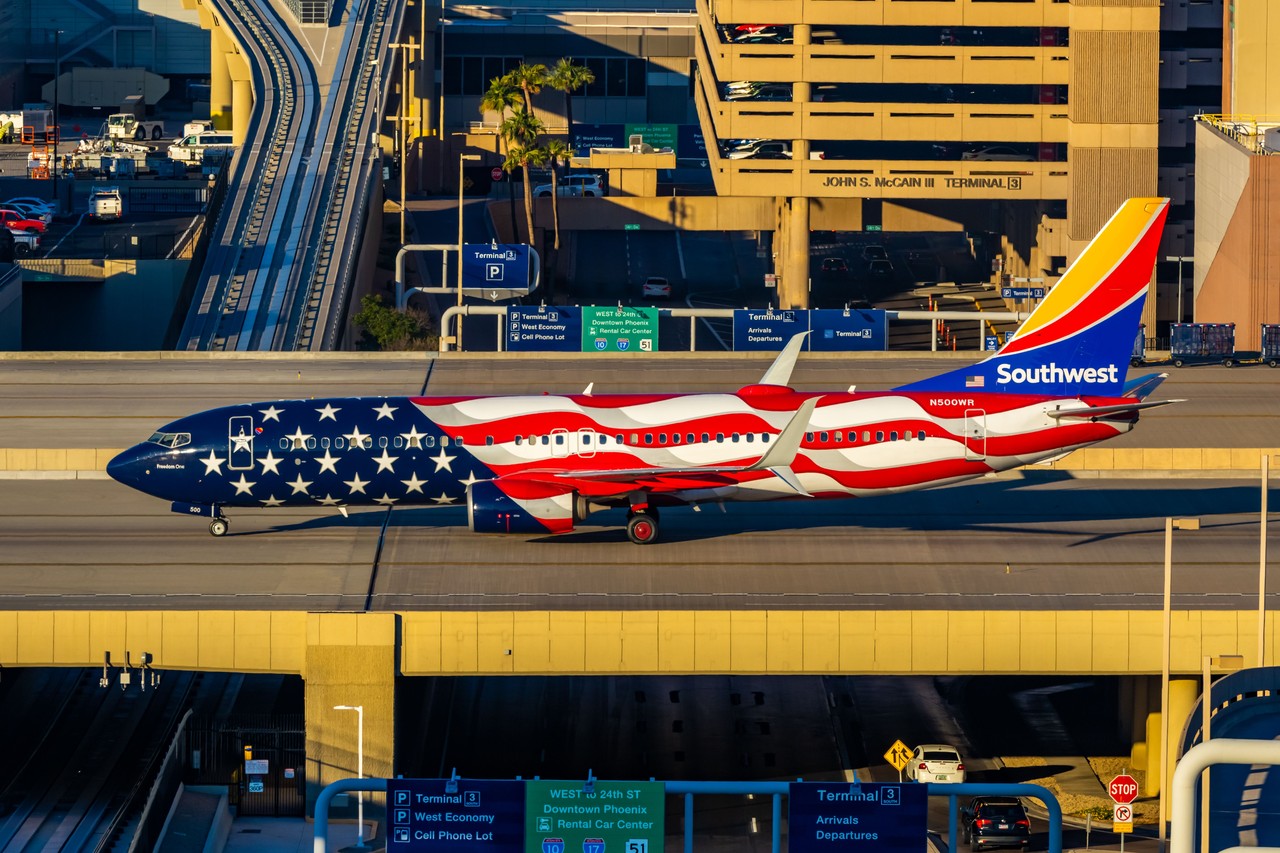
The 737-800 dominated the narrow-body market by becoming the world's most-produced commercial airliner variant, with 5,205 units built including 4,991 commercial, 191 military, and 23 corporate aircraft. Launch customer Hapag-Lloyd Flug received the first aircraft in April 1998, and by 1999 the -800 had become the best-selling Next Generation variant. Major operators including Ryanair, Southwest Airlines, and United Airlines adopted the type en masse, with the aircraft enabling the explosive growth of low-cost carriers through its combination of efficiency, reliability, and reduced training requirements for pilots transitioning from earlier 737 variants.
Military Variants
While designed as a commercial airliner, the 737-800 spawned significant military derivatives, most notably the P-8 Poseidon maritime patrol aircraft based on the -800's fuselage. The United States Air Force selected the 737-800 platform for the VC-25B presidential transport program, with two aircraft designated 737-800A serving as replacements for the aging VC-25A Air Force One fleet. These military applications demonstrated the platform's versatility beyond passenger service, though the baseline 737-800 saw no direct combat deployment.
The Manufacturer
Boeing Commercial Airplanes developed the 737-800 as part of the Next Generation program launched September 5, 1994, targeting modernization of airline fleets and competition with the Airbus A320 family. The Boeing Company, founded in 1916, consolidated all 737 production at its Renton, Washington facility in December 1970, where every 737-800 was assembled using fuselages manufactured in Wichita, Kansas. Production rates climbed from 31 aircraft per month in 2005 to 57 per month by 2019, when Boeing ceased passenger 737-800 production to focus on the MAX series after delivering the final aircraft to KLM in December 2019.
Engine & Technical Innovation
CFM International's CFM56-7B series engines powered every 737-800, delivering between 19,500 and 27,300 pounds of thrust through advanced high-bypass turbofan technology. This joint venture between GE Aerospace and Safran Aircraft Engines produced engines achieving up to 7 percent better fuel efficiency compared to 737 Classic variants, with dispatch reliability exceeding 99.99 percent. The -7B variant incorporated dual annular combustors for reduced emissions and represented the culmination of CFM56 development that spanned 46 years from 1974 to 2020.
Performance & Pilot Experience
Test pilots Mike Hewett, Ken Higgins, and Jim McRoberts guided the 737-800's development through its maiden flight program, with the prototype rolling out on June 30, 1997. The aircraft achieved certification for ETOPS-180 operations, enabling extended overwater flights previously restricted to wide-body aircraft. Pilots appreciated the type's familiar handling characteristics inherited from earlier 737s while benefiting from upgraded avionics, redesigned wings with optional winglets, and a maximum cruise speed of Mach 0.82 at altitudes up to 41,000 feet with a climb rate of approximately 2,500 feet per minute.
Production Legacy
The final passenger 737-800s rolled off Boeing's Renton production line on January 5, 2020, when China Eastern Airlines took delivery of two aircraft, marking the end of a 23-year production run. The type's success stemmed from its stretched fuselage design that replaced the less popular 737-400 while offering 20 percent more capacity than the 737-700 in a package that required minimal pilot retraining. As of 2025, thousands of 737-800s remain in active service worldwide, with the type serving as the bridge between Boeing's Classic 737s and the MAX series, having established the template for modern single-aisle aviation that enabled affordable air travel for millions of passengers globally.