
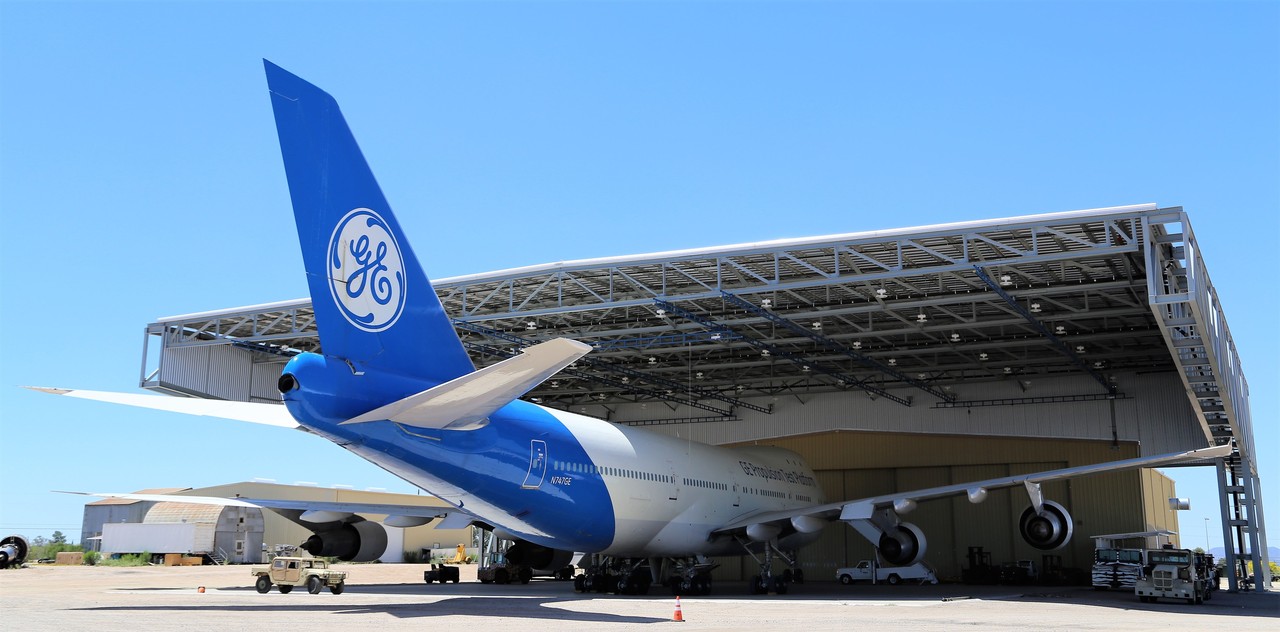
Transforming Commercial Aviation
The 747-100 emerged from Boeing's collaboration with Pan American World Airways, which sought an aircraft capable of handling the explosive growth in international air travel during the 1960s. Pan Am's 1966 order for 25 aircraft at $525 million—equivalent to $3.8 billion today—provided Boeing with the financial foundation to develop what would become known as the "Jumbo Jet." The aircraft's unprecedented size allowed airlines to transport twice as many passengers as the largest existing jets, fundamentally changing the economics of long-haul aviation.
Design Innovation and Leadership
Joe Sutter led the Boeing design team assigned to the project in 1965, creating an aircraft that would establish new standards for commercial aviation. The design featured several groundbreaking innovations, including the distinctive upper deck "hump" that housed first-class seating and lounges while providing space for future cockpit relocation in stretched variants. The wide fuselage accommodated up to 10-abreast seating in economy class, a significant departure from the narrow-body aircraft that dominated commercial aviation.
The prototype, designated City of Everett and registered N7470, rolled out in 1968 after an intensive development program. Boeing retained this aircraft throughout its service life, and it now resides at The Museum of Flight in Seattle as a testament to the program's achievements.
Production and Manufacturing
Boeing concentrated 747-100 production at its massive Everett facility, where assembly began in 1967. The production timeline reflected the challenges of introducing such a revolutionary aircraft, with peak output occurring in 1970 when 175 examples rolled off the assembly line. Manufacturing continued through 1981, though production slowed dramatically after 1975 as Boeing focused on improved variants. Of the 168 aircraft built, 167 were delivered to customers while Boeing retained the prototype.
The production years tell the story of the variant's commercial lifecycle: 20 aircraft in 1969, followed by the peak year of 1970, then declining numbers through the mid-1970s before a final surge of 30 aircraft between 1980 and 1981 as airlines sought the proven design.
Powerplant and Performance
Four Pratt & Whitney JT9D-3A high-bypass turbofan engines powered the 747-100, each producing between 43,500 and 45,000 pounds of thrust. These engines represented the first generation of high-bypass turbofans designed specifically for widebody aircraft, enabling efficient long-range flight despite the aircraft's massive size. The JT9D family, manufactured by Pratt & Whitney—a division of what is now RTX Corporation—encountered early reliability issues that were progressively resolved in later variants.
The aircraft achieved a maximum speed of Mach 0.86 (917 kilometers per hour) and could reach a service ceiling of 45,000 feet. With a typical passenger load of 366, the 747-100 could fly 5,800 miles, making it ideal for transcontinental and transoceanic routes that previously required fuel stops.
Commercial Service Launch
Pan American World Airways received the first production 747-100 on January 15, 1970, immediately placing it into service on the prestigious New York to London route. Flight 2, the inaugural commercial service, carried between 335 and 366 passengers—more than double the capacity of any aircraft previously operated on the route. This launch established the 747-100 as the new standard for high-capacity, long-range air travel.
Other major operators quickly followed Pan Am's lead. Japan Air Lines ordered four 747-100SR variants on October 30, 1972, specifically designed for high-density domestic routes with seating for up to 563 passengers. All Nippon Airways acquired 20 of the 747-100BSR variants, while Northwest Airlines operated ten standard 747-100s plus five 747-100B models. Flying Tiger Line became the first operator of the 747-100SF freighter variant in 1974, opening new possibilities for cargo transportation.
The Boeing Company Legacy
Boeing, founded in 1916, had established itself as a pioneer in commercial aviation with earlier successes like the 707. The 747 program represented the company's most ambitious undertaking to that point, requiring construction of the world's largest building by volume at the Everett facility. Boeing continued operating as an independent company until merging with McDonnell Douglas in 1997, having previously acquired Rockwell International's aerospace division in 1996.
The success of the 747-100 positioned Boeing as the dominant force in widebody aircraft manufacturing throughout the 1970s and 1980s. The company delivered the final 747 variant to Atlas Air in January 2023, concluding a 54-year production run that totaled 1,574 aircraft across all variants.
Current Status and Cultural Impact
As of 2025, fewer than 65 total 747s remain active across all variants, with most 747-100s retired from commercial service. The aircraft earned lasting cultural significance as the "Jumbo Jet," symbolizing aviation's jet age and appearing in popular films including Airport in 1970. The 747-100's influence extended far beyond its operational service, inspiring all subsequent large airliner designs and enabling the mass global air travel that defined the late 20th century.
The prototype City of Everett serves as the most notable preserved example, allowing visitors to experience the aircraft that launched the widebody era and carried billions of passengers across the world's oceans.