
Service History
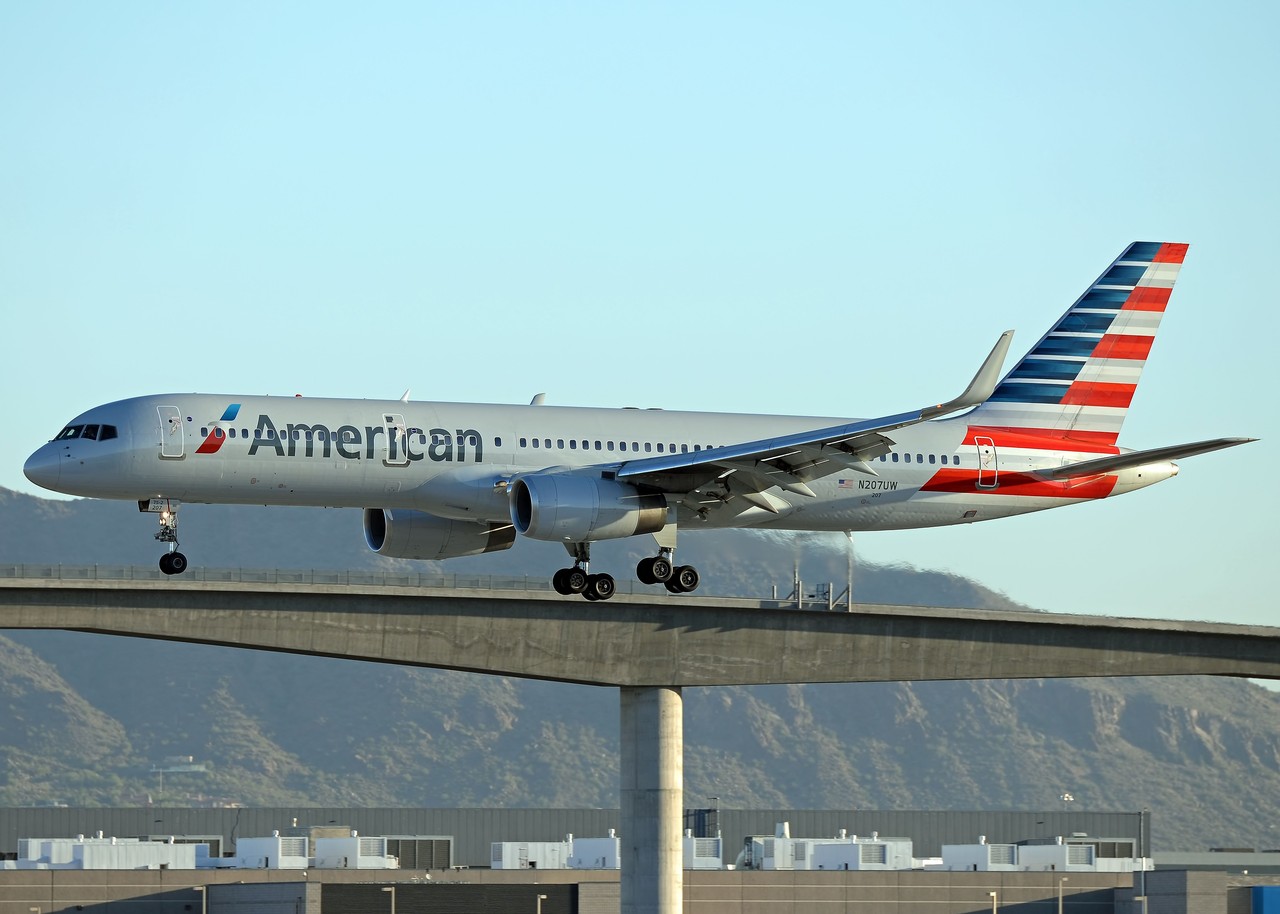
The 757-200 transformed airline operations by enabling carriers to profitably serve thin long-haul routes previously requiring widebody aircraft. Eastern Air Lines launched commercial service on January 1, 1983, operating the inaugural flight between Atlanta and Tampa. Delta Air Lines became the first operator of the Pratt & Whitney-powered variant on November 5, 1984, eventually building the world's largest 757 fleet with 127 aircraft by 2018.
Major operators leveraged the 757-200's unique capabilities to open new markets. United Airlines pioneered transatlantic narrowbody service with routes like Newark to Berlin, while Icelandair built its hub strategy around 26 of the type. Cargo carriers embraced the dedicated 757-200F freighter variant, with UPS receiving the first example in September 1987. FedEx Express operated 111 freighters while UPS flew 75, making the 757-200F the backbone of express cargo networks.
The Manufacturer
The Boeing Company designed the 757 through its Commercial Airplanes division, drawing on decades of airliner experience dating to the revolutionary 707 jetliner of 1958. Founded in 1916, Boeing had established itself as America's premier aircraft manufacturer through World War II bomber production including the B-17 Flying Fortress and B-29 Superfortress. The company dominated the jet age of the 1960s before acquiring McDonnell Douglas in 1997, ending that storied manufacturer's independent existence.
Boeing's Renton factory in Washington served as the exclusive 757 production site, the same facility that had manufactured the 707, 727, and 737. The integrated production approach allowed Boeing to leverage decades of manufacturing expertise while maintaining quality control across the entire program.
Engine & Technical Innovation
Boeing offered customers a choice between two advanced high-bypass turbofan powerplants. The Rolls-Royce RB211-535 series, certified on December 21, 1982, delivered 37,000 to 43,100 pounds of thrust and built upon the reliability of over 10,000 RB211 engines produced since 1969. Pratt & Whitney's competing PW2000 series, introduced with the 757 in 1984, provided similar thrust levels while incorporating early Full Authority Digital Engine Control (FADEC) systems for enhanced reliability and fuel efficiency.
The 757-200's advanced supercritical wing design enabled Extended-range Twin-engine Operational Performance Standards (ETOPS) certification, allowing twin-engine operations over vast oceanic distances previously restricted to three or four-engine aircraft. Leading-edge slats provided exceptional short-field performance, enabling operations from challenging airports with hot, high-altitude conditions.
Development & Testing
Boeing's engineering team, working under the initial designation 7N7, developed the 757 as a direct 727 replacement with dramatically improved economics. The design achieved certification in just 27 months from program launch, reflecting Boeing's mature development processes. Test pilots John H. Armstrong and Samuel Lewis Wallick Jr. conducted the maiden flight on February 19, 1982, from Renton Municipal Airport, completing a 2 hour 31 minute flight despite experiencing a right engine stall that demonstrated the crew's skill and the aircraft's inherent safety.
Performance & Capabilities
The 757-200 achieved a maximum speed of Mach 0.86 (590 mph) with a service ceiling of 42,000 feet and impressive initial climb rates exceeding 6,200 feet per minute. Its 3,915 nautical mile range with 239 passengers enabled previously impossible route structures, while the two-pilot glass cockpit eliminated the flight engineer position required on earlier generation aircraft, significantly reducing operating costs.
The aircraft's fuel efficiency represented an 80 percent improvement over the 727 it replaced, making marginal routes profitable while opening new possibilities for point-to-point service bypassing traditional hub airports.
Production & Legacy
Boeing produced exactly 913 examples of the 757-200 between 1981 and 2004, part of 1,050 total 757 family aircraft delivered to 54 customers worldwide. The freighter variant accounted for 80 additional aircraft, serving specialized cargo operators. Production concluded on October 28, 2004, with final delivery occurring November 28, 2005, to Shanghai Airlines.
As of August 2018, 611 of all 757 variants remained in active service, though numbers have declined without a direct replacement offering comparable performance. The prototype aircraft N757A continues serving Boeing as an electronics testbed, including modifications to support F-22 Raptor avionics development. Delta Flight Museum preserves 757-225 N144DC (serial number 22191) as a permanent exhibit, ensuring future generations can appreciate this revolutionary design that redefined narrowbody aviation capabilities.