
Service History
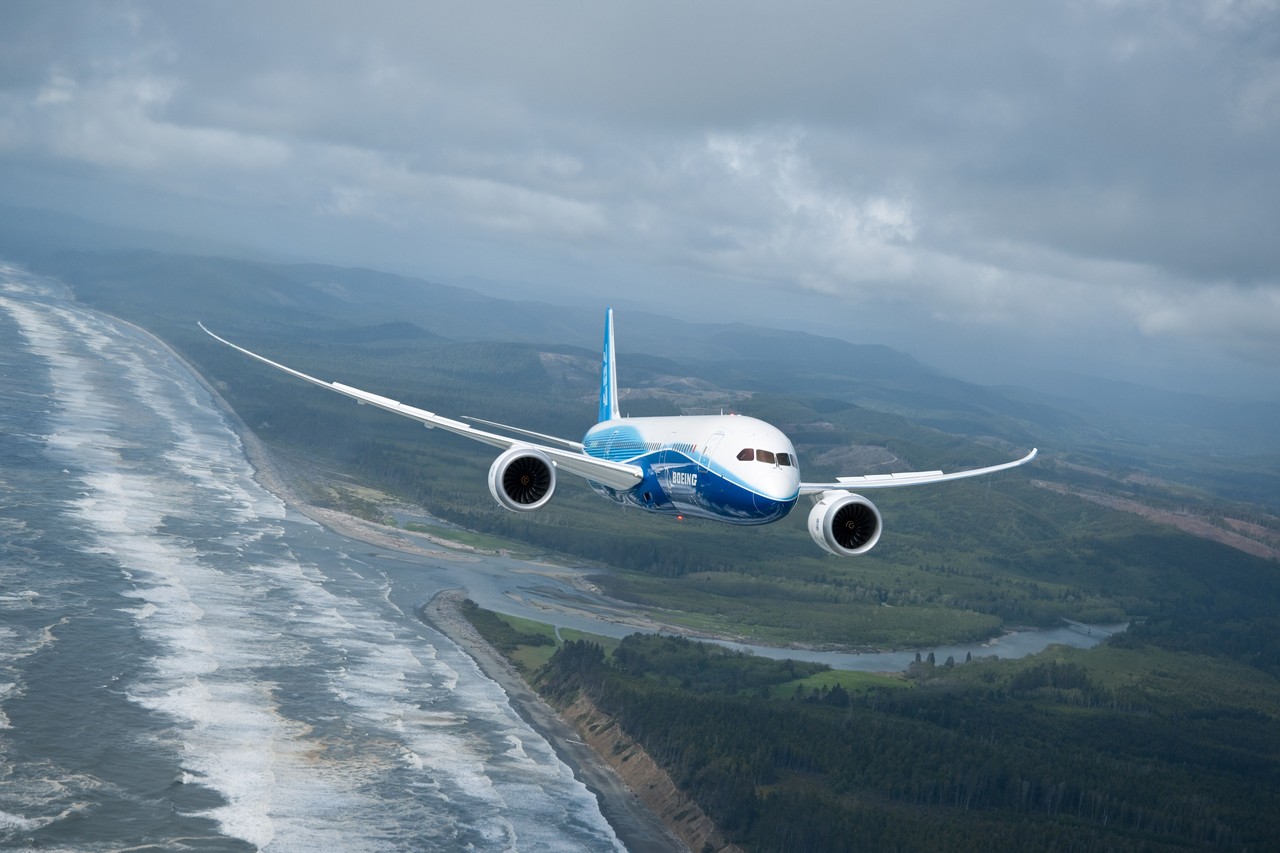
The 787-8 transformed long-haul aviation by enabling airlines to operate profitable point-to-point routes previously reserved for larger, less efficient aircraft. All Nippon Airways received the first delivery on September 25, 2011, at Boeing's Everett factory, operating the inaugural commercial flight on October 26, 2011, from Tokyo to Hong Kong. By June 2025, over 1,000 Boeing 787s across all variants had been delivered worldwide, with the -8 model forming the foundation of this success.
United Airlines became the largest 787 operator with orders totaling 221 aircraft across variants, while early adopters included Air China, China Eastern, China Southern, and Ethiopian Airlines. The aircraft's ability to carry up to 335 passengers in high-density configuration while maintaining exceptional fuel economy made it attractive to carriers seeking to optimize route profitability on medium to long-haul sectors.
The Manufacturer
Boeing Commercial Airplanes, a division of The Boeing Company, developed the 787-8 as part of its long heritage of aviation innovation dating to 1916. Founded by William E. Boeing, the company pioneered military aviation with the B-17 Flying Fortress in 1935 and launched the jet age with the 707 in 1958. The 1997 merger with McDonnell Douglas consolidated Boeing's position as a global aerospace leader, ending the McDonnell Douglas brand while incorporating its technological expertise.
Production began in June 2006 at Boeing's Everett, Washington facility, with a second assembly line established in North Charleston, South Carolina in 2011. Boeing consolidated all 787-8 final assembly in South Carolina by October 1, 2020, where production continues as of 2025 with no specified termination date.
Engine & Technical Innovation
The 787-8 offers operators a choice between two advanced powerplants: the General Electric GEnx-1B or Rolls-Royce Trent 1000, both producing approximately 74,000 pounds of thrust. These high-bypass turbofan engines incorporate composite fan blades and chevron technology for noise reduction while delivering 15 to 20 percent fuel efficiency improvements over previous generation engines.
General Electric began GEnx production in 2006, manufacturing thousands across variants, while Rolls-Royce introduced the Trent 1000 in 2007, delivering over 1,000 units by 2020. Early Trent 1000 models experienced blade corrosion issues between 2016 and 2020, subsequently addressed through comprehensive redesigns.
The aircraft's revolutionary design employs carbon-fiber-reinforced composites for 50 percent of its structure, replacing traditional aluminum construction. This material innovation, combined with electrical systems substituting for hydraulic components, contributes significantly to weight reduction and operational efficiency. The cabin features higher pressure and humidity levels than conventional aircraft, along with larger windows, enhancing passenger comfort on extended flights.
Performance Specifications
Measuring 186 feet 11 inches in length with a wingspan of 197 feet 3 inches and height of 55 feet 6 inches, the 787-8 achieves a maximum cruise speed of Mach 0.85 (594 mph). The aircraft operates with a two-pilot flight crew plus minimum cabin crew of two, climbing at an initial rate of approximately 2,800 feet per minute to a service ceiling of 43,100 feet.
The 787-8's exceptional range of 7,355 nautical miles enables non-stop service on routes like Seattle to Delhi or Los Angeles to Melbourne, opening new market opportunities for airlines. This capability, combined with reduced operating costs, allowed carriers to launch previously uneconomical city-pair services.
Design Development
Boeing executives initiated the 787 program in January 2003, originally designating the aircraft as 7E7 before adopting the Dreamliner name. The company selected Everett for final assembly on December 16, 2003, with design objectives focused on replacing aging Boeing 767s while incorporating advanced aerodynamics and materials technology.
The global supply chain included partnerships with companies like Alenia for fuselage sections, representing a significant shift from traditional aircraft manufacturing approaches. First flight occurred on December 15, 2009, from Paine Field in Snohomish County, Washington, though the program experienced delivery delays of approximately 3.5 years from original schedules.
Legacy and Current Status
As of June 2025, numerous 787-8s remain in active service worldwide, with production records indicating high utilization rates and minimal retirements. Test aircraft including N787EX and N787BX, both first flown in June 2009, have been preserved for historical significance.
The 787-8 holds cultural importance as aviation's first composite-heavy airliner, frequently featured in documentaries highlighting modern aerospace engineering. While initial production delays exposed supply chain vulnerabilities, the aircraft ultimately cemented Boeing's reputation for innovation in efficient long-haul transportation, establishing new standards for fuel economy and passenger experience in commercial aviation.