
Service History
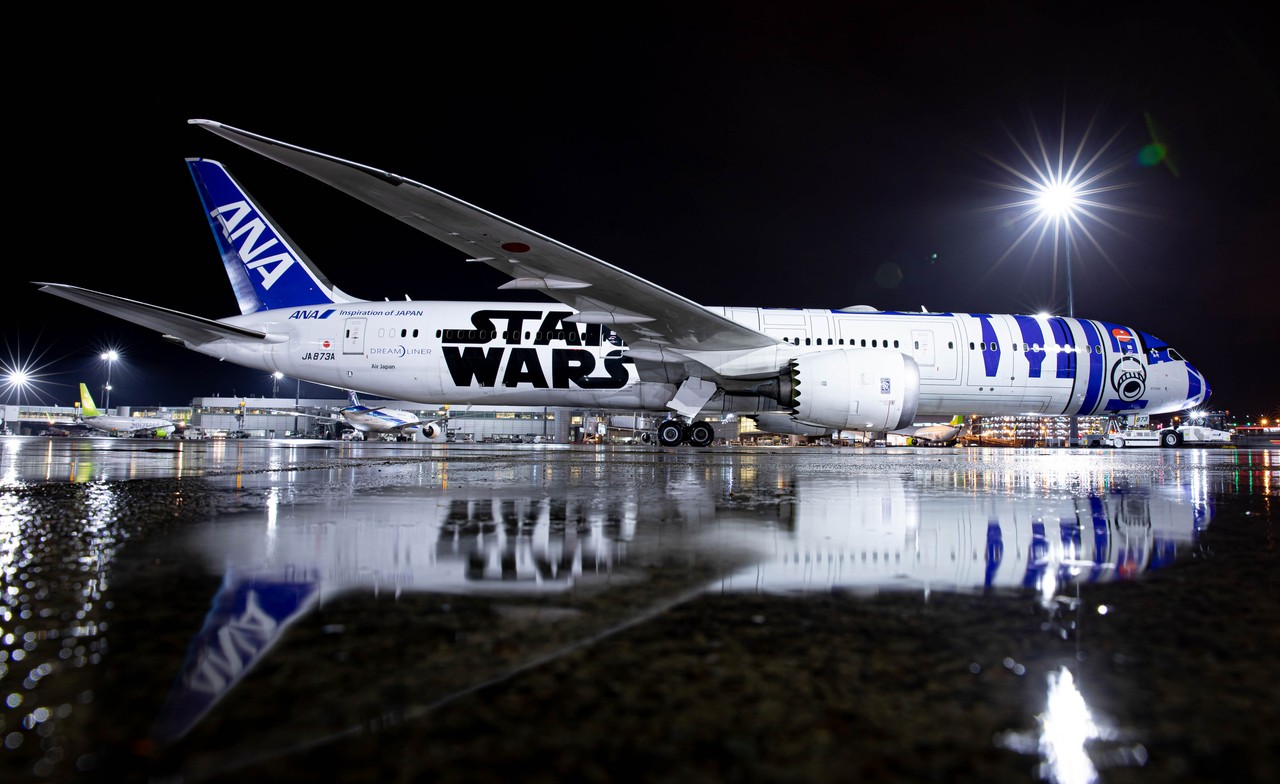
The 787-9 has transformed international air travel since entering commercial service, with over 1,100 total 787s delivered across all variants by 2025. All Nippon Airways operated the inaugural commercial flight on October 26, 2011, flying a charter service from Tokyo to Hong Kong. The aircraft's Extended-range Twin-engine Operational Performance Standards (ETOPS-330) certification allows it to fly routes up to 330 minutes from the nearest airport, opening direct connections across vast oceanic expanses that previously required larger, less efficient aircraft.
United Airlines became the type's largest operator with 221 aircraft on order as of June 2025, while Asian carriers including Air China, China Eastern, and Hainan Airlines have embraced the aircraft for trans-Pacific routes. The 787-9's ability to carry 40 more passengers than the 787-8 while maintaining similar operating costs made it the most popular variant in the family.
The Manufacturer
Boeing Commercial Airplanes, a division of The Boeing Company, developed the 787 as part of a fundamental shift toward composite construction. Founded in 1916 by William E. Boeing, the company had previously revolutionized aviation with aircraft like the B-17 Flying Fortress during World War II and the 707 that launched the jet age in 1958. The 1997 merger with McDonnell Douglas expanded Boeing's capabilities in defense and space technology.
The 787 program launched on April 26, 2004, with Boeing establishing a global supply chain unprecedented in aviation manufacturing. Major subassemblies arrive from international partners including Mitsubishi Heavy Industries in Japan and Leonardo in Italy, representing a departure from traditional aircraft manufacturing approaches.
Engine & Technical Details
The 787-9 operates with two high-bypass turbofan engines, either the General Electric GEnx-1B or Rolls-Royce Trent 1000, each producing approximately 74,000 pounds of thrust. Both engines incorporate advanced materials including ceramic matrix composites, contributing to the aircraft's exceptional fuel efficiency and reduced emissions profile.
The aircraft's revolutionary design centers on its composite structure, with carbon-fiber materials comprising 50 percent of the airframe by weight. This construction approach reduces maintenance requirements while enabling the pressurization system to maintain cabin altitude at 6,000 feet rather than the typical 8,000 feet, improving passenger comfort on long flights. The electrical systems replace traditional hydraulic components, reducing weight and complexity.
Pilot Perspective
Flight crews appreciate the 787-9's advanced flight deck featuring large LCD displays and fly-by-wire controls that reduce pilot workload during long-haul operations. The aircraft requires a two-person crew and cruises at Mach 0.85, approximately 590 miles per hour, with a service ceiling of 43,100 feet. Its climb rate of roughly 3,000 feet per minute allows efficient departure from congested airports.
The 787-9's range of 7,635 nautical miles enables non-stop flights between city pairs like London and Perth, Australia, routes that were previously impossible with aircraft of similar passenger capacity. Pilots report smooth handling characteristics and reduced fatigue during ultra-long-range flights exceeding 14 hours.
Production & Legacy
Production began at Boeing's Everett, Washington facility in June 2006, with final assembly later consolidated to the North Charleston, South Carolina plant by October 2020. The first 787-9 rolled out on July 24, 2013, completing its maiden flight on September 17, 2013. Boeing has delivered at least 651 documented 787-9 aircraft, with production continuing at the South Carolina facility.
The 787-9's 206-foot length positions it between the smaller 787-8 and larger 787-10 variants, offering airlines optimal flexibility for medium-density long-haul routes. Early production faced challenges including battery fires and manufacturing delays, but these issues were resolved by 2014, allowing the program to achieve its efficiency and reliability targets.
Today, the 787-9 remains in active production and service worldwide, with operators praising its ability to open new route possibilities while reducing operating costs. The aircraft's composite construction techniques have influenced subsequent Boeing and Airbus designs, establishing new industry standards for fuel efficiency and passenger comfort in long-haul aviation.