
Design Revolution
The Baby Ace D emerged from one of aviation's most significant grassroots movements. In 1952, Paul Poberezny, founder of the Experimental Aircraft Association, purchased the rights to Orland J. Corben's original Baby Ace design for just $200. Recognizing the potential to modernize this pioneering homebuilt aircraft, Poberezny enlisted Stanley J. Dzik to create an extensive redesign that would become the Model D.
Dzik's modifications transformed the original 1930s design into a more capable aircraft. The cockpit was widened for improved pilot comfort, the structure was strengthened to handle float operations and engines up to 85 horsepower, ailerons were extended for better control response, and the fin and rudder were enlarged for enhanced directional stability. These changes addressed decades of builder feedback while maintaining the aircraft's fundamental simplicity.
The Manufacturer's Journey
Corben Aircraft Company traced its roots to 1929 when Orland J. Corben began selling plans for what would become the world's first marketed homebuilt aircraft. Initially operating from Wichita, Kansas, the company relocated to Madison, Wisconsin by late 1932. The original enterprise survived until 1935 when the Great Depression forced its closure and Corben's departure from the aviation industry.
The design's resurrection came through the Experimental Aircraft Association's acquisition of the rights in 1952. This transfer proved pivotal in the homebuilt movement's post-World War II revival, as new federal regulations in 1948 had opened experimental aircraft construction to amateur builders. Today, Ace Aircraft continues offering plans for Models C, D, and E, ensuring the design's availability to contemporary builders.
Engine Configuration and Performance
The Baby Ace D typically mounted the Continental A65, a 65-horsepower four-cylinder horizontally-opposed air-cooled engine that became a standard powerplant for light aircraft. Continental Motors produced these reliable engines from the 1930s into the 1970s, with the A65 series continuing into that decade. Builders could also specify Continental engines up to 85 horsepower, while some variants received more powerful installations including the 135-horsepower Lycoming O-290-D2.
This engine flexibility enabled impressive performance figures. Aircraft equipped with the 135-horsepower Lycoming on floats demonstrated climb rates of 2,500 feet per minute and water takeoff runs of just 350 feet. The standard Continental A65 installation provided adequate performance for sport flying while maintaining the aircraft's intended simplicity and low operating costs.
Construction and Design Philosophy
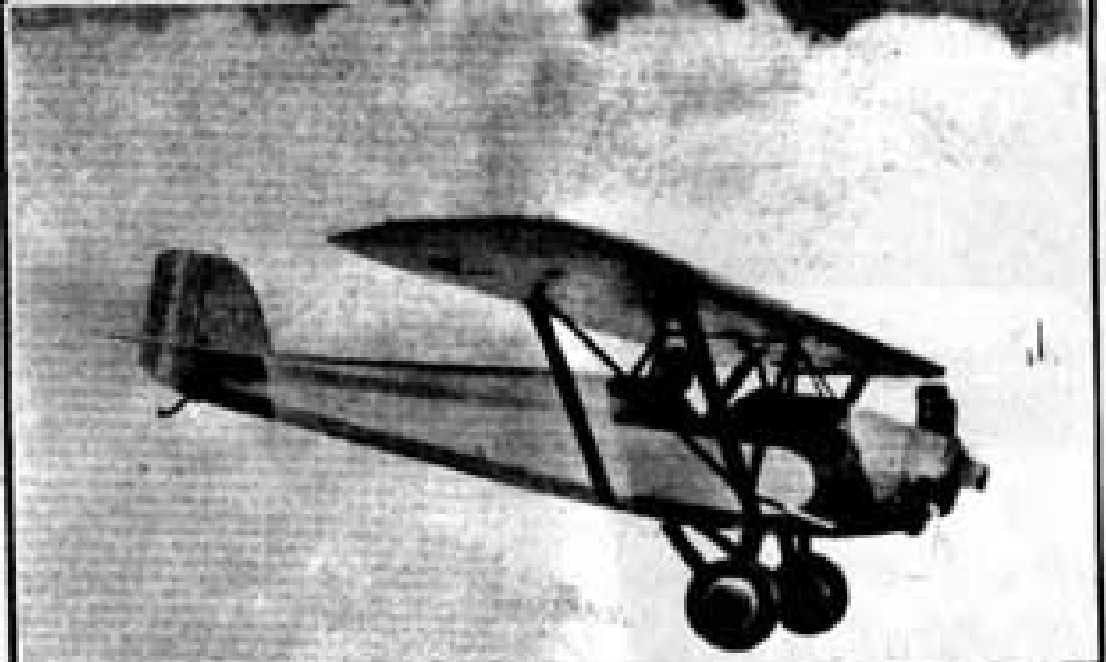
The Baby Ace D retained Corben's original philosophy of straightforward construction using readily available materials and techniques. The fuselage employed a fabric-covered steel-tube framework utilizing Pratt truss construction for structural efficiency. Wings featured spruce spars with built-up ribs, covered in fabric and designed for easy assembly by amateur builders.
One innovative aspect of the Model D was its integration of Piper J-3 Cub components, including landing gear and cowling elements. This parts commonality reduced costs and simplified maintenance while ensuring reliable, proven components. The parasol wing configuration provided excellent visibility and stable flight characteristics suitable for novice pilots.
Legacy and Preservation
While exact production numbers remain undocumented, dozens of Baby Ace D aircraft likely continue flying today as active homebuilt projects. Plans remain available, and new construction continues, with examples like G-DACE completed as recently as 2012. The design found international acceptance, with examples approved for construction in Australia, including VH-EJJ, which first flew on December 12, 1977.
The EAA Aviation Museum in Oshkosh, Wisconsin preserves a notable example in its Founders Wing: N9017C, a 1955 Corben/Lambert Baby Ace D built in the early 1960s by Stafford "Casey" Lambert with assistance from Paul Poberezny himself. This aircraft represents both the design's technical evolution and its cultural significance in promoting amateur aircraft construction.
The Baby Ace D's true importance extends beyond its modest performance specifications. As the descendant of aviation's first marketed homebuilt design, it established principles of simplicity, affordability, and amateur construction that continue influencing the experimental aircraft community today. Its revival by the EAA in the 1950s helped spark the modern homebuilt movement that has produced thousands of amateur-constructed aircraft worldwide.