
Dominance in Business Aviation
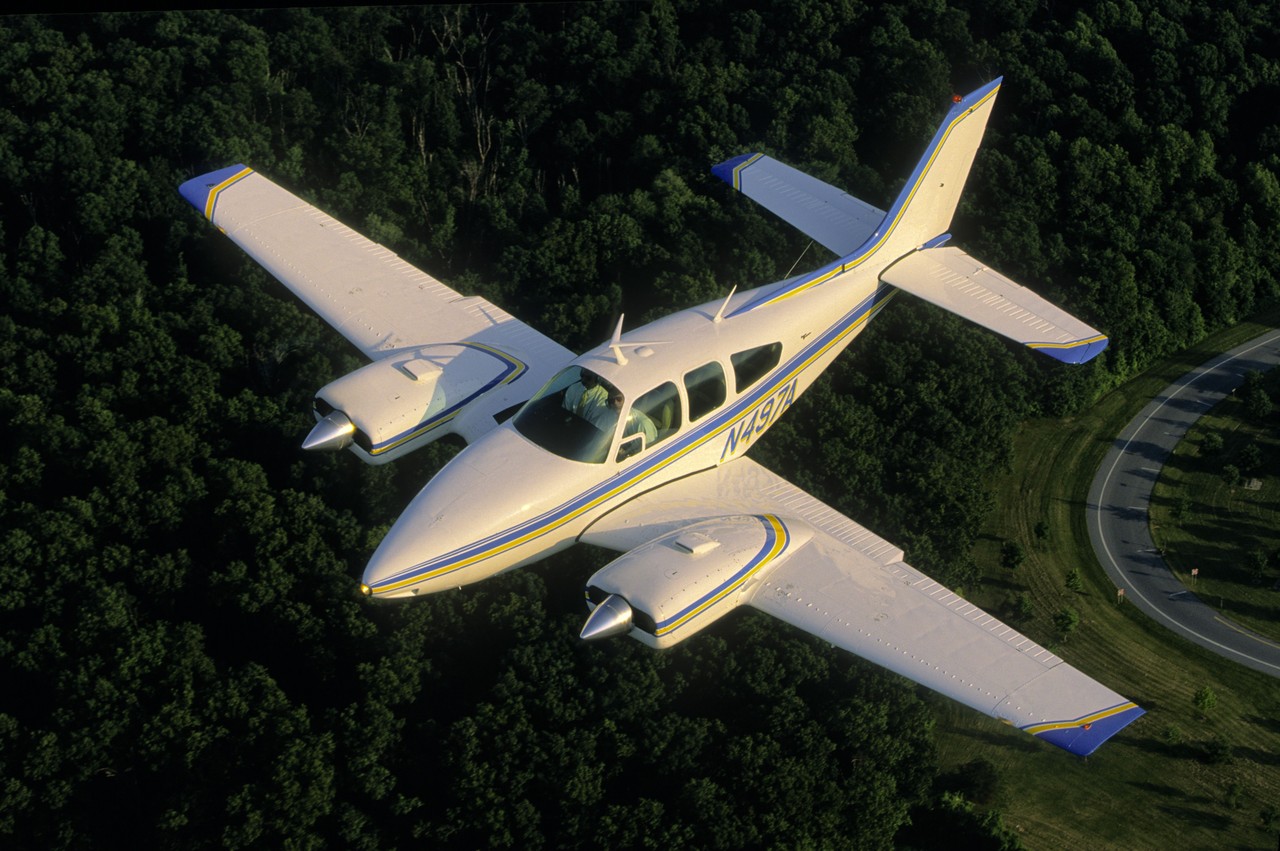
The Baron 55 captured the American business aviation market like no light twin before it, with 3,651 aircraft delivered between 1961 and 1983. By the mid-1970s, the Baron had become synonymous with executive transportation, offering single-engine aircraft speed with twin-engine safety. The aircraft's success stemmed from its ability to cruise at 225-230 mph while carrying a pilot and five passengers up to 1,000 miles, making it ideal for regional business travel.
Evolution Through Six Variants
Beechcraft continuously refined the Baron 55 through six distinct models. The original 95-55 of 1961 saw only 190 units produced before the improved A55 appeared in 1962 with a lengthened fuselage and enhanced payload capacity. The B55, introduced in 1964, became the most successful variant with 1,954 aircraft built through 1982. Later models featured increasingly powerful Continental engines, with the C55, D55, and E55 variants equipped with 285-horsepower IO-520-C engines that boosted cruise speeds to 230 mph.
The Beechcraft Legacy
Beech Aircraft Corporation, founded in 1932 by Walter and Olive Ann Beech in Wichita, Kansas, had established its reputation with the innovative Model 17 Staggerwing and the revolutionary Bonanza before tackling the twin-engine market. The company's chief engineer Ted Wells led the design team that transformed the earlier Travel Air into the Baron, incorporating lessons learned from both single and twin-engine aircraft development. Following acquisition by Raytheon in 1980 and later by Textron in 2014, the Beechcraft brand continues operating today under Textron Aviation.
Power and Performance
Early Baron variants utilized Continental IO-470 engines producing 260 horsepower each, while later models adopted the more powerful IO-520-C engines rated at 285 horsepower. These fuel-injected, six-cylinder powerplants provided the Baron with exceptional single-engine performance, crucial for safety in light twin operations. The D55 variant introduced three-blade propellers in 1968, reducing noise and vibration while improving ground clearance. Continental Aerospace Technologies manufactured these engines with a time between overhaul of 1,700 hours, contributing to the Baron's reputation for reliability.
Pilot Appeal and Handling
Pilots praised the Baron 55 for its docile handling characteristics and forgiving flight envelope, traits inherited from Beechcraft's extensive experience with the Bonanza series. The aircraft's cantilever low-wing design provided excellent stability in turbulence, while its retractable tricycle landing gear offered superior ground handling compared to conventional-gear competitors. With a maximum takeoff weight ranging from 5,000 pounds in the B55 to 5,300 pounds in later variants, the Baron could carry substantial payloads while maintaining a climb rate of 1,670 feet per minute on both engines.
Military Service
While primarily a civilian aircraft, the Baron 55 served the U.S. military as the T-42A Cochise. Approximately 70 examples were delivered to the Army and Navy beginning in the late 1960s for instrument flight training. These military variants featured simplified interiors and military avionics, designated specifically for training pilots in multi-engine operations. The T-42A served faithfully in the training role for over two decades before being replaced by more modern aircraft.
Production Success and Modern Legacy
Beechcraft's Wichita factory delivered Barons at peak rates exceeding 300 aircraft annually during the mid-1960s boom years. The 1968 D55 variant commanded $73,950 new, equivalent to over $600,000 in current dollars, positioning it as a premium product for successful businesses and wealthy individuals. Flight training organizations also embraced the Baron, with England's College of Air Training purchasing 12 new C55s in 1967 for airline pilot instruction.
Today, hundreds of Baron 55s remain active worldwide, testament to their robust construction and enduring appeal. The B55 variant, with its high production numbers, represents the most common Baron in the used aircraft market. These aircraft continue serving in corporate fleets, flight training schools, and private ownership, with many examples exceeding 5,000 flight hours while maintaining airworthiness. Aviation museums across America display restored Barons, recognizing their significance in the evolution of business aviation from the experimental 1960s through the mature industry of today.