
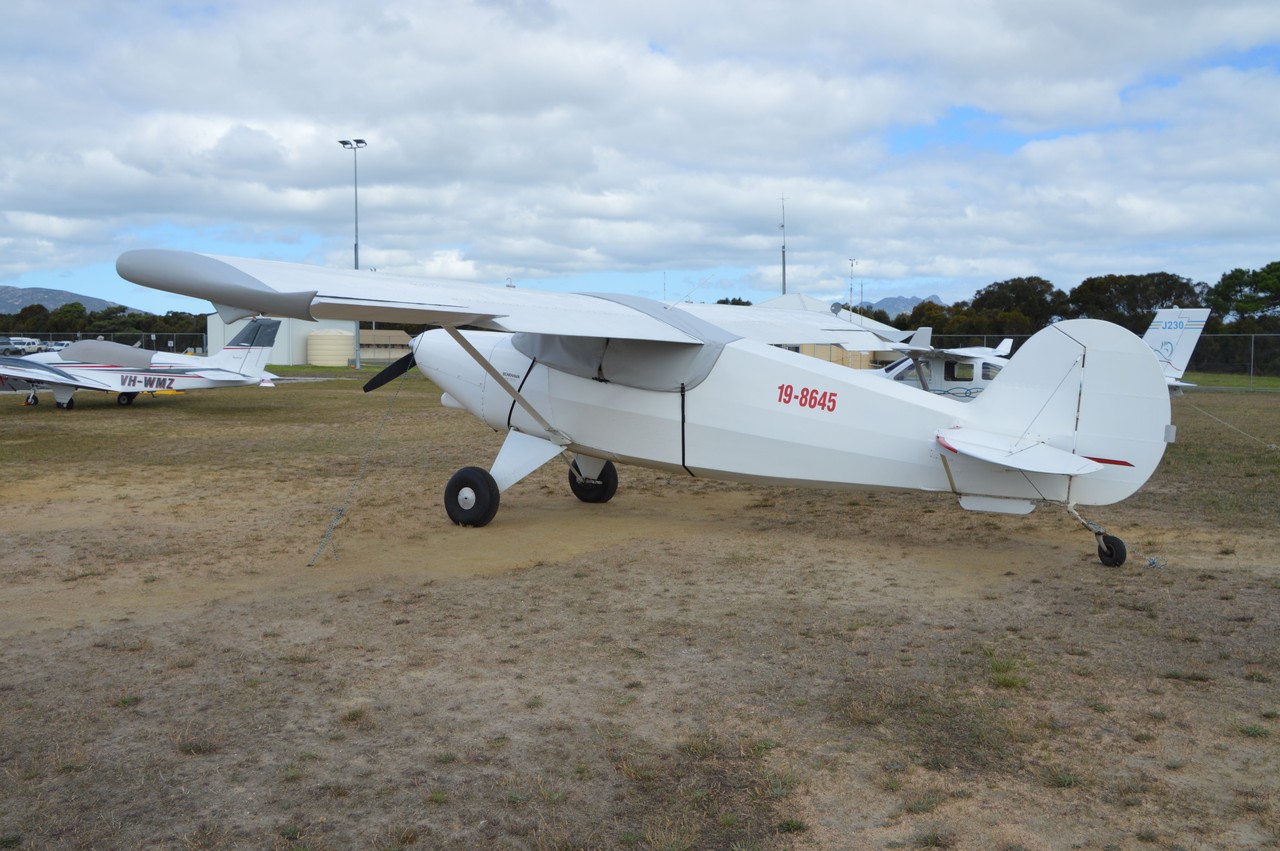
Development and Design Philosophy
Bob Barrows conceived the RB-4 Bearhawk around 1980 to address a specific need in his airframe and engine building business - an aircraft capable of hauling aircraft engines as freight while maintaining excellent short field performance. Barrows spent over a decade refining his design, incorporating lessons learned from building and maintaining various aircraft types. The prototype emerged in the early 1990s powered by a 170-horsepower Lycoming O-360 engine burning automotive fuel, demonstrating the practical approach that would characterize the entire program.
The Bearhawk's introduction at Oshkosh '95 marked a watershed moment for kit aviation. Where most homebuilt aircraft prioritized speed or aerobatic capability, Barrows had created something different - a genuine utility workhorse that could operate from primitive airstrips while carrying substantial loads. The 42.5-inch cabin width matched or exceeded many certified aircraft, while the 1,100-pound useful load capability meant serious cargo-hauling potential.
Technical Innovation
Barrows incorporated several innovative construction techniques that simplified building while maintaining structural integrity. The all-aluminum wings featured "C"-shaped spars reminiscent of the Midget Mustang and RV series, using 0.032-inch channels reinforced with 1/8-inch by 1.25-inch straps. This approach provided excellent strength-to-weight ratios while remaining within amateur builder capabilities. The welded steel tube fuselage, covered in traditional doped fabric, balanced modern engineering with proven construction methods.
The original design employed the NACA 4412 modified airfoil, later updated to the Riblett 30-413.5 section on the Bravo variant introduced in 2016. These airfoils contributed directly to the aircraft's remarkable short field performance, enabling 42-mph stall speeds and climb rates exceeding 1,500 feet per minute with appropriate power plants.
Production Evolution
AVIPRO Aircraft initially supplied components and quick-build kits representing up to 51 percent completion, allowing builders to focus on final assembly and systems installation. The estimated 1,200-hour build time positioned the Bearhawk as a serious commitment requiring genuine craftsmanship rather than casual weekend assembly.
By 2001, complete kit availability transformed the program's accessibility. Bearhawk Aircraft in Fairview, Oklahoma, assumed primary manufacturing responsibilities, working closely with Barrows to maintain design integrity while improving production efficiency. The company continues operations today, having delivered components for approximately 78 completed aircraft by 2016, with 77 registered with the FAA and 11 in Canada.
Engine Options and Performance
The Bearhawk's engine flexibility represents one of its most practical attributes. Standard installations include the Lycoming O-360 producing 180 horsepower, the O-540 generating 250 horsepower, and the YIO-540-D4A5 delivering 260 horsepower. The YIO-390-X producing 210 horsepower provides an intermediate option. In August 2023, the DeltaHawk DHK180 diesel engine became available, offering improved fuel economy and reduced maintenance requirements.
With the 180-horsepower O-360, the Bearhawk achieves 175-mph maximum speeds and 144-mph cruise performance at 75 percent power. The 600-mile range, combined with fuel capacity options from 55 to 74 gallons, provides genuine cross-country capability. More impressive are the short field numbers: 220-foot takeoff distances and 235-foot landing rolls enable operations from strips that challenge much larger aircraft.
Operational Versatility
The Bearhawk's utility extends beyond impressive performance specifications. The aircraft accommodates various landing gear configurations including traditional tailwheel, skis for winter operations, and floats for water landing capability. Oil-dampened mechanical struts provide reliable shock absorption across diverse operating conditions.
Pilots particularly appreciate the aircraft's honest handling characteristics and generous cabin dimensions. The 23-foot, 6-inch overall length houses a cabin measuring 9 feet, 8 inches in floor length, providing genuine comfort for four occupants during extended flights.
Variants and Legacy
The basic Four model spawned several derivatives addressing specific mission requirements. The Patrol variant features tandem seating for two occupants with a reduced 2,000-pound gross weight, optimizing performance for training or recreational flying. The Companion offers side-by-side two-seat configuration, with initial deliveries beginning in October 2019.
More recent developments include LSA and Model 5 variants, expanding the design's appeal across different certification categories and mission profiles. The 2016 Bravo incorporation of improved airfoil design and enhanced corrosion resistance demonstrates continuing evolution nearly three decades after the original prototype's first flight.
Today, dozens of Bearhawks operate worldwide, concentrated heavily in bush flying operations across Alaska, Canada, and the American West. The design's influence on subsequent kit aircraft development remains substantial, proving that utility and performance could coexist in amateur-built aviation long before such combinations became commonplace.