
Service History
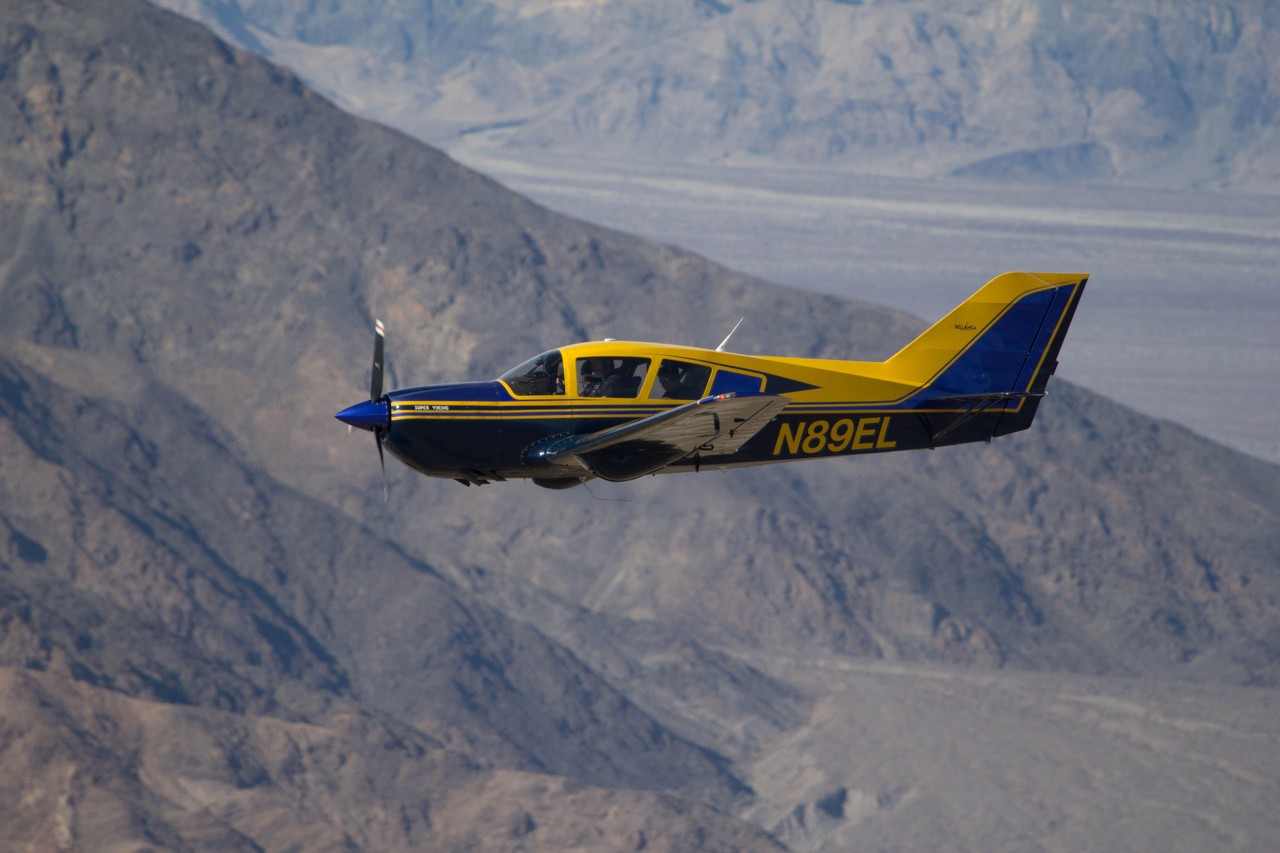
The Bellanca 17 Viking carved out a distinctive niche in general aviation as a premium high-performance single-engine aircraft. Between 1967 and 1975, the type dominated the upper tier of four-seat cabin aircraft, with 1,019 Vikings delivered during this peak production period. The aircraft attracted pilots seeking airline-like speed and comfort in a single-engine package, offering performance that often exceeded twin-engine aircraft of the era while maintaining lower operating costs.
The Manufacturer
Bellanca Aircraft Corporation established its Minnesota operations in Alexandria, honoring the region's Scandinavian heritage with the "Viking" designation. The company converted a former creamery into a specialized woodworking facility where skilled local craftsmen fabricated spruce wings, flaps, and ailerons using traditional techniques. Steel tubing welded construction formed the fuselage and empennage, with final assembly completed at the local airport. This operation represented the continuation of Giuseppe Bellanca's design legacy, which had evolved from earlier triple-tail Cruisair models through 1963 to the single-fin configuration of the Viking series.
The company's roots traced back to the earlier 14-19 Cruisemaster, which received certification on September 26, 1949, with 99 aircraft built between 1949 and 1951. Tooling for the Viking program arrived from the company's previous New Castle, Delaware facility, establishing the Minnesota operation as Bellanca's primary manufacturing center through 2001. Following the company's bankruptcy that year, six aviation enthusiasts acquired the assets in 2002, though large-scale production never resumed.
Engine & Technical Details
Chief Engineer Roland Friestad led the Viking's development beginning in late 1966, establishing design objectives for a 300-horsepower aircraft that would surpass the earlier Model 260 Cruisemaster. The program pursued Republic Aviation's Seabee construction efficiency target of 0.075 man-hours per pound, combining traditional materials with modern performance requirements.
Two primary powerplant options defined the Viking variants. The Continental IO-520-D and IO-520-K engines, manufactured by Teledyne Continental Motors, powered the 17-30 and 17-30A models with 300 horsepower from fuel-injected, normally aspirated six-cylinder configuration. These engines provided smooth power delivery with a 1,700-hour time between overhaul interval. Lycoming IO-540 engines, produced by the Textron division, generated 290-300 horsepower in the 17-31 series, with turbocharged Rajay-equipped variants designated 17-31TC and 17-31ATC achieving estimated maximum speeds of 320 mph at 24,000 feet.
The prototype completed its first flight in early 1967 after four months of modifications from the Model 260 baseline. FAA Type Certificate A18CE was awarded in 1969 for the "A" series Super Vikings. Initial aircraft featured hydraulic gear and flap operation, transitioning to electric systems in 1968 for improved reliability and reduced complexity.
Design Innovation
Several significant improvements emerged throughout the production run. Gross weight increased from initial certification limits to 3,325 pounds in 1969, later expanding to 4,000 pounds for improved payload capability. The 1974 model year introduced a simplified fuel system with left, right, and auxiliary tank configuration, directly addressing fuel mismanagement accidents that had affected earlier variants.
The 1979 Continental-powered models incorporated an enclosed nosewheel configuration with cowl flaps, generating a 12-mph speed increase while improving ground handling characteristics. These refinements represented continuous development efforts to enhance both performance and safety throughout the production period.
Pilot Perspective
Viking pilots consistently praised the aircraft's exceptional cruise performance, with the 17-30A achieving 163 knots indicated airspeed in normal cruise configuration. The combination of retractable landing gear, efficient aerodynamics, and powerful engines delivered performance typically associated with twin-engine aircraft while maintaining single-engine simplicity and operating economics.
The aircraft provided seating for one pilot and three passengers, with flexible cargo arrangements enhanced by rear cargo tie-down points added after prototype testing. Range extended to approximately four hours and 45 minutes with standard reserves, making the Viking suitable for serious cross-country transportation.
Production & Legacy
Total Viking production reached 1,356 aircraft across all variants, with peak output occurring in 1973 when approximately 200 aircraft rolled off the Alexandria production line. Following the primary production period ending in 1975, limited manufacturing continued with approximately 38 additional aircraft completed between 1984 and 2005.
The final production aircraft represented highly refined examples, with 1989 17-30A models and the last 35 Super Vikings commanding premium prices in today's market. Dozens of Vikings remain active in general aviation service, representing Giuseppe Bellanca's enduring design philosophy and Minnesota's contribution to aviation manufacturing excellence.