
Design Philosophy and Innovation
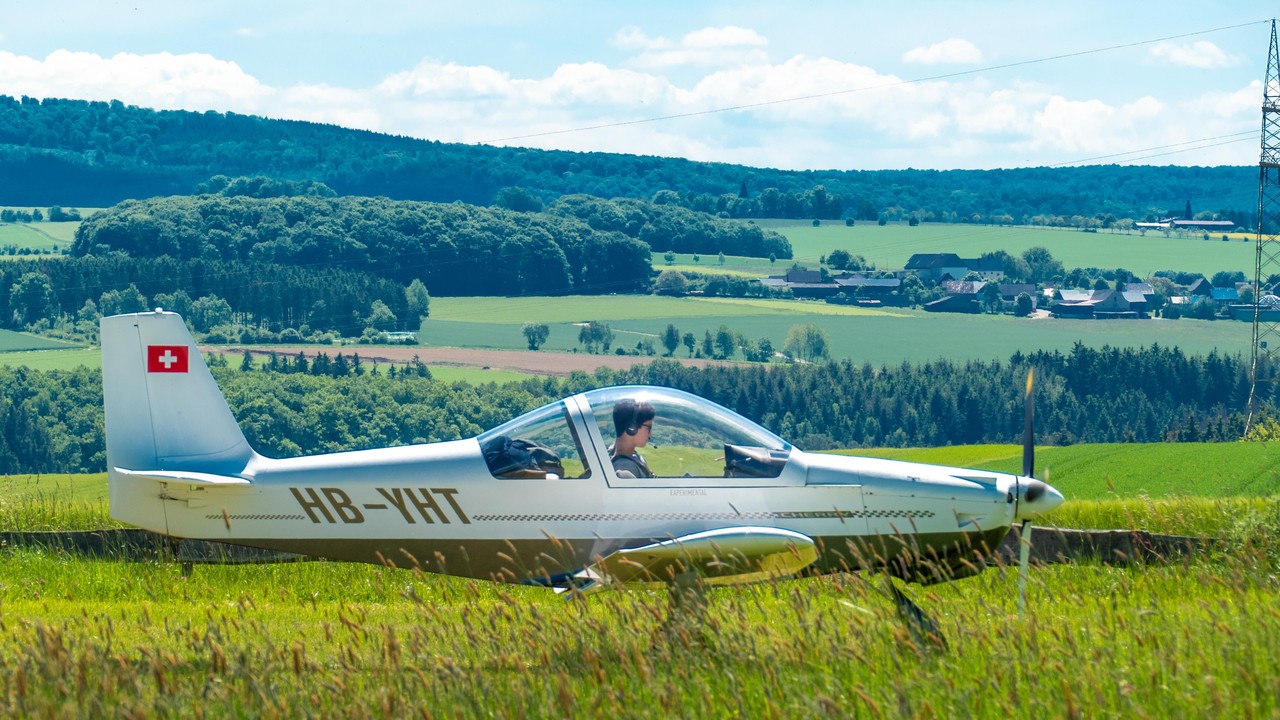
Max Brändli conceived the BX-2 Cherry with specific objectives that would distinguish it from other homebuilt aircraft of the early 1980s. Born March 31, 1924, Brändli had been fascinated with aviation since childhood, building model aircraft before attending school and constructing model engines during his mechanic apprenticeship. His design goals for the Cherry included economical operation, outstanding flight characteristics, perfect 360-degree visibility, and quick-removable wings for convenient storage and trailering.
The aircraft's construction method represented an innovative approach for its era, utilizing a composite structure combining timber, Styrofoam, fiberglass, and epoxy resin. This lightweight construction technique, unusual for homebuilders in the 1980s, enabled the Cherry to achieve an empty weight of just 315 kg while maintaining structural integrity under a maximum loaded weight of 550 kg.
Development and First Flight
Brändli invested 3.5 years and approximately 5,500 hours developing and building the prototype, registered as HB-YBX in Switzerland's Experimental category. The aircraft made its maiden flight on April 24, 1982, marking the successful culmination of his ambitious design project. By early 2006, the prototype had accumulated more than 2,000 flight hours, demonstrating the design's reliability and appeal to its creator.
The BX-2's engineering incorporated several advanced features for a homebuilt aircraft, including retractable tricycle landing gear with timber main gear legs and hydraulic brakes, rod-controlled elevator and ailerons, cable-controlled rudder, and a forward-opening canopy that enhanced the aircraft's modern appearance.
Production and Distribution
Rather than establishing conventional aircraft manufacturing, Brändli chose to distribute his design through plans sales to amateur builders. The construction plans, written in German, became available following the prototype's successful flight testing. By early 1991, BX Aviation had sold 140 sets of plans, with the first seven licenses distributed in January 1983.
Each aircraft required approximately 5,000 construction hours and cost builders around $30,000 for equipment and materials. Individual construction projects began around 1983 and continued into the 1990s, with builders located primarily in Switzerland, other European countries including the Netherlands, Austria, and Denmark, as well as Australia and the United Kingdom.
Engine Versatility
The Cherry's design accommodated multiple powerplant options, providing builders flexibility based on availability and preference. Documented installations included the Continental A-65, Rotax 912, Jabiru 2200, and BMW R1100S automotive conversion producing 73 kW. One completed example, the 1999-built G-BXUX registered in the United Kingdom, utilized a Continental Motors C90-12F inline piston engine.
This engine flexibility reflected Brändli's practical approach to homebuilt aircraft design, recognizing that builders in different countries would have varying access to powerplants and different regulatory requirements.
Performance Characteristics
The BX-2 Cherry delivered impressive performance figures that justified the extensive construction effort required. Maximum speed reached 219 km/h, with a comfortable cruise speed of 200 km/h and a gentle stall speed of 85 km/h with flaps deployed. The aircraft demonstrated a climb rate of 180 meters per minute and achieved a remarkable range of 1,254 km.
Takeoff performance proved excellent for a homebuilt aircraft, requiring only 290 meters of runway, while landing runs measured just 150 meters. These short-field capabilities, combined with the retractable landing gear, made the Cherry suitable for operations from smaller airfields while maintaining cross-country efficiency.
International Community
Completed BX-2 Cherry aircraft found homes across multiple countries, creating an international community of builders and operators. Notable examples included multiple aircraft in the Netherlands bearing registrations PH-YCM, PH-GDT, and PH-VIN, Austrian aircraft OE-CEN and OE-CTO, Danish examples HB-YLK, HB-YDW, and HB-YDX, Swedish SE-XVH, and Croatian 82LI.
The Cherry community organized gatherings including the Cherry Meeting 2007 at Bitburg (EDRB) and participation in events like the KZ Rally 2004, fostering connections among builders and operators across national boundaries.
Legacy and Current Status
Following Max Brändli's death on June 15, 2009, new plan sales ceased, but existing aircraft continue flying. Recent photographs and registration data suggest at least 10-15 aircraft remain active, with construction numbers reaching at least 190 based on the Austrian aircraft OE-CEN.
The BX-2 Cherry represents a significant achievement in homebuilt aviation history, demonstrating how careful engineering and innovative construction techniques could produce a high-performance aircraft accessible to amateur builders. Its emphasis on excellent visibility, retractable gear, and composite construction influenced subsequent homebuilt designs and established Switzerland's contribution to the experimental aircraft movement of the 1980s.