
Design Innovation and Development
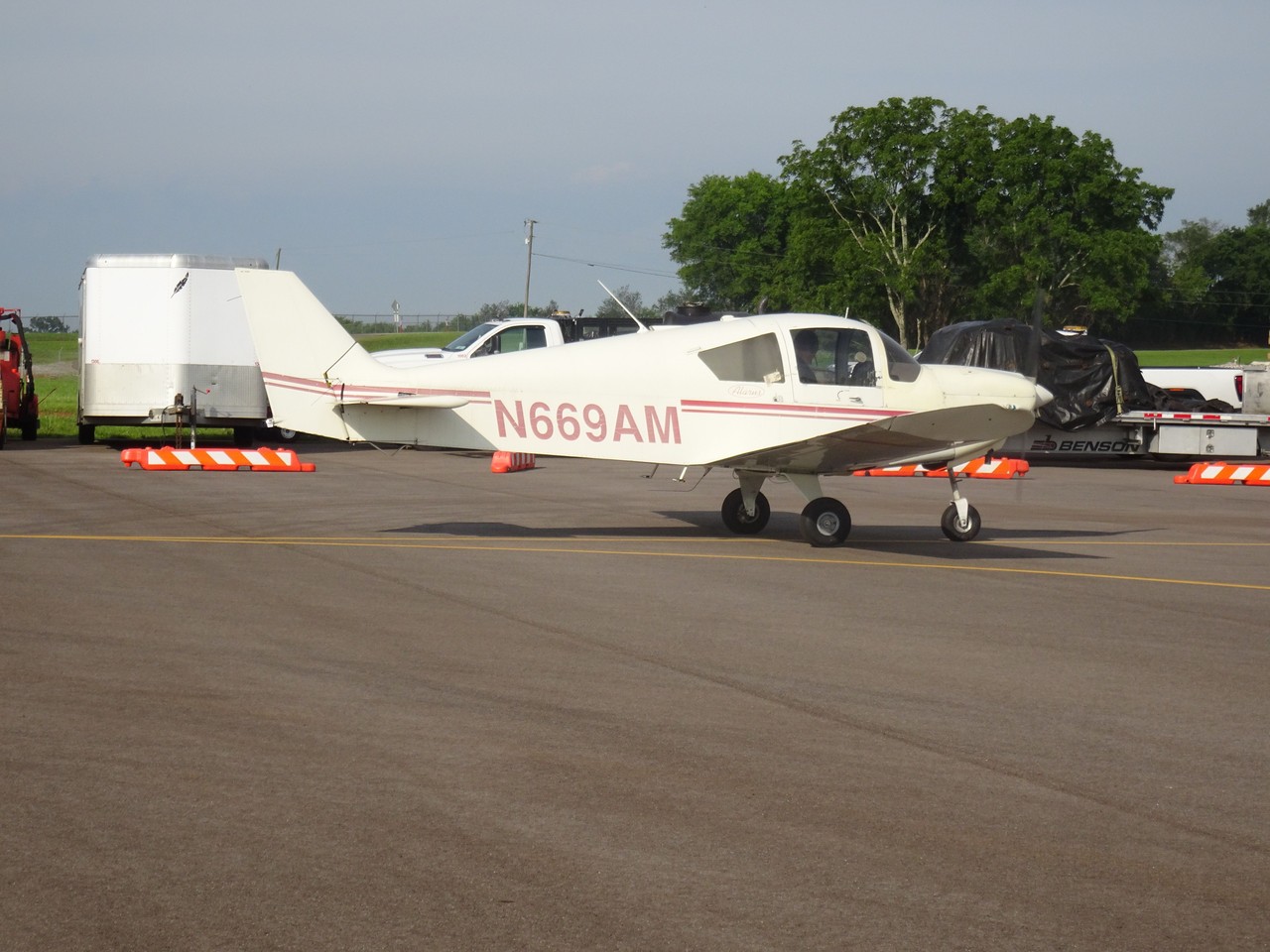
Chris Heintz, a French aeronautical engineer with experience at Avions Pierre Robin, began developing the CH-200 in October 1968 with ambitious objectives. He sought to create a sophisticated two-seat aircraft specifically engineered for amateur construction, featuring side-by-side seating and the capability to accommodate various powerplants from 85 to 160 horsepower. The prototype achieved first flight on March 22, 1970, in France, demonstrating several groundbreaking design innovations.
The CH-200's all-metal cantilever low-wing construction represented a significant advancement over fabric-covered designs prevalent among homebuilts of the era. Heintz incorporated a fixed nosewheel undercarriage for easier ground handling, a sideways-opening plexiglass canopy for improved access, and construction techniques that would later prove revolutionary for quick-build potential. The design utilized a modified NACA 64A515 airfoil with a 5:1 aspect ratio, optimized for both touring performance and limited aerobatic capability.
Commercial Success and Production
Zenair Ltd., founded by Chris Heintz in 1974 following his departure from de Havilland Canada, began kit production from his two-car garage in Canada. The first North American example took flight in October 1975, marking the beginning of substantial commercial success. By 1976, Zenair had sold over 300 plans, with hundreds of aircraft flying by 1999, though exact total production numbers remain undocumented.
The CH-200's construction accessibility was dramatically demonstrated at the 1976 EAA AirVenture Oshkosh, where a complete aircraft was assembled in just eight days totaling 550 person-hours. This public exhibition validated Heintz's design philosophy and significantly boosted kit sales. Plans remained available through 1999, with Zenair Ltd. expanding operations by 1992 into larger facilities while maintaining ongoing support for builders.
The Manufacturer's Evolution
Heintz established Zenair after leaving de Havilland Canada in June 1974 following the company's government takeover. Beginning with the CH-200, Zenair expanded its catalog to include over a dozen designs, with the CH-100 prototype flying in May 1975 and the CH-300 following in July 1977. The company's success led to licensing agreements with Zenith Aircraft Company in the United States during the early 1990s for models including the popular CH 601.
Zenair's influence extended beyond kit manufacturing when the company developed the Alarus CH 2000, which received FAA type certification in 1996 as a fully certified light aircraft. Zenair Ltd. continues operations under its original name today, providing ongoing support for kits and replacement parts across its entire product line.
Engine and Technical Specifications
The CH-200 typically employed the Continental O-200 four-cylinder horizontally-opposed air-cooled piston engine, producing 75 kW (100 horsepower). Continental manufactured over 17,000 O-200 engines between 1963 and 2008, establishing a reputation for reliability in training aircraft like the Cessna 150. Alternative powerplants included the Franklin Sport 4B developing 150 horsepower, demonstrating the design's engine flexibility.
With an empty weight of 900 pounds and maximum takeoff weight of 1,450 pounds, the CH-200 carried 16 Imperial gallons (72.5 liters) of fuel. The aircraft's versatility extended to landing gear configurations, accommodating conventional tailwheel arrangements, tricycle gear, floats, or skis depending upon operational requirements.
Operational Service and Examples
The CH-200 served exclusively in civilian roles as a two-seat light sport aircraft optimized for cross-country touring. With engine modifications, the aircraft proved capable of limited aerobatic maneuvers, expanding its appeal among sport pilots. Notable examples include ZK-KLM (constructor number AACA/1077) registered in New Zealand in 1992, and a 1977 Canadian demonstration aircraft that remained active in Ontario as of recent reports.
Tragically, not all CH-200 operations concluded successfully. New Zealand-registered ZK-JLP (constructor number 426) first flew on September 15, 2000, but crashed on December 28, 2002, after accumulating just 31.6 flight hours, highlighting the importance of proper construction and maintenance in amateur-built aircraft.
Legacy and Continuing Influence
The CH-200's significance extends far beyond its production numbers, establishing principles that influenced modern homebuilt aviation. Hundreds of examples remained active as of 1999, with many continuing flight operations today. The aircraft's pioneering quick-build techniques and all-metal construction methods directly influenced Heintz's subsequent designs, including the widely successful CH 601 and CH 701 series.
The CH-200's cultural impact lies in democratizing sophisticated aircraft construction, proving that amateur builders could successfully complete all-metal aircraft previously considered beyond homebuilder capabilities. This achievement contributed significantly to the post-1970s kitplane boom, establishing foundations for the thriving experimental aircraft movement that continues today.