
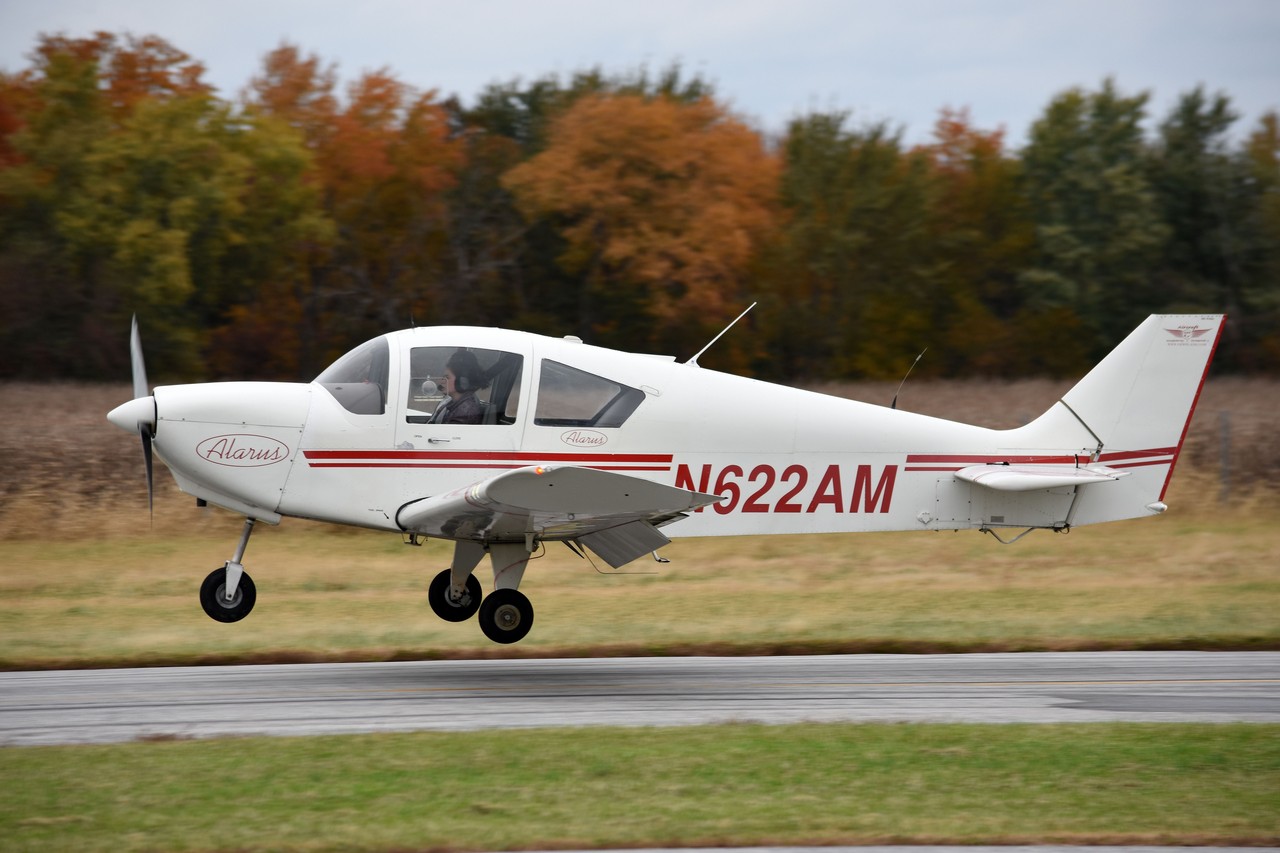
Breaking New Ground in Certification
The CH-2000's certification represented a watershed moment for experimental aircraft manufacturers. Chris Heintz derived the design from his earlier CH-200 and CH-250 models, but development stalled until 1991 when negotiations between the EAA and FAA created favorable conditions for light aircraft certification. The prototype CF-QCU completed its certification process in 1995, proving that amateur-construction aircraft could meet stringent commercial standards.
International Production Network
Following certification, production expanded globally through strategic partnerships. Zenith Aircraft Company, formed in 1992 as a joint venture at Mexico Memorial Airport in Missouri, handled North American manufacturing. AMD Inc. produced the aircraft as the ALARUS CH2000 for the United States market until ceasing production by 2011.
Jordan Aerospace Industries created the most successful international variant, launching the SAMA CH2000 series in 2001 with first flight in 2002. The base SAMA CH2000 retained the 116-horsepower Lycoming engine, delivering four examples to the Mid-East Aviation Academy. JAI developed the SAMA CH2000A with a more powerful 140-150 horsepower Lycoming O-320-E2A for hot-weather performance, and the innovative SAMA CH2000B in 2006, featuring a TAE Centurion 1.7 diesel engine capable of running on either Jet A1 or diesel fuel.
SEMAN, an FAA and EASA-approved facility in Lima, Peru, began assembling the aircraft as the ANTARQUI in spring 2013, demonstrating the design's continued international appeal.
Zenair's Manufacturing Heritage
Zenair Ltd., established by Chris Heintz in Midland, Ontario, brought decades of kit aircraft experience to the certification project. The company had served over 2,000 customers across 48 countries before achieving type certification, making it one of the world's most experienced light aircraft manufacturers. This extensive background in amateur construction proved invaluable in meeting commercial certification requirements while maintaining the design's inherent simplicity.
Proven Powerplant Selection
Heintz selected the Lycoming O-235-N2C for its exceptional reliability and 2,400-hour time between overhauls. This four-cylinder, air-cooled engine produces 116 horsepower at 2,800 rpm, driving a fixed-pitch Sensenich propeller with 72-inch diameter. The engine choice proved strategic, as the O-235 powered other successful trainers including the Cessna 152, Piper Tomahawk, and Grumman AA-1, ensuring excellent parts availability and maintenance familiarity.
Flight Characteristics and Performance
The CH-2000 delivers predictable training aircraft performance with a 780 feet-per-minute rate of climb and 12,500-foot service ceiling. Takeoff ground roll requires just 700 feet, extending to 1,550 feet over a 50-foot obstacle. Landing performance is even more impressive, with 600-foot ground roll and 950 feet over obstacles. The aircraft demonstrates excellent crosswind capability, certified to 25 knots.
Cruising at 100 knots while consuming 6.0 gallons per hour at 75 percent power, the CH-2000 provides economical operation. With 28 gallons of usable fuel capacity, the aircraft offers approximately five hours endurance. Critical speeds include 60 KIAS for best angle of climb, 68 KIAS for best rate of climb, and 104 KIAS maneuvering speed.
Training Aircraft Mission
Designed specifically for flight schools and flying clubs, the CH-2000 emphasizes durability and maintainability over high performance. The all-aluminum construction resists corrosion while providing structural strength. Constant-chord wings simplify manufacturing and maintenance, while the steerable nosewheel tricycle gear configuration offers ground handling suitable for student pilots.
The aircraft received certification for day and night VFR operations, with IFR capability planned during development. Maximum takeoff weight reaches 838 kilograms in the SAMA configuration, providing adequate useful load for training missions.
Market Position and Legacy
New CH-2000s carried a base price of $69,900, reaching $76,940 fully equipped, positioning the aircraft competitively in the training market. A 2003 example sold for $48,500, representing exceptional value as one of the newest certificated aircraft available at that price point.
The CH-2000's achievement opened new possibilities for experimental aircraft designers seeking type certification. By proving that kit-based designs could meet commercial standards, Heintz and Zenair demonstrated a path for small manufacturers to compete with established aviation companies. Examples from the early 2000s continue flying actively today, accumulating hundreds of hours annually and validating the design's durability and operational economy.