
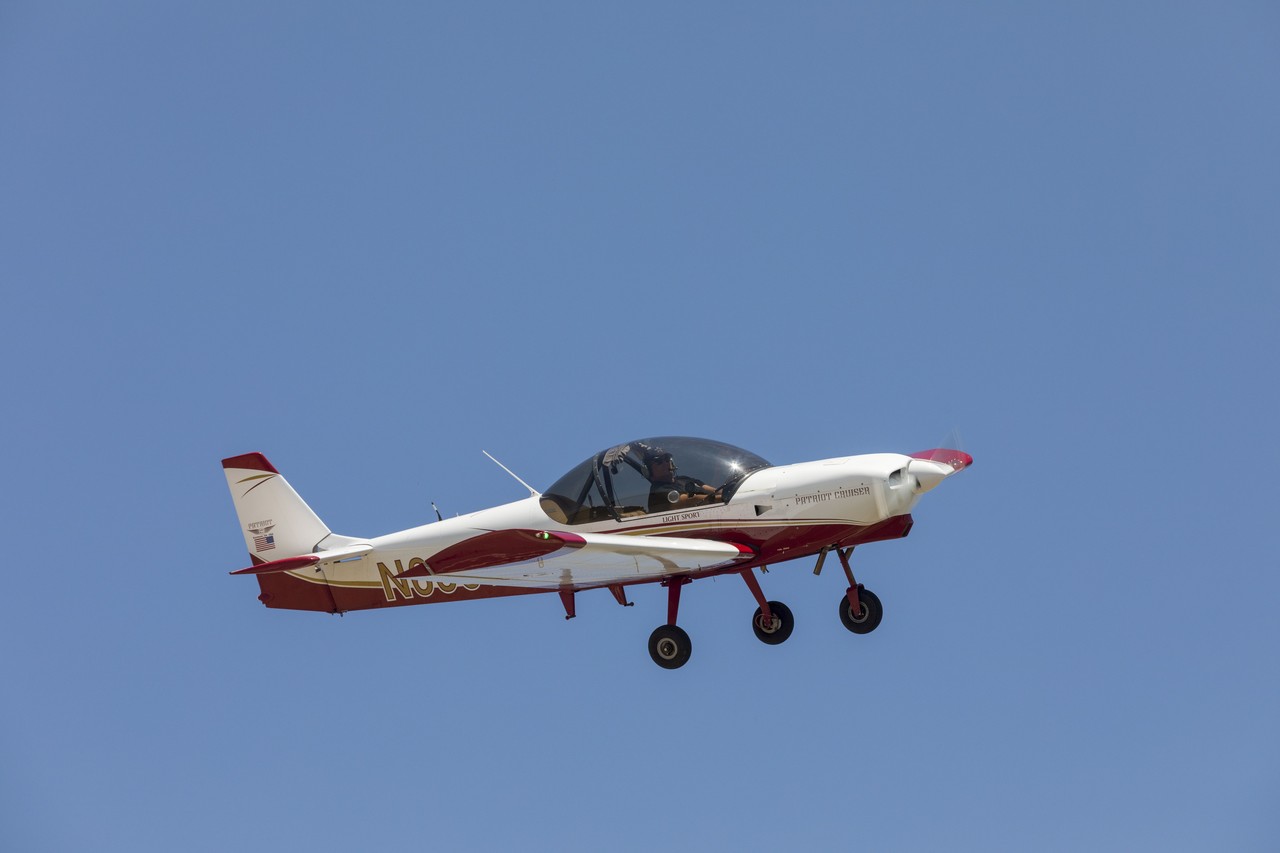
Design Heritage and Development
The CH-650 Zodiac traces its origins to aeronautical engineer Chris Heintz, whose credentials include work on the supersonic Concorde program before transitioning to general aviation design. Heintz developed more than 25 different aircraft models throughout his career, establishing the original Zodiac CH-600 in the early 1980s with its first flight occurring in 1984. The design philosophy emphasized simplicity, affordability, and adaptability to various regulations worldwide.
The evolution from the original CH-600 through the CH-601 XL to the current CH-650 reflected changing regulatory landscapes and builder demands. When the Federal Aviation Administration introduced the Sport Pilot/Light-Sport Aircraft category, Zenith Aircraft developed the CH-601 XL in 2001 specifically to meet these new requirements. The CH-650, introduced around 2013, incorporated builder feedback requesting a larger cabin while maintaining compliance with LSA weight limits.
Manufacturing and Production Philosophy
The Zodiac family pioneered flexible manufacturing approaches in kit aircraft production. Zenair in Canada and Zenith Aircraft Company in the United States initially produced the designs, offering customers multiple purchase options including complete kits, component kits, plans-only packages, and factory-assembled aircraft. This approach democratized aircraft ownership by allowing builders to choose their level of involvement and financial commitment.
Aircraft Manufacturing and Design assumed production of ready-to-fly variants, establishing operations in Eastman, Georgia. By December 2011, builders and manufacturers had completed and flown one hundred CH-650 aircraft worldwide. The international appeal led to production facilities in Canada, Europe, the United States, and South America, with Italian company ICP srl manufacturing the European microlight variant as the CH-650Ei.
Technical Specifications and Performance
The CH-650 employs a low-wing configuration with a NACA 65-018 airfoil across its 132-square-foot wing area. The design accommodates multiple powerplant options, reflecting Heintz's philosophy of adaptability. Standard installations include the Continental O-200 producing 100 horsepower, while alternatives encompass the Australian Jabiru 3300 at 120 horsepower, Rotax 912S/912ULS at 100 horsepower, and UL Power UL-350 generating 130 horsepower.
Performance characteristics position the CH-650 as a capable recreational aircraft with a cruise speed of 170 mph and stalling speed of 51 mph without flaps deployed. The aircraft achieves a climb rate of 1,000 feet per minute and requires only 500 feet for both takeoff and landing rolls. With 20 imperial gallons of fuel capacity, the CH-650 provides 656-mile range and 4.2-hour endurance, making it suitable for cross-country recreational flying.
Safety Challenges and Solutions
The Zodiac family faced significant safety scrutiny between 2008 and 2010 when multiple in-flight wing separation incidents affected the CH-601 XL and CH-650 models. The Netherlands grounded 12 Dutch-registered CH-601 XLs on October 24, 2008, pending structural investigations. By November 2009, seven crashes had resulted in 11 fatalities, with wing separation being the common factor.
The Federal Aviation Administration responded decisively, issuing a Special Airworthiness Information Bulletin on November 6, 2009, strongly recommending flight operations cease until mandatory modifications were completed. AMD and Zenith Aircraft mandated strengthening of main and rear wing spar carry-throughs plus addition of aileron balance weights. The FAA conducted comprehensive reviews, publishing the Zodiac CH601 XL Airplane Special Review Team Report in January 2010, which led to design improvements incorporated into subsequent production.
Current Operations and Market Position
Zenith Aircraft demonstrates confidence in the design by operating a CH-650 as their official demonstration aircraft, conducting approximately 300 demo flights annually. As of February 2007, their demo aircraft had accumulated over 1,400 trouble-free flight hours, showcasing the type's reliability when properly maintained and modified.
The CH-650 serves multiple international markets through various certification categories. The CH-650 LS/LSi variants target the United States light sport aircraft market with VFR and IFR equipment options, while the CH-650E meets standard LSA requirements. European operators utilize the CH-650Ei variant, certified under microlight regulations with a reduced 1,042-pound gross weight limit. Factory-built AMD CH-650 LSi aircraft command prices around $114,900, positioning them competitively in the LSA market.
Global Adoption and Legacy
International acceptance demonstrates the design's versatility across different regulatory environments. Australia registered its first CH-650 under Recreational Aviation Australia regulations on March 9, 2012, while New Zealand's first example (ZK-LMG) gained registration in mid-2014. This global presence reflects the aircraft's ability to meet diverse national airworthiness requirements while maintaining design integrity.
The CH-650 represents four decades of continuous development in recreational aviation, embodying Chris Heintz's vision of accessible, practical aircraft design. From its 1984 origins through current production, the Zodiac family has influenced light aircraft design philosophy while providing thousands of pilots with affordable access to aviation. The resolution of early safety issues through engineering improvements demonstrates the industry's commitment to continuous safety enhancement while preserving design innovation.