
Dominating Post-War Training
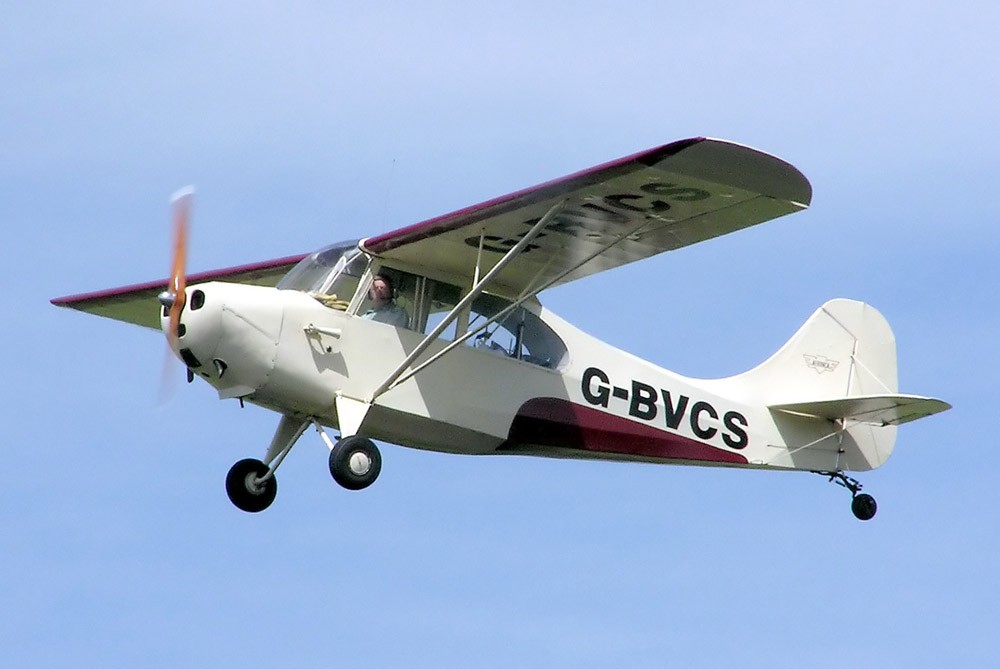
The 7AC Champion emerged during the post-war aviation boom when demand for training aircraft skyrocketed. By 1946, Aeronca achieved the highest-volume production line in general aviation, manufacturing an average of 30 aircraft per day and reaching peaks of 50 daily. Of the more than 8,000 Champions produced by Aeronca through 1951, approximately 7,200 were the baseline 7AC model, making it one of the most popular light aircraft designs in aviation history.
The Designer's Vision
Ray Hermes designed the Champion in 1944 specifically to address perceived shortcomings of the ubiquitous Piper Cub. His most significant innovation was relocating the pilot from the rear to the front seat in the tandem configuration, dramatically improving forward visibility during takeoffs, landings, and climbs. This design change gave instructors and students a critical safety advantage that quickly gained recognition in the training community.
Military Recognition
While designed for civilian use, the Champion's training capabilities attracted military attention. The U.S. military acquired basic 7AC models and designated them L-16. More significantly, all 509 units of the upgraded 7BCM variant, powered by an 85-horsepower Continental C85 engine, went directly to military service as the L-16A. This military endorsement validated the design's effectiveness as a primary trainer.
Aeronca's Rise and Fall
Aeronca Aircraft, a contraction of Aeronautical Corporation of America, operated from the late 1920s through 1951. The company built its reputation on affordable light aircraft, progressing from the C-model Aeroncas in the late 1920s through the model Ks and Chiefs in the 1930s. The Champion represented the pinnacle of their design evolution before the company ceased all light aircraft production in 1951.
Engine Performance and Variants
The standard 7AC utilized a Continental A-65-8 engine producing 65 horsepower, though some aircraft received 65-horsepower engines from Lycoming and Franklin. This four-cylinder, air-cooled, horizontally-opposed powerplant provided reliable performance for training operations. Aeronca expanded the line with the 7BCM featuring an 85-horsepower Continental C85, the rare 7CCM with a 90-horsepower Continental (only 124 built), and the 7DC with an 85-horsepower engine (limited to 184 units).
Design Excellence
The Champion's metal tube fuselage covered with fabric combined durability with light weight. Its high-wing configuration provided inherent stability, while the conventional landing gear with tailwheel taught pilots essential taildragger skills. The roomy tandem cockpit offered excellent visibility and comfortable accommodations for both instructor and student.
Enduring Legacy Through Multiple Owners
When Aeronca exited aviation, Champion Aircraft acquired the design rights in 1954, producing advanced variants through the early 1960s. Bellanca Aircraft purchased Champion in 1970, reintroducing the design as the 7ACA in 1971 before ceasing production in the early 1980s. American Champion Aircraft Corporation acquired the designs in 1989 and continues operating today, producing the Citabria, Decathlon, and Scout series based on the original Champion concept.
Modern Revival and Sport Pilot Appeal
The Champion returned to production in 2007 to capitalize on the new light-sport aircraft category, though production ended by mid-2019. Today's sport pilots particularly value Champions because they can be flown without requiring a medical certificate or BasicMed, making them accessible to recreational pilots who might otherwise be medically disqualified from flying.
Museum Pieces and Active Flyers
Champions remain popular with taildragger enthusiasts and frequently appear at aviation museums and in private collections. Their docile handling characteristics, reasonable cruise speed, and fuel economy continue attracting pilots seeking authentic stick-and-rudder flying experiences. The design's 80-year longevity, spanning multiple manufacturers and regulatory changes, demonstrates the fundamental soundness of Ray Hermes' original vision for an improved training aircraft that could successfully challenge the Piper Cub's market dominance.