
Development and Design Innovation
The CJ-6's development story represents one of aviation's most remarkable engineering achievements, earning recognition as the "Miracle of 72 days" in Chinese aviation history. Chief designers Lin Jiahua and Tu Jida, both transferred from Shenyang Aircraft Factory, led a team of China's premier aeronautical engineers including Xu Shunshou and Huang Zhiqian. Under Chief Engineer Gao Zhenning's direction, the team initiated production in May 1958, completing the aircraft from concept to first flight in an unprecedented 72 days.
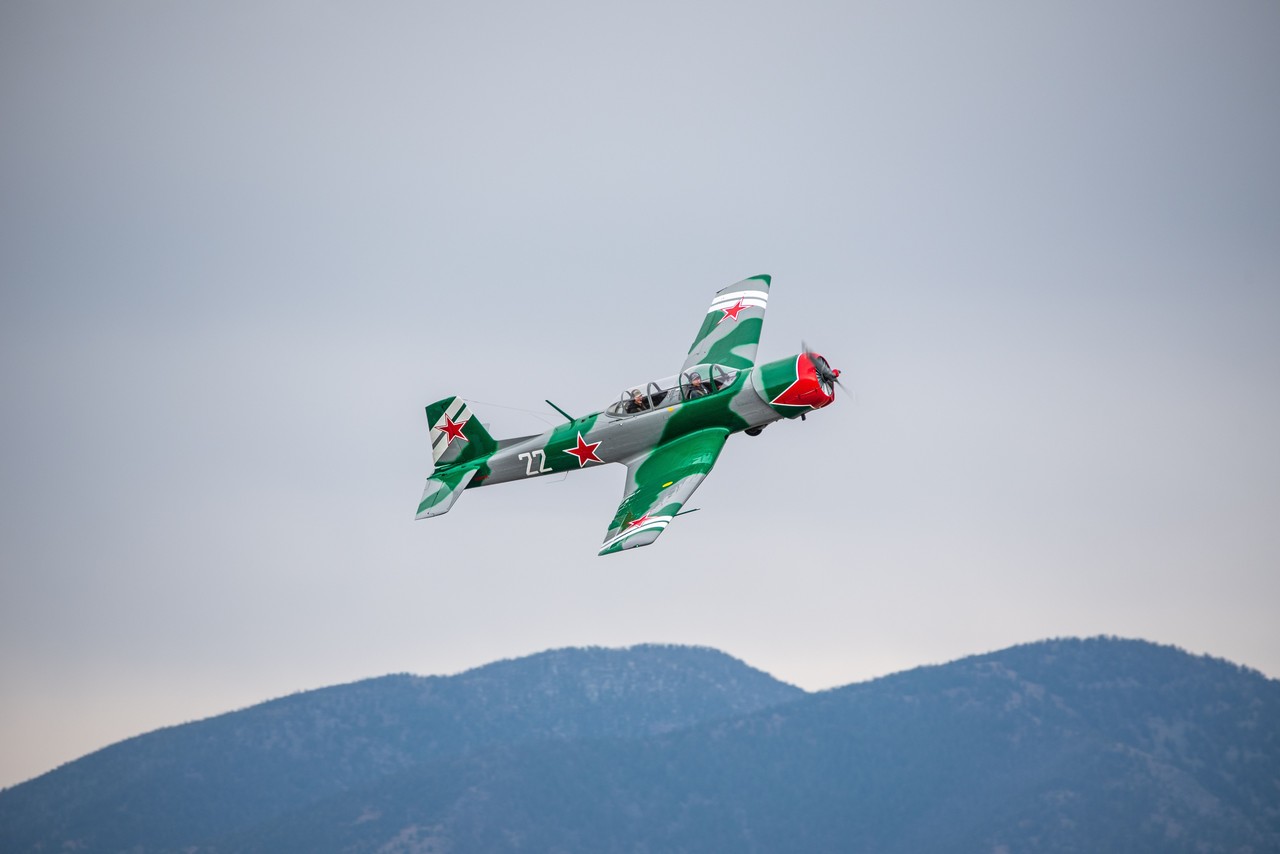
The design addressed critical deficiencies in the Soviet Yak-18A, which PLAAF engineers deemed unsuitable for Chinese training requirements. The CJ-6 featured an aluminum semi-monocoque fuselage with flush riveting, a modified Clark airfoil wing with pronounced dihedral in outer sections, and an angular vertical tail that distinguished it visually from Soviet predecessors. Most significantly, the aircraft incorporated tricycle landing gear, dramatically improving ground handling characteristics for student pilots.
Engine Development and Production Challenges
Initial flight testing revealed serious limitations with the prototype's Czech-built horizontally opposed piston engine, designated "Doris-B." The powerplant provided insufficient performance and created technical incompatibilities with the propeller system. In July 1960, engineers resolved these issues by installing a Soviet AI-14P engine producing 260 horsepower, paired with an F530D35 propeller.
China subsequently developed domestic engine production capabilities, manufacturing the Huosai HS-6 engine with identical 260-horsepower output. By 1965, the HS-6 received upgrades increasing power to 285 horsepower, redesignated as the HS-6A. Aircraft equipped with this enhanced powerplant became the CJ-6A variant. The production prototype achieved its first flight on October 15, 1961, followed by an extensive 612-hour flight test program encompassing over 1,800 takeoffs and landings before receiving government production approval in January 1962.
Military Service and Export Success
The CJ-6 became the backbone of PLAAF pilot training, preparing thousands of aviators for transition to jet fighters. Military operators praised the aircraft's rugged reliability, simplified maintenance requirements, and excellent handling characteristics that built pilot confidence. Production exceeded 3,000 aircraft for domestic military use, with additional thousands manufactured for international customers.
Export sales under the PT-6 designation reached multiple countries including Albania, Bangladesh, Cambodia, North Korea, Tanzania, Zambia, and Sri Lanka, which purchased 10 aircraft in 2002. Between 1964 and 1966, Nanchang produced an armed variant designated CJ-6B, with 10 aircraft retrofitted with weapons hardpoints for light attack missions.
The Manufacturer's Evolution
The Nanchang Aircraft Factory, established in the early 1950s, initially focused on licensed production of Soviet designs, manufacturing the CJ-5 variant of the Yak-18 from 1954 to 1959. The company's evolution into Hongdu Aviation Industry Group Ltd marked China's transition from dependence on foreign designs to indigenous aircraft development. Hongdu continues operations today, having collaborated with Yakovlev on the CJ-7 trainer designed to replace aging CJ-6 fleets.
Performance and Pilot Experience
Pilots consistently praise the CJ-6's well-harmonized flight controls and predictable handling characteristics. The aircraft demonstrates respectable aerobatic capabilities while maintaining forgiving flight characteristics essential for primary training. With its 260-horsepower radial engine, the CJ-6 provides sufficient performance for advanced training maneuvers while remaining economical to operate.
The tricycle landing gear configuration eliminated ground handling difficulties common to tail-wheel trainers, reducing training accidents and building student confidence during the critical early phases of flight training. These characteristics made the CJ-6 particularly valuable for military pilot production during China's rapid air force expansion.
Production Legacy and Modern Operations
CJ-6 production represents one of aviation's longest manufacturing runs, continuing in various forms until 2007 with the CJ-6G variant designed for general aviation and agricultural applications. Total production across all variants exceeded 10,000 aircraft, including specialized versions like the Haiyan series for crop dusting and aerial spraying operations.
The aircraft achieved civil aviation type certification on February 28, 2019, more than 60 years after entering military service. Today, over 200 CJ-6 aircraft operate in private hands, popular among warbird enthusiasts and frequent participants in airshows worldwide. An unknown number remain in military service globally, testament to the design's enduring utility and robust construction. The CJ-6's success established China's credentials as an independent aircraft manufacturer and paved the way for the nation's subsequent aviation industry development.