
Service History
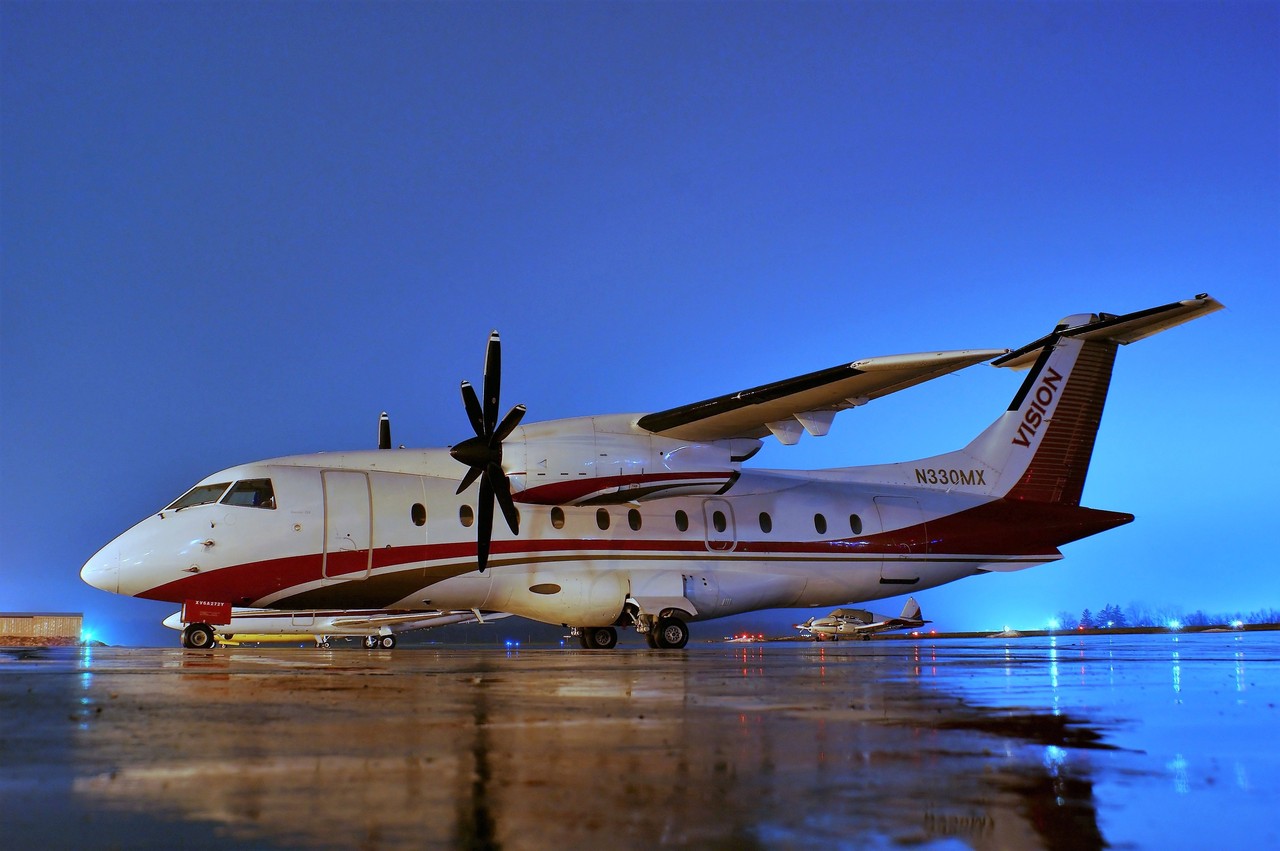
The Dornier 328 entered commercial service on October 13, 1993, capturing immediate attention from regional carriers seeking quiet, efficient aircraft for short-haul routes. Horizon Air demonstrated remarkable confidence in the untested design by placing the launch order for 35 aircraft in May 1991—before the prototype had even taken flight. This order represented the largest commitment to any regional aircraft that year, underscoring industry expectations for the 328's performance capabilities.
Of the 217 turboprop variants produced between 1991 and 2000, approximately 150 remain in active service today, testament to the aircraft's operational reliability and enduring appeal to regional operators worldwide. The 328's commercial success was later complemented by the 328JET variant, which entered service in July 1999 with 110 examples built through 2002.
The Manufacturer
Dornier Luftfahrt GmbH launched the 328 program following extensive market research conducted by Deutsche Aerospace in the mid-1980s, which identified strong demand for a 30-seat commuter airliner emphasizing speed and quiet operation. The program received formal approval in 1988 after negotiations between Dornier and Daimler Benz, leading to the December 1991 first flight.
The company's ownership structure underwent significant changes during production. In 1996, American firm Fairchild Aircraft acquired Dornier, creating Fairchild Dornier with sales operations in San Antonio, Texas, while maintaining production and support facilities in Germany. This transatlantic arrangement continued until Fairchild Dornier's insolvency in 2002, effectively ending the original production run.
Following the manufacturer's collapse, AvCraft Aviation of Virginia acquired the 328 program in March 2003, obtaining design rights and 18 partially completed 328JETs. AvCraft managed to deliver aircraft until 2005 before entering administration. Currently, Deutsche Aircraft has revived the program, conducting a groundbreaking ceremony for a new final assembly line at Leipzig/Halle Airport in May 2023, with plans for a modernized D328eco variant.
Engine & Technical Innovation
The 328's Pratt & Whitney Canada PW119 turboprops were specifically selected for their exceptional quietness and reliability, addressing airline concerns about passenger comfort and operational efficiency. This powerplant choice proved prescient, as the aircraft's quiet operation became one of its most marketable features in an increasingly noise-conscious regulatory environment.
The aircraft featured an advanced glass cockpit configuration, representing cutting-edge avionics technology for regional aircraft of the early 1990s. The 328JET variant, which first flew on January 20, 1998, utilized Pratt & Whitney Canada PW306B turbofans and incorporated the Honeywell Primus 2000 EFIS avionics system as standard equipment, along with an auxiliary power unit.
Testing Challenges and Certification
The 328's development encountered a dramatic setback on December 14, 1992, when a test aircraft experienced a catastrophic propeller failure. All six blades from one engine detached, puncturing the fuselage and causing the aircraft to roll 280 degrees while descending 5,000 feet before pilots recovered control. This incident extended the certification timeline by nearly two years but ultimately validated the aircraft's structural integrity under extreme conditions.
A second prototype successfully flew on June 4, 1992, and comprehensive testing continued through 1993. The turboprop variant achieved certification and entered service in October 1993, while the 328JET received certification in July 1999.
Market Position and Legacy
The 328 entered service during a pivotal period in regional aviation, competing against numerous established turboprop designs while facing growing pressure from emerging regional jets. Despite achieving technical success with its combination of speed and quiet operation, the aircraft never reached Dornier's optimistic production target of 400 units, partly due to economic recession and shifting market preferences toward jet-powered regional aircraft.
The 328JET variant has demonstrated greater longevity, with 18 examples remaining active across ten operators worldwide, including SUN-AIR in Scandinavia. These aircraft continue providing reliable service in both commercial passenger and executive transport roles, with executive variants accommodating up to 15 passengers with range capabilities spanning routes like London to Ibiza or New York to Atlanta.
Deutsche Aircraft's planned revival, targeting first flight in 2025 and annual production capacity of up to 48 aircraft at Leipzig/Halle, suggests the 328's design philosophy remains relevant in today's regional aviation market. The D328eco represents an evolution of the original concept, adapted for contemporary efficiency and environmental standards while retaining the fundamental characteristics that made the original 328 a respected, if limited-production, regional aircraft.