
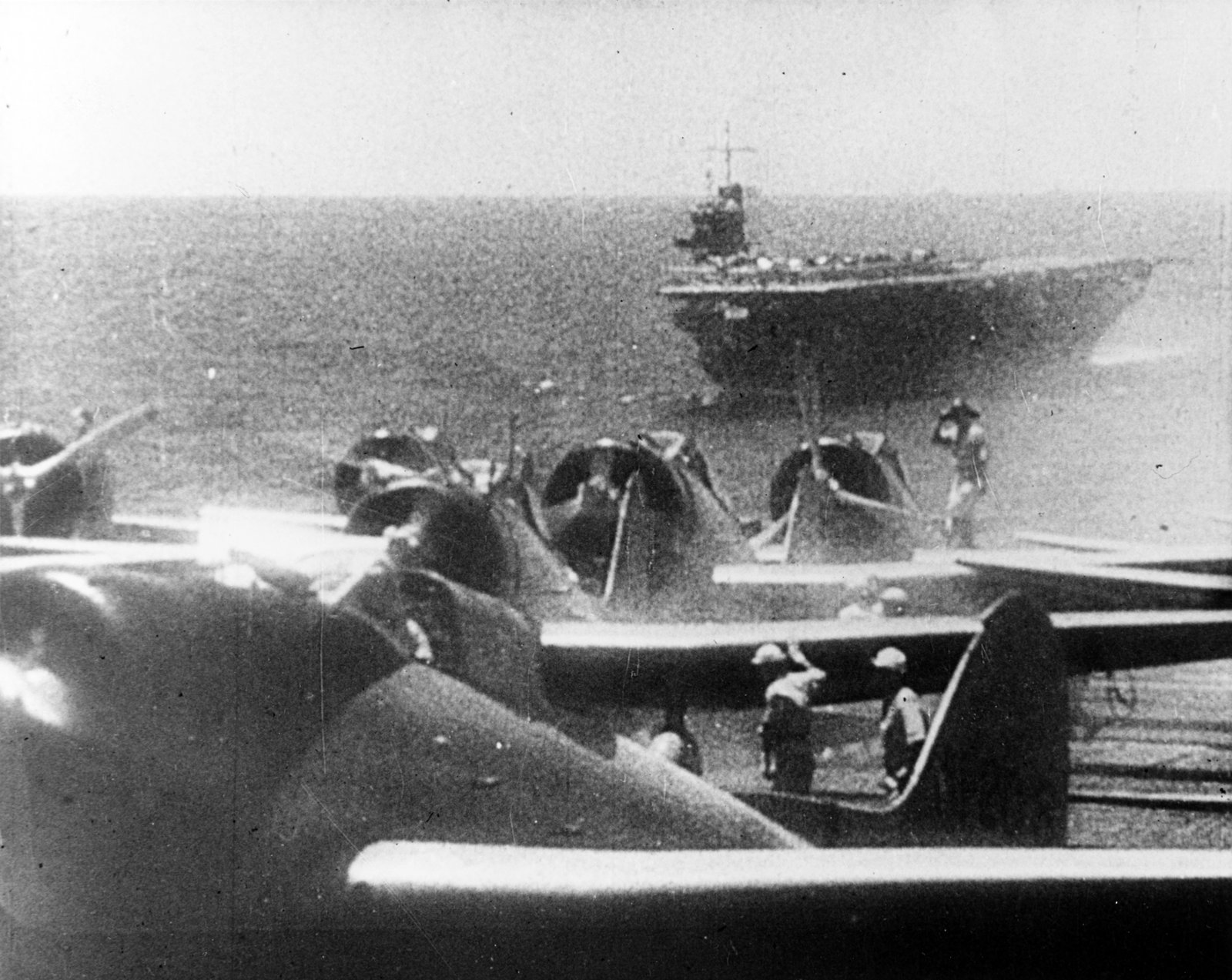
The Aichi D3A, designated by Allied forces as the "Val," served as the cornerstone of the Imperial Japanese Navy's (IJN) dive-bombing capabilities during World War II. The aircraft was developed by Aichi Kokuki Kabushiki Kaisha after a design team led by Hideo Itokawa won a competitive evaluation against a proposal from Nakajima. The D3A first took flight in January 1938 and was praised for its superior handling and efficiency in dive-bombing operations.
Production of the aircraft spanned from December 1939 to June 1944, resulting in a total of 1,495 units. This production run included 470 D3A1 Model 11 aircraft and 815 D3A2 Model 22 production aircraft, along with a single D3A2 Model 12 prototype. Technical evolution between the variants was primarily driven by engine upgrades. The D3A1 utilized a Nakajima Hikari air-cooled radial piston engine producing 710 hp during the prototype phase. In contrast, the D3A2 was equipped with a more powerful Mitsubishi Kinsei 54 radial engine rated at 1,300 hp, which, combined with increased fuel capacity, significantly improved the aircraft's performance.
Operational history for the D3A began in November 1939, when it first saw combat from land bases in China during the Second Sino-Japanese War. However, it is most famous for its role as the principal carrier-borne dive bomber in the Pacific. The D3A was the first Japanese aircraft to strike American targets, beginning with the attack on Pearl Harbor and subsequent strikes on U.S. bases in the Philippines. It played a critical role in major engagements including the Coral Sea, Midway, and the Santa Cruz Islands. According to historical records, the D3A sank more Allied warships than any other Axis aircraft. As the IJN's carrier strength diminished, the aircraft was increasingly operated from land bases and eventually relegated to trainer and kamikaze roles.
Performance specifications for the D3A2 include a maximum speed of 267 mph, a cruise speed of 139 mph, and a service ceiling of 34,450 ft. It featured a maximum takeoff weight of 8,378 lb and a range of 840 miles. While some sources describe the cockpit as a two-seat tandem enclosed configuration, others list a crew of three. Today, surviving examples are rare, though the Planes of Fame Air Museum possesses an Aichi D3A2 that is being restored to flight status.