
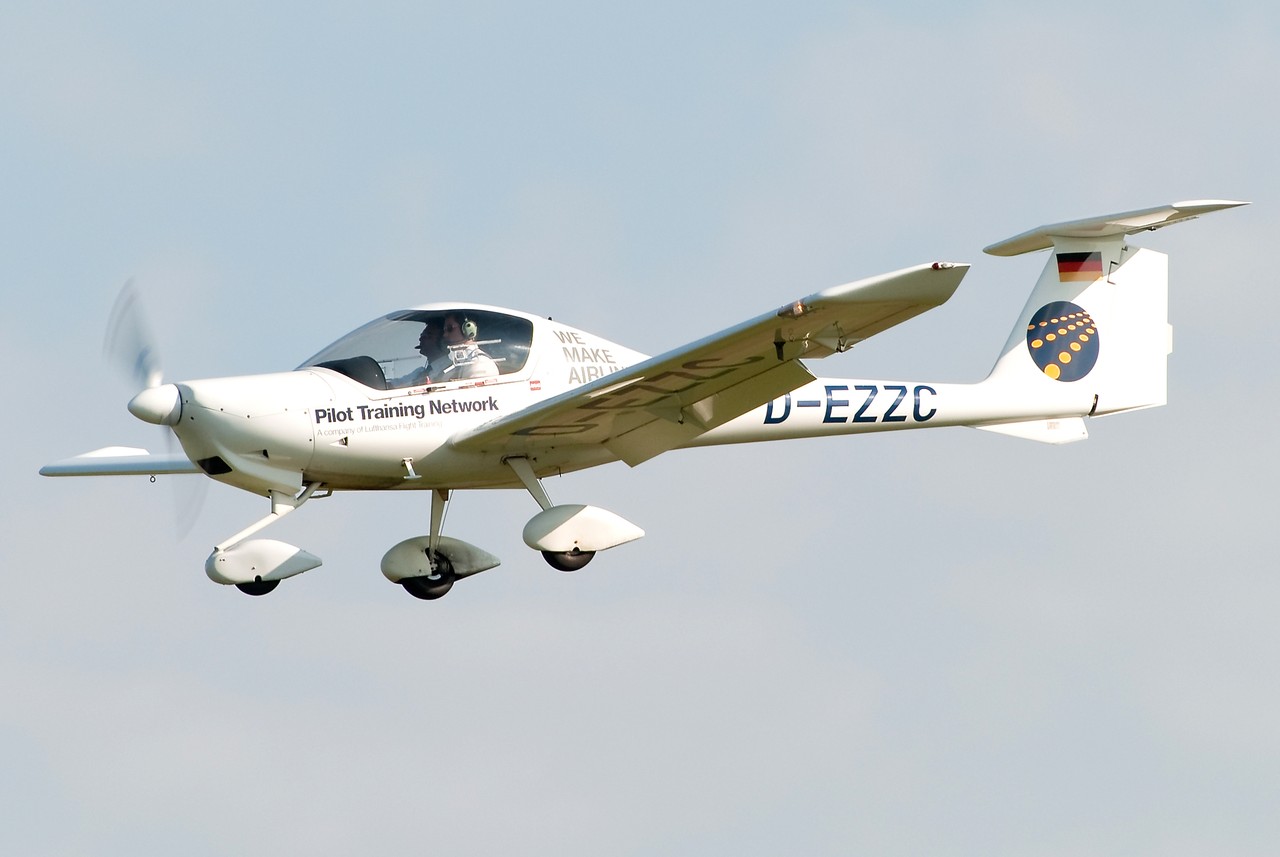
Revolutionary Composite Construction
The DA-20's introduction to North American aviation marked a watershed moment in general aviation manufacturing. While composite construction was standard in Europe, Diamond's all-composite fuselage and wing design was revolutionary for North America in the mid-1990s. The aircraft featured fuselage halves joined longitudinally down the centerline, with wings constructed from upper and lower halves using lay-up and vacuum-bagging processes before hot-curing in ovens. This innovative approach influenced major manufacturers including Cirrus, Lancair, and Cessna to adopt similar construction methods.
Training Excellence and Market Dominance
Since U.S. deliveries began in late 1994, the DA-20 has established itself as a cornerstone of flight training operations. The aircraft's combination of modern avionics, predictable handling characteristics, and fuel efficiency has made it the preferred choice for flight schools, flying clubs, and private owners. Recent surges in demand have been so significant that Diamond Aircraft reintroduced European production of the DA-20i variant to meet market needs, demonstrating the design's continued relevance after three decades.
The Diamond Aircraft Story
Diamond Aircraft Industries traces its origins to Hoffmann Flugzeugbau, founded in 1981 in Carinthia, Austria. The company established its North American operations in London, Ontario, Canada in 1992, specifically to develop a North American version of the Katana. Through the 1990s, the company underwent several transformations: the North American branch became Diamond Aircraft in 1996, and the parent company was renamed Diamond Aircraft GmbH in 1998. In late 2017, co-founder Christian Dries sold the entire Diamond Aircraft Industries group upon his retirement. Today, the company operates under Chinese ownership through Wafeng Aviation Industry Co., Ltd., which manages manufacturing at the Wuhu Diamond facility in China.
Engineering Heritage and Evolution
The DA-20's lineage traces back to the H36 Dimona motorglider, from which engineers developed a fixed tricycle landing gear variant featuring shortened wings with distinctive winglets. The DV20-A1 Katana prototype completed its maiden flight on March 16, 1991, achieving certification in 1993. This motorglider heritage contributed to the aircraft's exceptional fuel efficiency and benign handling characteristics that make it ideal for training operations.
Power Plant Diversity
Diamond has offered the DA-20 with multiple engine configurations throughout its production run. The original DA20-A1 variant utilized the Austrian-built Rotax 912 engine producing 80 horsepower, driving a two-bladed variable-pitch propeller. Later in the 1990s, an upgrade program introduced the more powerful Rotax 912S generating 100 horsepower. In 1998, Diamond introduced the DA20-C1 variant powered by the Continental IO-240 flat-four air-cooled engine producing 125 horsepower. This powerplant change necessitated significant design modifications including increased wing sweep, internal system rearrangement, and the adoption of slotted flaps replacing the simple hinged flaps of the Rotax-powered variants. The newest DA20i features the modern Rotax 912 iSc3 Sport engine, representing the latest evolution in efficiency and reliability.
Performance and Pilot Appeal
Pilots praise the DA-20 for its predictable handling characteristics and impressive fuel economy. The Rotax-powered DA20i achieves remarkable fuel consumption of just 2.9 gallons per hour at long-range cruise power settings at 8,000 feet, while the Continental-powered DA20-C1 consumes 5.3 gallons per hour under similar conditions. With a maximum operating altitude of 13,100 feet and a useful load of up to 606 pounds, the aircraft provides genuine cross-country capability alongside its training mission.
Global Production Legacy
Production of the DA-20 has spanned multiple continents and manufacturing facilities. Initially built in Austria, production shifted to London, Ontario, Canada in 1995 before moving to China under license by Wuhu Diamond, Ltd. by 2004. With over 1,000 aircraft delivered and continuous production spanning more than 30 years, the DA-20 ranks among the most successful training aircraft designs of the modern era. The recent reintroduction of European production, complete with Garmin G500TXi glass cockpit displays, demonstrates the enduring market appeal of this composite design that helped reshape general aviation manufacturing standards across the industry.