
Service History
The DC-10 entered commercial service with American Airlines on August 5, 1971, operating the Chicago to Los Angeles route. By the mid-1970s, the aircraft had captured significant market share among airlines seeking wide-body capacity without the Boeing 747's massive size requirements. The Series 30 variant proved especially successful with European carriers, with 163 units built and deliveries to 38 countries. Swissair and KLM became launching customers for this extended-range version in November 1972, establishing the DC-10's reputation for reliable intercontinental service.
Federal Express adopted the DC-10-30F all-freighter variant beginning January 24, 1986, utilizing its ability to carry palletized payloads of 175,000 pounds across distances exceeding 3,800 miles. The aircraft's versatility allowed operations from relatively constrained airports like New York's LaGuardia with full passenger loads to Chicago, while longer runways enabled transatlantic missions.
The Manufacturer
McDonnell Douglas Corporation emerged from the 1967 merger of McDonnell Aircraft Corporation and Douglas Aircraft Company, combining McDonnell's military expertise with Douglas's commercial aviation heritage. The company operated independently for three decades, producing both military and civilian aircraft from facilities in Long Beach, California, and St. Louis, Missouri. Major DC-10 fuselage components were manufactured at the Convair Division of General Dynamics in San Diego, which constructed exactly 614 fuselage sets for both DC-10 and MD-11 programs.
Boeing acquired McDonnell Douglas in 1997, ending the company's independent existence and consolidating the American commercial aviation industry. The acquisition brought Boeing control of the DC-10's successor, the MD-11, along with McDonnell Douglas's military aircraft programs including the F-15 Eagle and F/A-18 Hornet fighter jets.
Engine & Technical Details
The DC-10's powerplant varied by series, with the Series 10 employing three General Electric CF6-6 engines producing 40,000 pounds of thrust each. The more successful Series 30 utilized CF6-50 engines with enhanced fuel efficiency and greater range capability. A smaller production run of Series 20 and 40 aircraft featured Pratt & Whitney JT9D turbofans, with only 42 units built between 1973 and 1983 for Northwest Orient Airlines and Japan Airlines.
These turbofan engines represented a quantum leap in aviation technology, generating twice the power of earlier turbojet designs while producing half the noise levels. The aircraft incorporated an inertial navigation system (INS) for autonomous flight management, a sophisticated feature for the early 1970s. Flight crews consisted of three members: captain, first officer, and flight engineer, following industry standards for wide-body aircraft of the era.
Military Service
The United States Air Force acquired 60 KC-10 Extender aircraft as aerial refueling tankers and cargo transports. These military variants featured boom refueling systems and reinforced cargo floors, with current plans calling for service until 2043, though earlier retirement has been considered. The KC-10's ability to carry both fuel and cargo simultaneously provided strategic flexibility for military operations.
The Royal Netherlands Air Force operates three converted DC-10s in military configuration. Two aircraft, designated T-235 and T-264, received KDC-10 modifications including tanker booms and complete avionics updates with glass cockpit displays. The third aircraft, T-255, serves exclusively in transport roles without refueling capability.
Production & Legacy
DC-10 production spanned exactly 20 years from January 1968 through December 1988, with the final aircraft delivered to Nigeria Airways. The production total of 446 aircraft comprised 386 commercial airliners and 60 military KC-10 variants. Manufacturing concluded as McDonnell Douglas shifted resources to the MD-11 program, which incorporated digital flight systems and improved fuel efficiency.
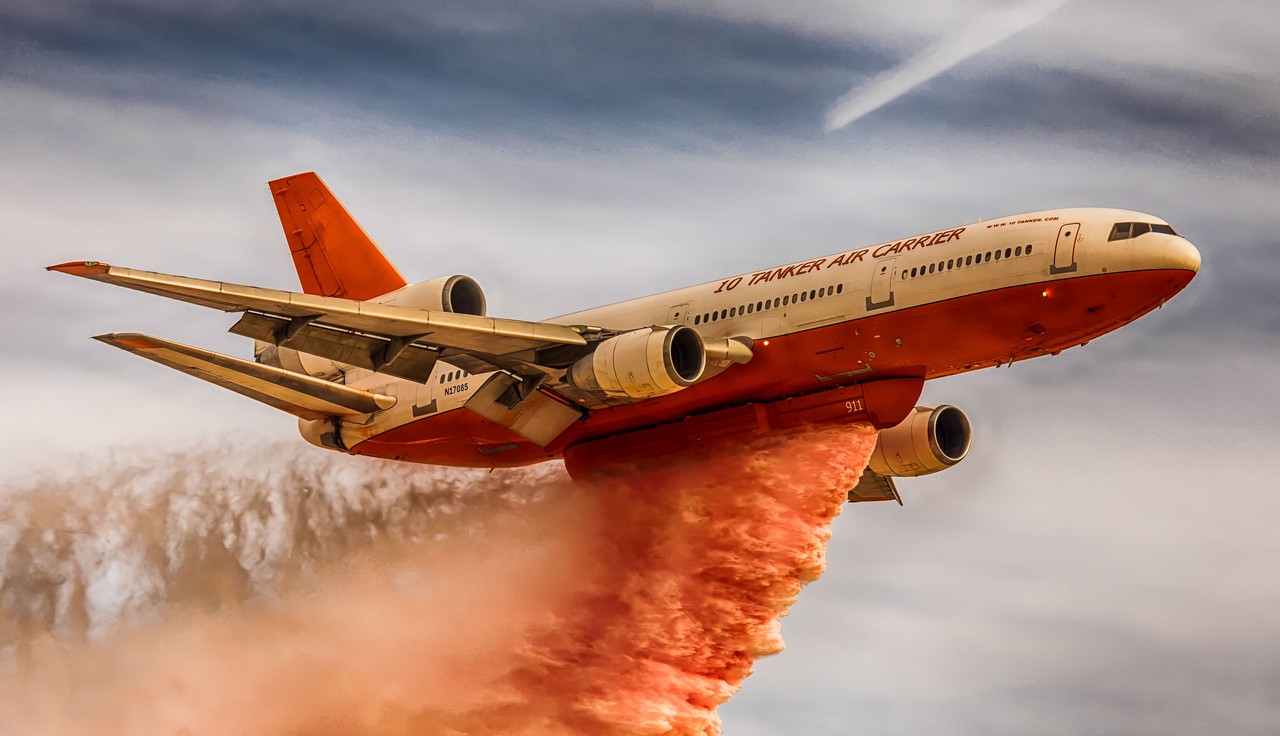
Commercial passenger service with DC-10s effectively ended on February 20, 2014, when Biman Bangladesh Airlines operated the type's final revenue flight from Dhaka to Birmingham. However, the aircraft continues operating in cargo roles, with many Series 30 variants converted to -30F freighter configuration. Federal Express DC-10s received MD-10 upgrades featuring modern avionics and two-person flight crews, extending their operational lives well into the 21st century.
The DC-10's fundamental contribution to aviation was making wide-body, long-range capability accessible to airlines beyond those operating Boeing 747s. Its three-engine configuration provided operational flexibility and reduced infrastructure requirements compared to four-engine aircraft, while offering significantly greater capacity than narrow-body jets. This positioning established a market segment that influenced subsequent aircraft development and made intercontinental travel more economically viable for carriers worldwide.