
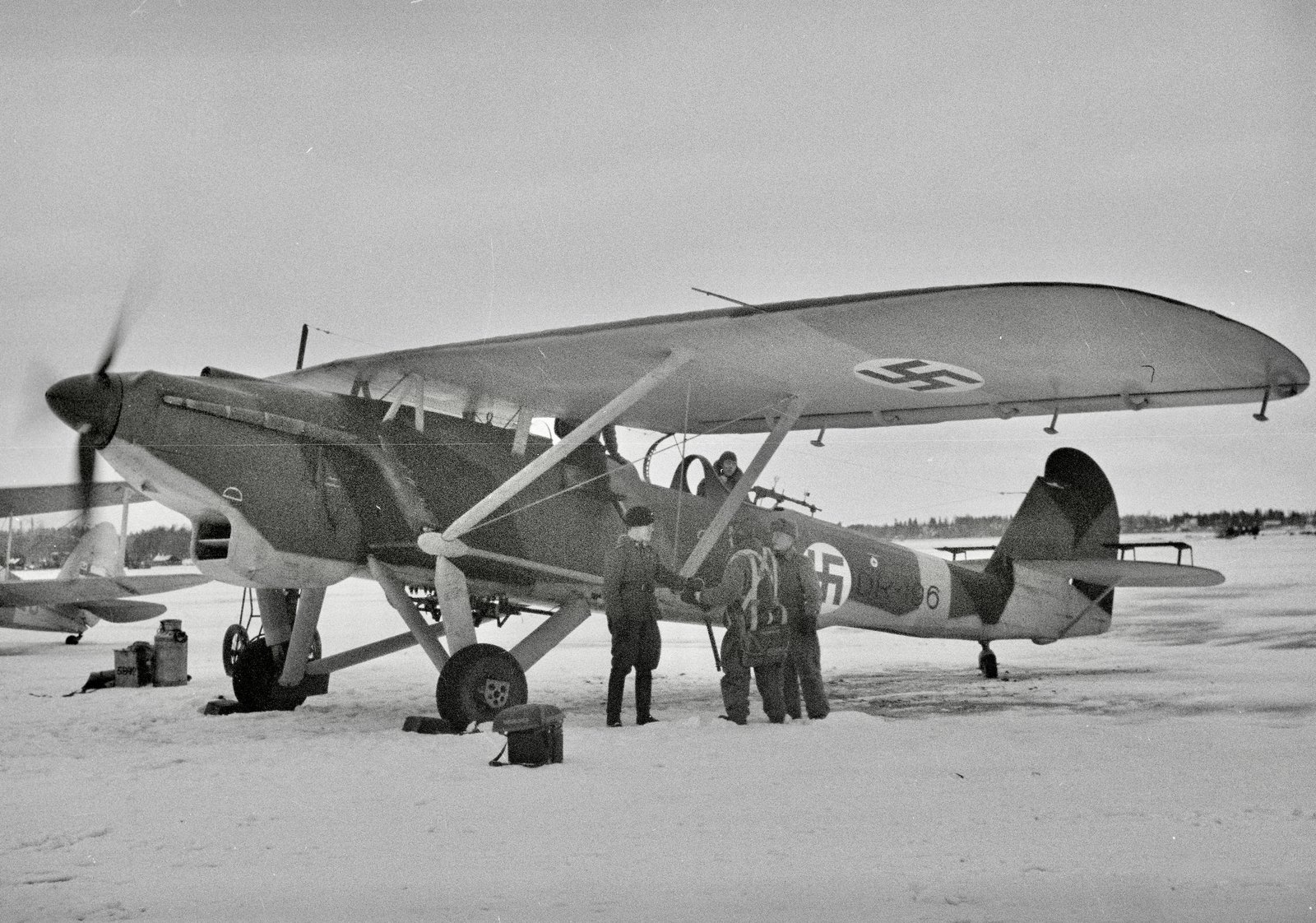
The Dornier Do 22 was a versatile military aircraft designed for reconnaissance, light bombing, and torpedo attack roles. Developed by Dornier Flugzeugwerke, the project began in 1934 as a derivative of the earlier Do C2 seaplane. To facilitate covert German rearmament, initial design work was conducted at Dornier's facility in Altenrhein, Switzerland, though series production was later carried out at the company's factory in Friedrichshafen, Germany.
Technically, the Do 22 was a high-wing, strut-braced monoplane featuring a metal airframe with fabric covering on certain surfaces. It was designed for flexibility, capable of being configured with floats, wheels, or skis. A single land-based prototype, the Do 22L, was built with fixed undercarriage and spatted wheels, though it never entered series production. The aircraft was powered by a French-made Hispano-Suiza 12Ybrs liquid-cooled V-12 piston engine, which produced approximately 860 hp. This powerplant allowed the floatplane to reach a maximum speed of 350 km/h (220 mph) at 3,000 meters, with a service ceiling of 9,000 meters and a range of 2,300 km.
Production was limited, with approximately 30 aircraft built between 1938 and 1939. The first production aircraft flew on July 15, 1938. Because the Luftwaffe and the German Air Ministry (RLM) declined to adopt the type, it was marketed exclusively for export. Greece received 12 Do 22Kg variants, and Yugoslavia received 12 Do 22Kj variants. Additionally, four Do 22Kl aircraft originally intended for Latvia were diverted to Finland via a proxy after the Soviet occupation of Latvia in 1940.
During the Second World War, the Do 22 saw combat in the Mediterranean and Baltic theaters. Greek aircraft operated during the Greco-Italian War and the subsequent German invasion of Greece in 1941. Yugoslav aircraft fought during the April 1941 Axis invasion, with four surviving aircraft escaping to Egypt to operate under Allied control. In Finland, the Do 22Kl served as maritime patrol aircraft during the Continuation War, where they were credited with sinking one Soviet submarine and damaging another. The Finnish aircraft remained in service the longest, eventually being scrapped in 1956. No complete airframes are known to survive today.