
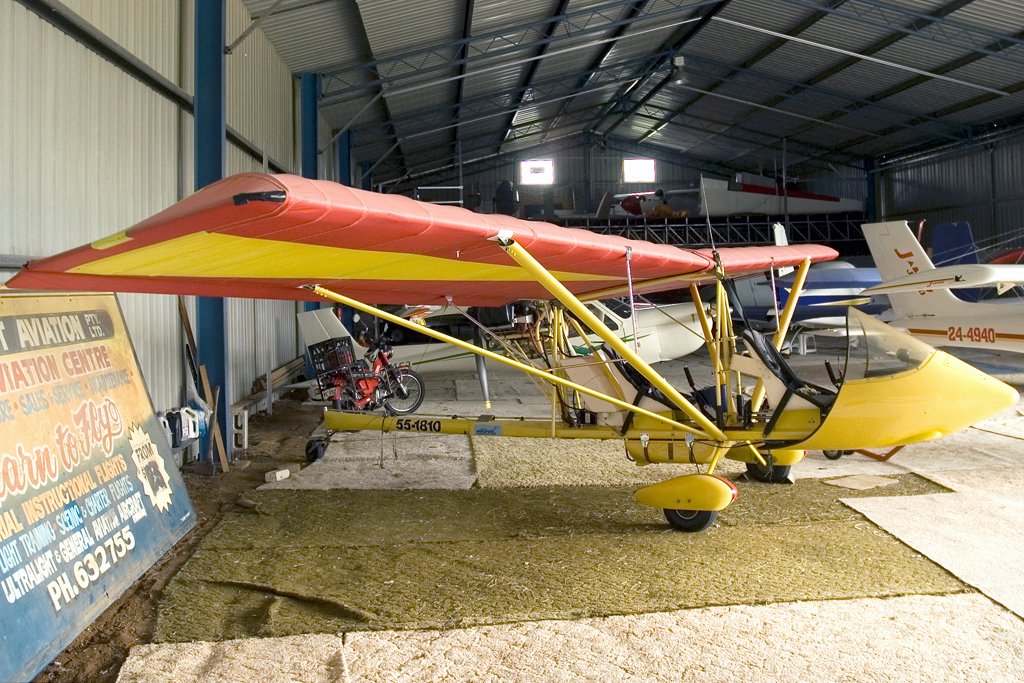
Development and Certification
The Austflight Drifter emerged from Dennis Franklin's original Maxair Drifter design, but Australian engineers extensively modified the concept to meet stringent Civil Aviation Safety Authority requirements. Austflight ULA Pty Ltd, incorporated in 1983 at Ballina, New South Wales, initially imported Maxair kits before developing their own certified variants. The company relocated to Boonah, Queensland in 1986, where they achieved CASA certification for the "Australian Drifter" in 1987.
The breakthrough came in December 1993 when the strut-braced SB version received CAO 101.55 certification, marking a significant milestone for ultralight aviation in Australia. This certification process, while financially demanding, established the Drifter as the first truly robust certified ultralight capable of commercial operations.
The Manufacturer's Journey
Austflight ULA Pty Ltd operated for nearly two decades before financial pressures from certification costs and an ambitious Chinese joint venture led to its collapse in May 2002. The company had formed a 50 percent partnership with Shanghai Aircraft Manufacturing Factory in late 1995, creating Shanghai Fenton Light Aircraft Company to produce Drifters to Australian standards. While this venture demonstrated the design's international appeal, it contributed to the parent company's financial strain.
Following Austflight's demise, Noosa Air Pty Ltd acquired the assets and type certificate. However, production truly resumed when Drifter Aircraft Pty Ltd, a family-owned operation with 30 years of aviation experience, established operations at Dalby, Queensland. This company received its CASA production certificate on June 1, 2006, ensuring the Drifter's continued availability.
Service Excellence
The Austflight Drifter earned its reputation through exceptional durability in Australia's harsh operating environment. Aircraft accumulated thousands of operational hours in aerial mustering, where extreme heat, dust, and demanding flight profiles tested every component. Some examples exceeded 10,000 hours in banner towing operations, while training aircraft routinely surpassed 3,000 hours without major overhauls.
This reliability stemmed from thoughtful engineering choices, including the aluminum tube keel frame design and wire-braced kingpost configuration. The open cockpit layout, while spartan, provided excellent visibility for agricultural and mustering work. The steerable tailwheel landing gear proved ideal for rough airstrips common in remote Australian stations.
Engine and Performance
Most Austflight Drifters utilized Austrian-manufactured Rotax two-stroke engines, primarily the Rotax 503 and 582 models. Later variants adopted the four-stroke Rotax 912 UL, producing 80 horsepower and 60 kilowatts. These powerplants proved exceptionally reliable in the demanding Australian environment, with the lightweight Rotax 503's 28 horsepower enabling ultralight category compliance while providing adequate performance.
The SB 582 variant measured 22 feet in length with a 30-foot wingspan and 10-foot height. Empty weight of 495 pounds allowed a maximum takeoff weight of 1,000 pounds, providing that crucial 505-pound useful load. Wing area of 160 square feet delivered gentle handling characteristics appreciated by student pilots and experienced operators alike.
Operational Impact
Beyond recreational flying, the Austflight Drifter found extensive commercial applications throughout Australia and New Zealand. Flight training schools adopted the type for its forgiving characteristics and low operating costs. Agricultural operators employed Drifters for crop spraying and livestock mustering, while photographers and banner-towing services valued the aircraft's stability and visibility.
Tiger Aviation of Trenton, South Carolina, imported SB versions to the United States during the 1990s, expanding the type's international footprint. The aircraft's success influenced ultralight certification standards globally, demonstrating that properly engineered light aircraft could achieve airline-level reliability.
Production Legacy
Austflight manufactured approximately 500 Drifters during its production run, contributing to the overall Drifter family total exceeding 1,425 aircraft by 2011. While Lockwood Aviation continued producing wire-braced variants in Florida, the Australian strut-braced configuration represented a distinct evolutionary branch.
Today, Drifter Aircraft Pty Ltd maintains production capabilities and parts support, ensuring continued airworthiness for the fleet. The company's family ownership provides continuity that larger manufacturers often cannot match. Kit aircraft remain available with approximately 300 hours required for completion, making the design accessible to amateur builders.
The Austflight Drifter's influence extends beyond its production numbers. By proving that ultralight aircraft could meet commercial certification standards while maintaining affordability and simplicity, it established the foundation for modern light sport aircraft regulations. Its success in aerial work applications demonstrated the economic viability of purpose-built ultralight designs, inspiring subsequent generations of utility aircraft.