
Service History
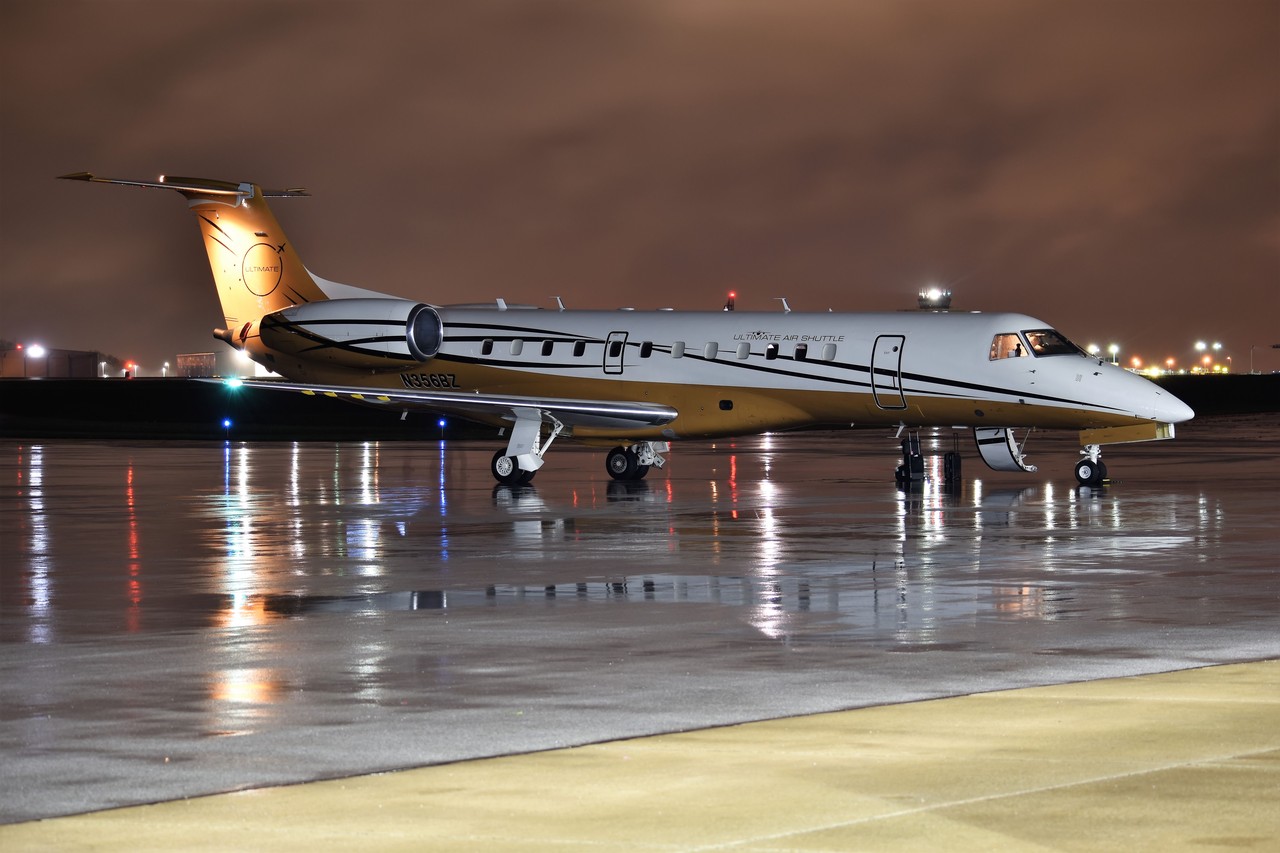
The ERJ-135 entered commercial service as airlines worldwide abandoned turboprop aircraft in favor of faster, quieter jets for regional routes. ExpressJet Airlines became the largest operator of the ERJ family, flying the type extensively throughout the Continental Express network. American Eagle Airlines operated the majority of ERJ-140s (internally designated EMB-135KL), with their first delivery registered as N800AE. By May 2011, nearly 990 aircraft from the ERJ-135/140/145 family remained in active service across multiple carriers, demonstrating the type's commercial success.
The aircraft proved exceptionally reliable in airline operations, with the entire ERJ family accumulating over 15 million flight hours by June 2009 without a single mechanical failure resulting in casualties. This safety record, combined with modern jet amenities, accelerated the industry-wide shift from regional turboprops to jets during the late 1990s and early 2000s.
The Manufacturer
Embraer (Empresa Brasileira de Aeronáutica) was founded by the Brazilian government in 1969 and privatized in 1994, just as the company began developing its revolutionary regional jet family. The manufacturer had previously focused on turboprops like the EMB 120, but market research in the early 1990s revealed strong demand for faster regional aircraft. Unsatisfactory wind tunnel tests of the EMB 120 in 1990 convinced Embraer engineers to pursue an entirely new jet-powered design.
The company expanded internationally during ERJ production, establishing Harbin Embraer as a joint venture in China in 2003 to assemble ERJ-145 family aircraft from Brazilian-manufactured kits. This partnership helped Embraer access the growing Asian market while maintaining primary production at its Brazilian facilities. Today, Embraer continues as one of the world's leading regional aircraft manufacturers.
Engine & Technical Details
Two Rolls-Royce AE 3007A3 turbofan engines power the ERJ-135, mounted on the rear fuselage in a configuration that improves aerodynamic efficiency and reduces cabin noise. The engines incorporate FADEC (Full Authority Digital Engine Control) systems that differentiate thrust settings across the various ERJ models. This rear-engine placement, combined with the aircraft's swept wings at 22.3 degrees, represented a significant advancement over earlier regional aircraft designs.
The ERJ-135 maintains 95 percent parts commonality with its larger ERJ-145 sibling while measuring 11.6 feet shorter in overall length. This design philosophy allowed Embraer to develop the ERJ-140 variant for just 45 million dollars, demonstrating the cost-effectiveness of the modular approach. Standard crew complement consists of two pilots, with cabin configurations typically accommodating 37 passengers in a comfortable three-abreast layout (2+1 seating).
Production & Development
Embraer began ERJ family production in 1995, with specific ERJ-135 manufacturing running from approximately 1999 through at least 2003. The development timeline included the aircraft's rollout on May 12, 1998, following its successful first flight the previous year. By 2006, Embraer had delivered 892 units across all ERJ-135/140/145 variants, with industry forecasts predicting an additional 102 deliveries through 2016.
The ERJ-135's design success stemmed from Embraer's decision to create a family of aircraft rather than a single model. Engineers developed the ERJ-135 as the shortest variant, the ERJ-140 as a stretched version with 40 seats, and the ERJ-145 as the longest family member. This approach allowed airlines to operate multiple aircraft types with minimal additional training costs and parts inventory.
Legacy
While many ERJ-135s have been retired from passenger service, the type's influence on regional aviation remains significant. Aircraft like N16501 entered storage in October 2017, and N701MH was withdrawn in November 2018, reflecting the natural aging of the fleet after two decades of service. The ERJ family's commercial success validated the market for small regional jets and influenced subsequent aircraft development by competitors.
The ERJ-135 achieved its primary objective of replacing turboprops in regional service, offering passengers jet-like speed and comfort on short routes previously served by slower propeller aircraft. Its entry into service marked a turning point in regional aviation, establishing jet service as the standard for routes previously considered too short for turbine aircraft. Although exact numbers of airworthy ERJ-135s remain unclear, the type's operational legacy continues through airlines worldwide that still rely on regional jets for essential connectivity.