
Market Dominance and Commercial Success
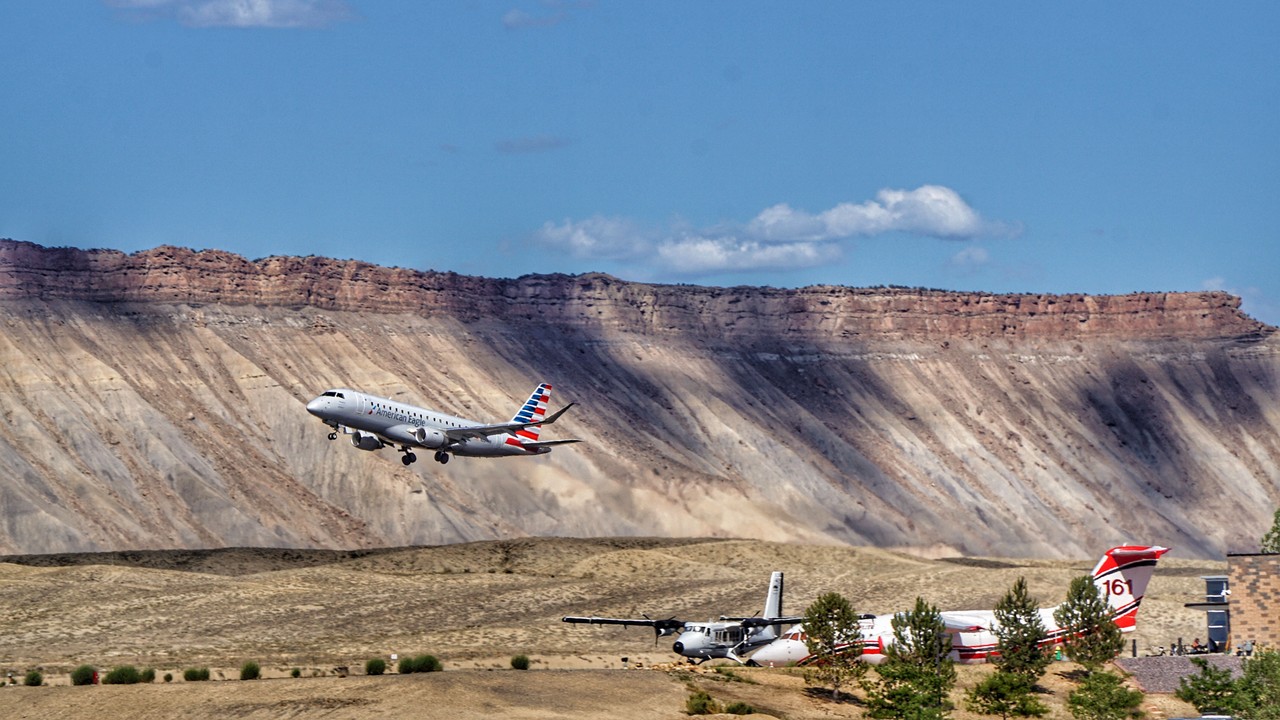
The ERJ-170-100 transformed Embraer into the world's third-largest aircraft manufacturer behind Boeing and Airbus, capturing an impressive 80 percent of the North American 76-seat regional jet market. Following its March 2004 entry into service with launch customer LOT Polish Airlines, the E170 family accumulated over 1,600 deliveries across the entire E-Jet series by 2018. The aircraft filled a crucial market gap, offering significantly more passenger comfort than the smaller ERJ-145 while remaining economical for regional routes.
The Manufacturer's Rise
Embraer's journey to E-Jet success began in 1969 when the Brazilian government established Empresa Brasileira de Aeronáutica as a state-owned enterprise. After privatization in 1994, the company leveraged its ERJ-145 regional jet success—delivering over 900 units—to fund the ambitious E-Jet program. The company announced the new aircraft family on June 14, 1999, at the Paris Air Show, securing initial orders from European carriers Régional and Crossair. This bold move required collaboration with 16 risk-sharing partners and 22 suppliers, demonstrating Embraer's evolution from a regional manufacturer to a global aerospace player.
Development and Design Philosophy
Embraer's engineering teams designed the E170 to combine the operational familiarity of the ERJ-145 cockpit with a completely new, larger fuselage and wing structure. Component production began in July 2000, though the program faced delays due to integration challenges with Honeywell avionics systems. The prototype aircraft, designated PP-XJE, rolled out on October 29, 2001, from the São José dos Campos facility before making its maiden flight on February 19, 2002. Seven test aircraft participated in the certification program, utilizing Embraer's Gavião Peixoto flight test center, which features South America's longest runway at 5,000 meters.
Technical Innovation
The ERJ-170-100 incorporated advanced avionics systems and represented a significant technological leap from Embraer's previous generation aircraft. While maintaining cockpit commonality with the ERJ-145 to reduce pilot training costs, the E170 featured an entirely new wing design optimized for its operational envelope. The twin-engine turbofan configuration provided airlines with improved fuel efficiency and reduced maintenance costs compared to competing aircraft in the 70-seat segment.
Operational Service
LOT Polish Airlines received the first production ERJ-170-100 on March 17, 2004, marking the beginning of commercial operations. The aircraft quickly attracted additional operators including US Airways, Alitalia Express, and Air Canada, with the related E175 variant entering service in July 2005. Virgin Australia became an early adopter of the long-range E170-100LR variant, taking delivery of their first aircraft, registered VH-ZHA, in September 2007. These early operations validated the aircraft's performance characteristics and passenger appeal, leading to expanded orders across multiple variants.
Production Milestones
Embraer achieved significant production milestones throughout the E-Jet program, with LOT Polish Airlines receiving the 600th E-Jet family aircraft in September 2009. The manufacturer delivered the 900th aircraft to Kenya Airways on October 10, 2012, followed by the 1,000th unit to Republic Airlines for American Eagle service on September 13, 2013. Production continued steadily, reaching 1,400 deliveries by December 6, 2017, and achieving the 1,500th delivery to Horizon Air on December 18, 2018.
Current Status and Legacy
As of recent assessments, 114 ERJ-170-100 aircraft remain in active commercial service with 14 different carriers worldwide. While production of the original E-Jet family concluded as Embraer transitioned to the improved E-Jet E2 series with more efficient engines, the E170's impact on regional aviation remains substantial. The aircraft established Embraer as a credible competitor to established manufacturers and proved that emerging aerospace companies could successfully challenge traditional market leaders through innovative design and strategic partnerships. Today, Embraer S.A. continues operations from the same São José dos Campos facility where the first E170 took shape, having evolved into one of the world's most successful regional aircraft manufacturers.