
Service History
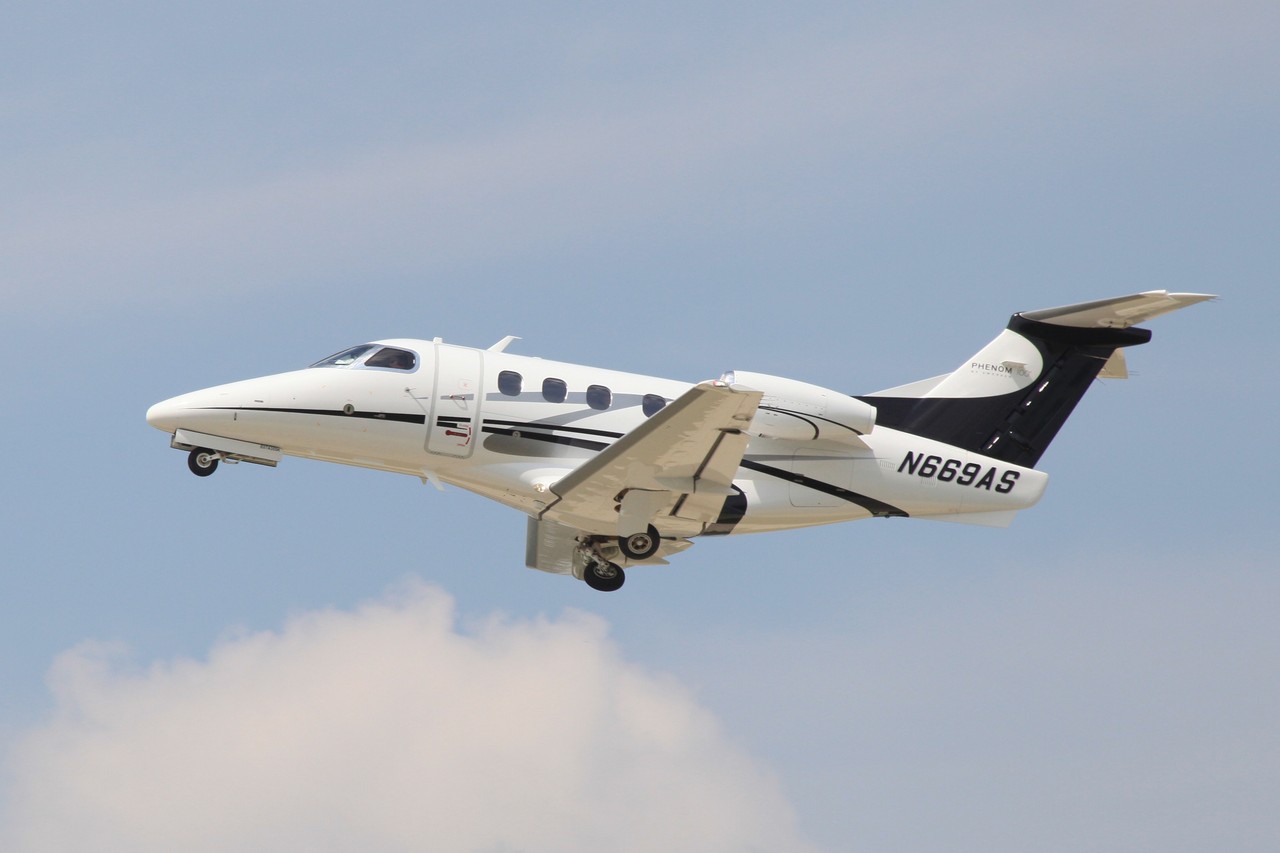
The Phenom 100 transformed the very light jet market by making business aviation accessible to a broader range of operators. Since entering service in December 2008, the aircraft has primarily served private owners, charter companies, and fractional ownership programs. Production peaked at 100 aircraft in 2010, with 386 units delivered by December 2020 and over 400 by 2024. The type's success stemmed from its positioning as an air taxi platform emphasizing operational simplicity, with design objectives targeting 35,000 operational cycles—20,000 more than competing aircraft.
Military Service
While designed for civilian use, the Phenom 100 found limited military application. In 2017, the Royal Air Force acquired two aircraft from Embraer's Melbourne, Florida facility for multi-engine aircrew training, replacing the aging King Air B200 and B200GT fleet. These aircraft, delivered via Brazil, marked the type's only documented military service, operating in a training role without armament or combat missions.
The Manufacturer
Embraer, founded in 1969 as a Brazilian state-owned enterprise, entered the business jet market in the 2000s after privatization in 1994. The Phenom 100 represented the company's inaugural very light jet program, announced in November 2005 following public development launch in May 2005. To address order backlogs, Embraer established its first U.S. assembly facility in Melbourne, Florida, in 2011, dedicated specifically to Phenom 100 production. By July 2016, the Florida plant had assumed complete final assembly responsibilities from the original São José dos Campos, Brazil facility, producing over 170 units by June 2016.
Engine & Technical Innovation
Powering the Phenom 100 are two Pratt & Whitney PW617F-E turbofan engines, with later variants utilizing the improved PW617F1-E powerplants introduced on the Phenom 100EV in 2017. These high-bypass turbofans underwent testing beginning in October 2006, with first delivery to Embraer in March 2007. The aircraft features advanced Garmin G1000 avionics and innovative multifunction spoilers on the Phenom 100E variant. Digital definition completion by March 2006 accelerated development, while four prototypes accumulated 1,600 test hours before certification.
Design Philosophy
Embraer's in-house design team prioritized operational simplicity and reliability over maximum performance. The aircraft accommodates one or two pilots, with single-pilot certification being a key selling point for cost-conscious operators. Passenger capacity ranges from five to seven occupants, with optimal configuration seating four to five passengers plus one aft lavatory. The cabin dimensions measure 4.92 feet in height, 5.08 feet in width, and 11 feet in length, with overall aircraft height reaching 14 feet 3 inches.
Performance Characteristics
The Phenom 100 delivers a maximum range of 915 nautical miles, positioning it perfectly for short-haul business missions. Its design emphasizes low operating costs and simplified maintenance procedures, making it attractive to operators transitioning from turboprops to jets. The aircraft's reliability focus and straightforward systems appeal to pilots seeking predictable handling characteristics in the very light jet category.
Production Legacy
With approximately 437 units built through 2024, the Phenom 100 established Embraer's credentials in business aviation. The Phenom 100EX variant, debuting at NBAA in 2023, sold out its production run, demonstrating continued market demand. As Embraer's oldest business jet in continuous production, the Phenom 100 paved the way for the company's expanded business aviation portfolio. Production continues as of 2024, with the type maintaining its position as Brazil's most successful entry into the competitive very light jet market.