
Service History
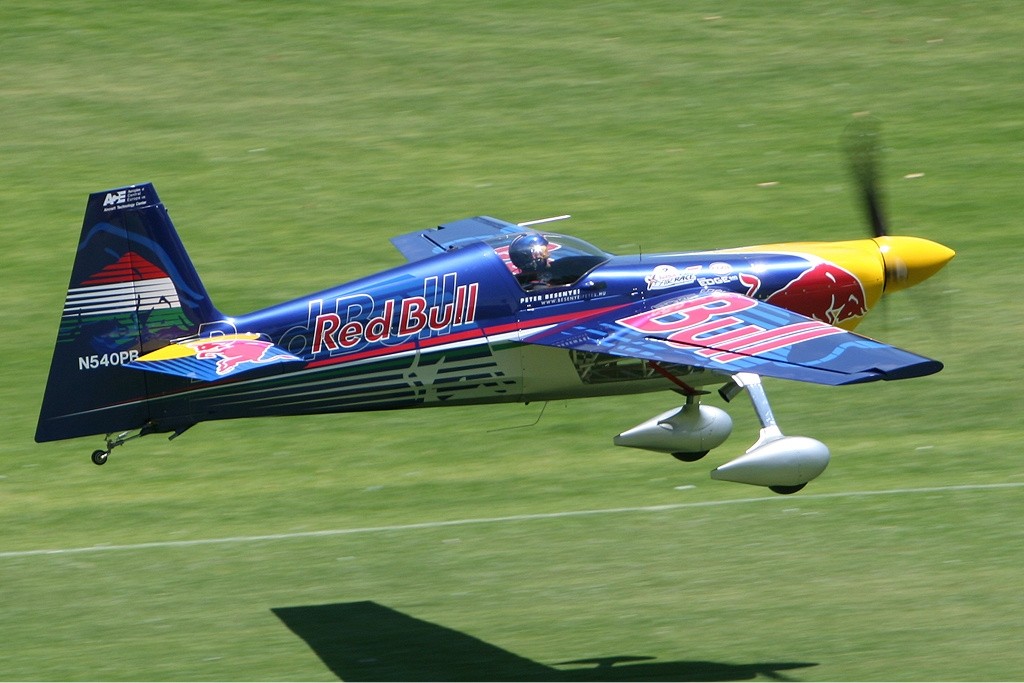
The Edge 540T has achieved unprecedented dominance in competitive aerobatics since entering service in 2000. Every Red Bull Air Race World Series champion since the mid-1990s has flown an Edge 540 variant, establishing it as the most successful unlimited-class aerobatic aircraft in competition history. By 2003, seven Edge 540Ts had been completed alongside 23 single-seat variants, forming part of more than 130 Edge 540 family aircraft manufactured worldwide.
The aircraft found immediate acceptance in international markets, with exports beginning in January 1997 to Germany, followed by deliveries to Mexico, South Africa, Switzerland, and Australia. Unlike typical general aviation aircraft, the Edge 540T serves exclusively in specialized roles including aerobatic competition, advanced pilot training, and air racing demonstrations.
The Manufacturer
Zivko Aeronautics was founded by Bill Zivko, an aircraft mechanic from Wisconsin who began his aviation career in the late 1960s. Based in Guthrie, Oklahoma, the company established itself as a pioneer in composite aircraft construction during the early 1990s. Zivko previously developed the Edge ZA-1 composite wing modification for Laser aircraft before embarking on the Edge 540 project.
By the early 1990s, Zivko Aeronautics had assembled a talented engineering team focused on advanced composite materials for lightweight, high-strength aircraft structures. The company remains operational today under its original name, continuing Edge 540 production and support from its Oklahoma facilities.
Design and Development
Bill Zivko led the Edge 540T design effort beginning in 1992, collaborating with engineers and experienced aerobatic pilots to create an aircraft exceeding all competitors in performance. The wing design featured custom aerodynamics by renowned designer John Roncz, incorporating a unique airfoil optimized for low stall speeds and extreme maneuverability.
The aircraft's innovative construction combines a computer-optimized steel-tube fuselage rated for sustained loads over 15G with composite components for optimal strength-to-weight ratio. Design objectives included achieving roll rates of 420 degrees per second while maintaining precise control authority throughout the aerobatic envelope.
First flight of the original Edge 540 occurred in 1993, with the tandem-seat Edge 540T variant following in March 2000. Key innovations included transparencies in cockpit sides and floor for enhanced visibility, complete inverted oil and fuel systems for sustained inverted flight, and pushrod-actuated ailerons and elevator with cable-operated rudder for maximum control precision.
Engine and Technical Specifications
The Edge 540T employs a modified Textron Lycoming AEIO-540-EXP six-cylinder horizontally-opposed piston engine producing 327 horsepower at 2,700 rpm. This powerplant incorporates a Christen inverted oil system and ZAI inverted fuel system, enabling unlimited aerobatic capability including sustained inverted flight.
Power transmission utilizes a three-bladed Hartzell HC-C3YR-4AX composite constant-speed propeller optimized for aerobatic performance. Fuel capacity includes 76 liters in the fuselage tank with optional 166-liter wing tanks, while oil capacity reaches 11.4 liters.
The tandem cockpit accommodates pilot and passenger in carbon fiber contoured seats beneath a one-piece starboard-hinged canopy. Baggage storage is located forward of the front seat, with maximum takeoff weight of 1,950 pounds reducing to 1,600 pounds for aerobatic operations.
Performance Characteristics
The Edge 540T achieves maximum speeds of 230 knots (430 km/h) while maintaining stall speeds between 51-59 knots (94-109 km/h). Service ceiling reaches 12,500 feet with initial climb rates of 3,700 feet per minute. Range varies from 450-525 nautical miles depending on fuel configuration.
Aerobatic performance specifications include sustained G-limits of ±12G and the signature 420-degree-per-second roll rate that defines the Edge 540 family. Wing loading of 12.4 pounds per square foot contributes to exceptional maneuverability and control response.
Takeoff distance requires only 90 meters while landing distance extends to 300 meters, enabling operations from short airfields typical of aerobatic competition venues.
Legacy and Current Status
The Edge 540T revolutionized unlimited aerobatics through its combination of composite technology and extreme performance capabilities. As the dominant aircraft in Red Bull Air Race competition, it established new standards for precision aerobatic maneuvers and competitive performance.
Examples continue flying in aerobatic competitions and air racing worldwide, though at least four Edge 540T accidents occurred between 2005 and 2020, reflecting the demanding nature of aerobatic operations. The aircraft's cultural significance as the world's premier aerobatic platform has influenced an entire generation of competition pilots and aircraft designers, cementing its position in aviation history as the ultimate expression of aerobatic aircraft capability.