
Design and Development
The Parnall Elf emerged as Harold Bolas's final aircraft design during his tenure as chief designer for George Parnall & Co from 1917 to 1929. Bolas, who departed for America after completing the Elf project, created the aircraft specifically to challenge the dominance of the de Havilland Moth in the burgeoning civilian touring market. The design incorporated several innovative features, including a low-mounted engine that provided exceptional pilot visibility and Warren girder wing bracing that reflected the company's naval aviation heritage.
The prototype, registered G-AAFH, featured a 105-horsepower Cirrus Hermes I engine and underwent evaluation at the Royal Aircraft Establishment's Martlesham Heath facility. Despite receiving a mediocre assessment report, the design showed technical promise, ranking eighth out of 88 aircraft in comparative trials. The aircraft's broad speed range and excellent handling characteristics demonstrated Bolas's engineering expertise, though mechanical reliability would later prove problematic.
Production and Variants
George Parnall & Co manufactured just three Elf aircraft at their Yate factory in 1929 and the early 1930s. The two production aircraft, G-AAIN and G-AAIO, incorporated improvements over the prototype, most notably the upgraded 115-120 horsepower Cirrus Hermes II engine manufactured by Cirrus Aircraft, later known as ADC. This powerplant increase provided better performance while maintaining the four-cylinder inline air-cooled configuration that characterized the Hermes series.
The limited production run reflected the intense competition in the light aircraft market, where established manufacturers like de Havilland had already captured significant market share with proven designs. Parnall's late entry into the civilian market, combined with the company's primary focus on military contracts, hampered the Elf's commercial prospects.
The Manufacturer's Legacy
George Parnall & Co had established itself as a significant aircraft manufacturer during World War I, beginning production in 1916 and building over 600 aircraft by 1918 across factories in Fishponds and Yate. The company's wartime portfolio included subcontracted designs such as Short 827 seaplanes, Avro 504s, and Sopwith Hamble Baby aircraft, alongside approximately 300 examples of their own Parnall Panther design, primarily used for HMS Argus carrier trials.
During World War II, despite suffering factory bombing, Parnall contributed significantly to the war effort by manufacturing over 22,000 gun turrets for Bomber and Coastal Command aircraft including Lancasters, Halifaxes, and Spitfires. Post-war operations included component production for the de Havilland Venom, Dove, Heron, Bristol Britannia, and Concorde mock-ups. Today, the company continues as Parnall Aircraft Company Ltd in Cornwall, specializing in aircraft restoration projects including a Supermarine Spitfire Mk Vb and a Parnall Panther replica.
Technical Specifications and Performance
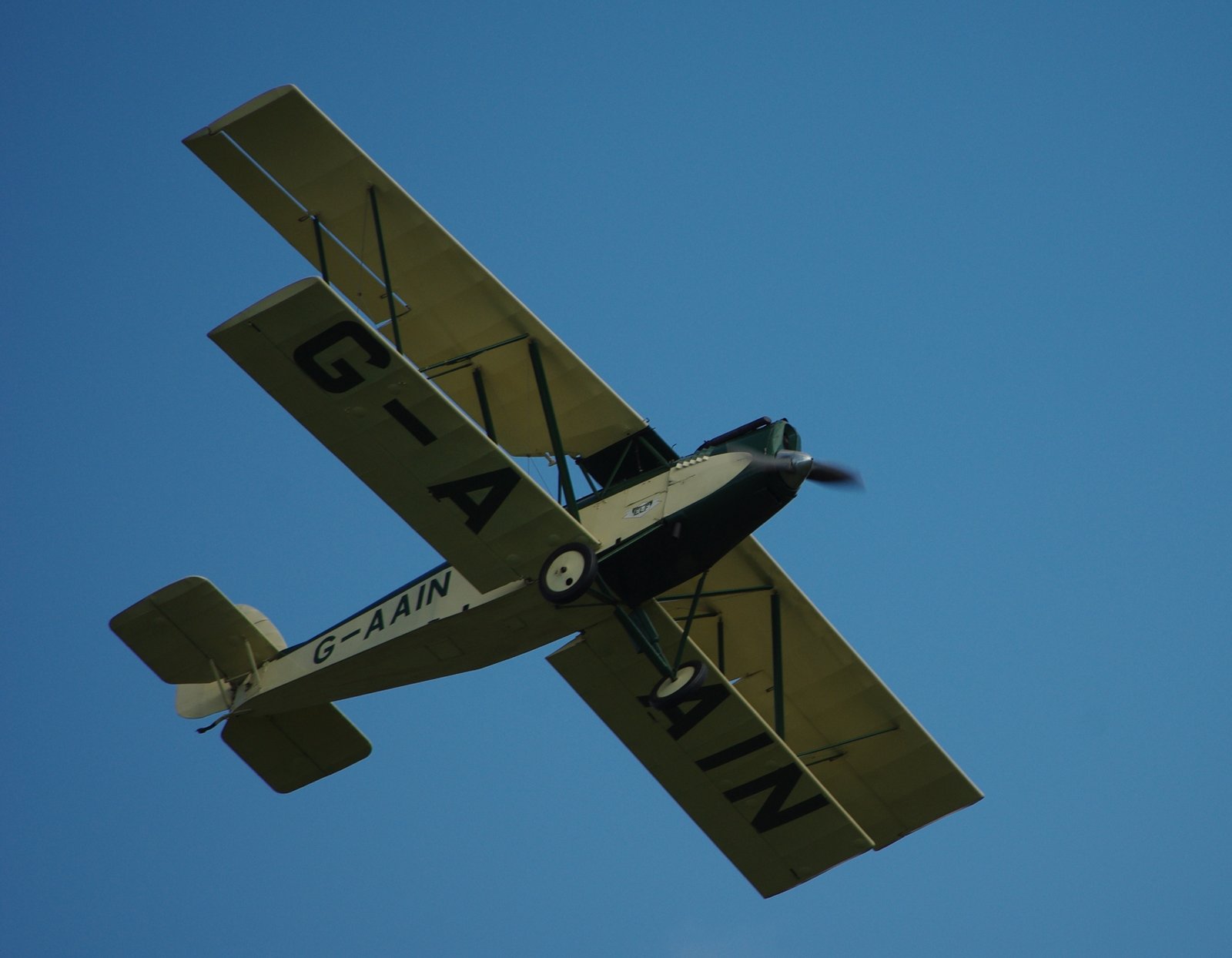
The Elf's design emphasized practicality for the private pilot market. With dimensions of 23 feet 9 inches in length and a wingspan of 31 feet 3 inches, the aircraft offered folding wings for hangar storage—a feature inherited from Parnall's naval aviation experience. The side-by-side seating arrangement in the cockpit provided better communication between pilot and passenger compared to tandem configurations common in military-derived designs.
Weighing 1,020 pounds empty and 1,700 pounds at maximum gross weight (reduced to 1,500 pounds for aerobatic operations), the Elf achieved a maximum speed of 110 miles per hour. The aircraft carried 21 imperial gallons of fuel in main and gravity tanks, providing reasonable range for touring flights. The fixed-pitch propeller and conventional landing gear reflected the cost-conscious approach necessary for the civilian market.
Operational History and Fate
The Elf's operational career proved tragically brief due to recurring fuel pump failures that plagued the Cirrus Hermes engines. Lord Apsley purchased the prototype in 1929 but sold it in 1932 following performance concerns. Both the prototype G-AAFH and production aircraft G-AAIO crashed in 1934, with fuel pump failures contributing to both accidents.
Cornwall Aviation Company operated at least one Elf for their St Austell "Flying Circus," providing joyrides and demonstration flights in the early 1930s. This commercial use highlighted the aircraft's suitability for passenger-carrying operations, though the small fleet size limited its impact on British aviation.
Surviving Legacy
Today, only one Parnall Elf remains airworthy. G-AAIN, built in 1932, survived its 1934 purchase by Lord Apsley after the prototype's loss and storage during World War II. The Shuttleworth Collection at Old Warden, Bedfordshire, now maintains and regularly flies this sole survivor, preserving the legacy of Harold Bolas's final design and representing the ambitions of smaller British aircraft manufacturers during the interwar period.
The Elf's story exemplifies the challenges faced by specialized manufacturers attempting to enter the civilian market dominated by larger competitors. Despite its technical competence and innovative features, the aircraft's limited production and unfortunate accident record relegated it to aviation history as a footnote to the more successful designs of its era.