
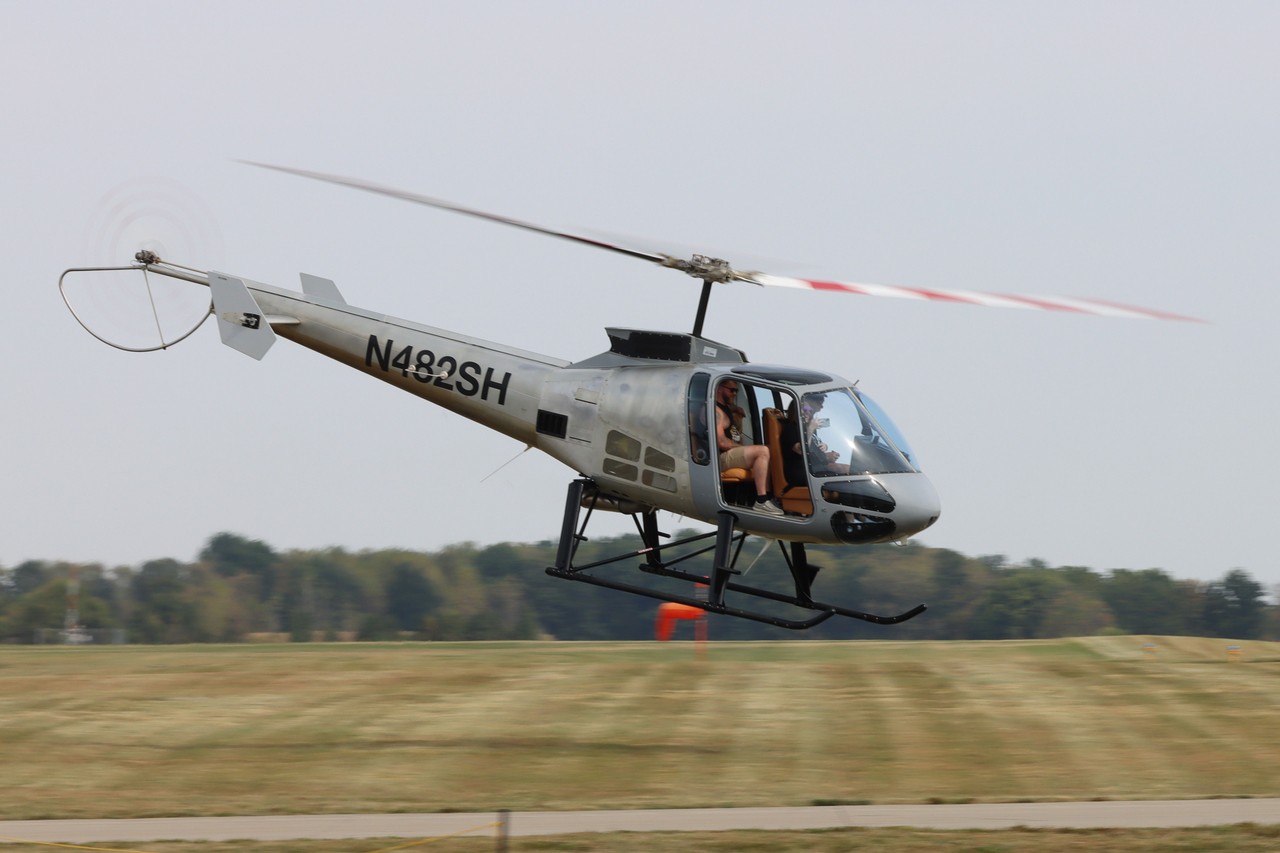
Military Competition and Development
The Enstrom 480 originated from the U.S. Army's New Training Helicopter (NTH) program competition, where Enstrom initially designated their entry as the TH-28. The company designed the aircraft as a turbine-powered evolution of their piston-engine 280FX Shark, incorporating a more spacious cabin, larger rotors, and crash-resistant fuel tanks to meet military specifications. Despite building six prototypes and achieving certification in 1992, Enstrom lost the Army contract to Bell's TH-67 Creek in July 1993, marking a significant disappointment for the Michigan-based manufacturer.
International Military Success
While the 480 failed to secure the lucrative U.S. Army contract, it found substantial success in international military markets. The Japan Ground Self-Defense Force became the largest military operator, purchasing 20 Enstrom 480B helicopters designated TH-480B for training pilots destined for OH-1 Ninja and CH-47J Chinook aircraft. Thailand acquired 22 units to replace aging Bell 47 helicopters in their training fleet, while Venezuela operated 16 aircraft for pilot instruction and utility roles. The Czech Republic received six helicopters through U.S. military aid programs, and Equatorial Guinea has maintained nearly 50 aircraft in service or delivery.
Technical Innovation
The 480 incorporated several design innovations that distinguished it from contemporary training helicopters. Most notably, Enstrom positioned the pilot controls in the left seat rather than the traditional right-seat configuration used by most helicopter manufacturers. The aircraft eliminated hydraulic systems entirely, instead employing a mechanical trim system to reduce control feedback forces transmitted to the pilot. The welded steel-tube fuselage with aluminum skin construction provided durability while maintaining relatively light weight, and the crash-resistant fuel tanks exceeded military survivability requirements.
Engine and Performance
Powering the Enstrom 480 is the proven Rolls-Royce 250-C20 turboshaft engine, derated from its maximum 420 shaft horsepower capability to 305 horsepower for five-minute emergency power and 277 horsepower continuous operation up to 13,000 feet on standard atmospheric conditions. This conservative power rating contributes to engine longevity and reliability in training environments where high utilization rates demand consistent performance. The free-turbine design provides smooth power delivery and simplified pilot workload compared to earlier reciprocating engines.
Enstrom Helicopter Corporation
Founded in 1959, Enstrom Helicopter Corporation achieved its first flight with the F-28 helicopter in 1960, establishing the company as a specialized manufacturer of light helicopters. The company developed the 280 series with redesigned airframes that became the foundation for the 480's design philosophy. Unlike many aviation manufacturers, Enstrom has maintained its independence throughout its history, avoiding major mergers or acquisitions while continuing operations under its original corporate name. The company remained active in helicopter manufacturing as of 2021, sustaining production of the 480 series nearly three decades after initial certification.
Civil and Commercial Applications
Certified for civilian use in November 1993, the Enstrom 480 serves private operators, flight training schools, and specialized utility roles requiring turbine reliability with relatively modest operating costs. The five-seat configuration accommodates one pilot and four passengers, making it suitable for corporate transport, aerial observation, and law enforcement missions. The 480B Guardian variant specifically addresses police requirements with integrated search cameras and high-intensity projectors for nighttime operations.
Variants and Improvements
Enstrom introduced the enhanced 480B model in February 2001, featuring increased gross weight from 2,850 to 3,000 pounds and improved power margins for high-altitude operations. The 480B received Canadian certification in February 2019, expanding its international market access. These improvements addressed operator feedback regarding payload limitations and performance margins in demanding operating conditions.
Production Legacy
With approximately 142 helicopters delivered since 1993, the Enstrom 480 represents a modest but sustained production success for the specialized manufacturer. While production numbers pale compared to major helicopter manufacturers, the aircraft achieved its design objectives of providing economical turbine-powered flight training with lower operating costs than larger, more complex helicopters. The 480's export success demonstrates American helicopter manufacturing capability in niche markets where established manufacturers like Bell and Robinson focus on higher-volume segments.
Current Status
The Enstrom 480 remained in active production as of 2021, with the majority of the fleet concentrated among military training organizations and specialized commercial operators. The aircraft's significance lies not in revolutionary technology or massive production numbers, but in successful execution of a focused design philosophy that created a viable alternative to mainstream training helicopters in international markets where cost-effectiveness and simplicity take precedence over advanced capabilities.