
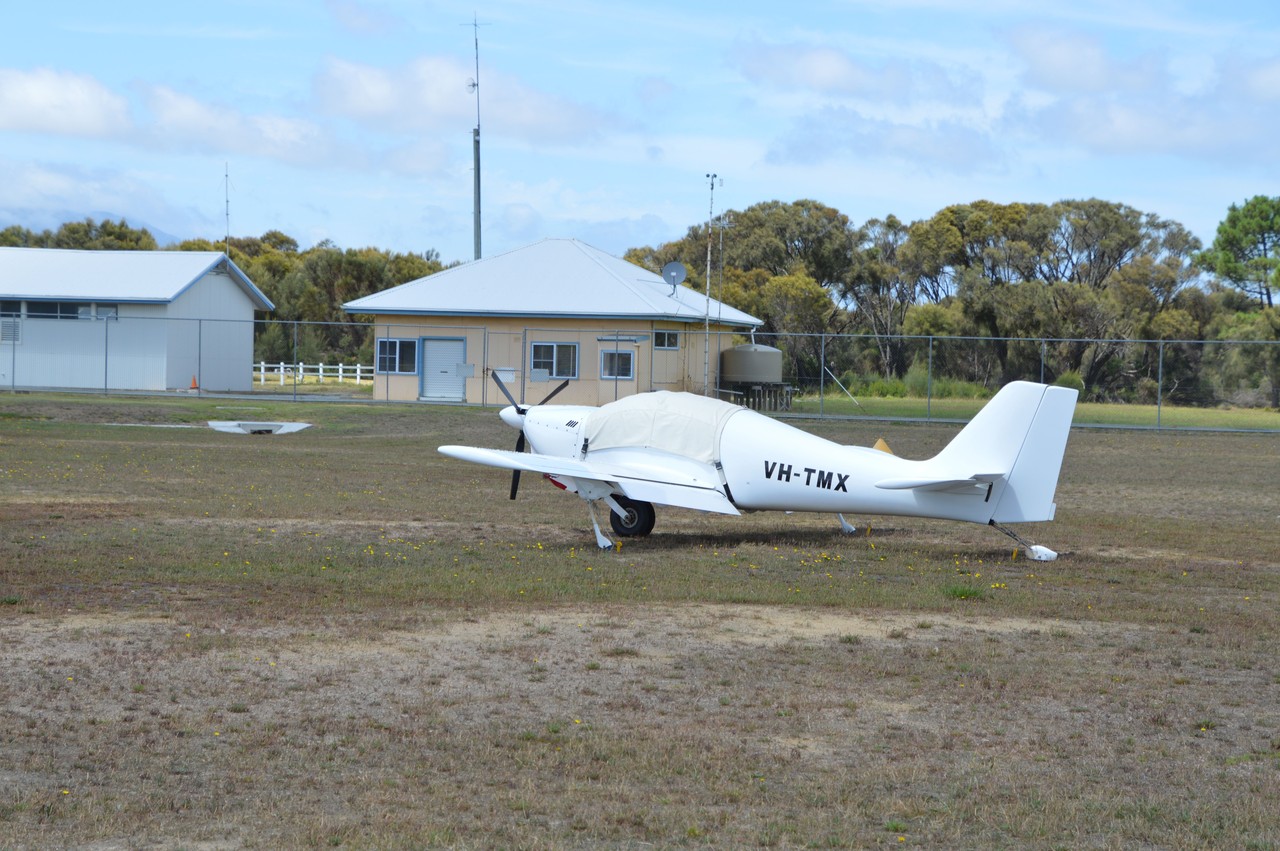
Revolutionary Design Philosophy
Ivan Shaw's Europa represented a paradigm shift in homebuilt aviation when design work commenced in January 1990. Shaw, born in 1945, established ambitious objectives: high speed performance, affordable construction costs, garage storage capability, easy transportation, and five-minute wing rigging time. The prototype G-YURO validated these goals on its maiden flight September 12, 1992, earning Popular Flying Association certification by May 1993.
Technical Innovation
The Europa pioneered several breakthrough technologies in kit aircraft construction. Its all-composite structure employed vacuum-molded glass and carbon fiber reinforced with PVC foam cores, bonded using epoxy and phenolic resins. This construction method achieved exceptional strength-to-weight ratios while enabling smooth aerodynamic surfaces impossible with traditional aluminum fabrication.
The aircraft's most distinctive feature was its folding wing system, allowing owners to trailer the aircraft or store it in standard garage spaces. Three wing configurations could be installed within five minutes: standard span for touring, short span for aerobatics, and extended 47-foot motor glider wings with winglets. Multiple landing gear options included tricycle, tailwheel, and an unusual monowheel configuration with wing-mounted outriggers.
Powerplant Options
The Europa accommodated various engine installations, with the Austrian-built Rotax 912 serving as the primary powerplant. This 80-100 horsepower, four-cylinder, horizontally-opposed engine provided liquid and air cooling, delivering reliable performance on automotive gasoline. The turbocharged Rotax 914 powered the high-performance Europa XS variant, achieving maximum speeds of 322 kilometers per hour.
Alternative engines included the Subaru EA81 automotive conversion, producing 98-118 horsepower, which first flew in G-NDOL on November 18, 1995. Some builders selected Wilksch diesel engines ranging from 100-190 horsepower, manufactured by Wilksch Air Motive in Gloucestershire.
Manufacturing Success
Europa Aviation established production at Kirkbymoorside, North Yorkshire, focusing primarily on kit manufacture rather than completed aircraft. Only five factory-built examples were completed by 1996, while kit sales exceeded 1,000 units worldwide. The modular kit system divided construction into four stages, requiring approximately 700 hours for completion by amateur builders.
The UK Department of Trade and Industry recognized Europa Aviation's technical achievements with a £100,000 grant in the early 1990s. Prime Minister Tony Blair designated the Europa XS among Britain's Millennium Products in 1999, while Pilot magazine proclaimed it "the most significant light plane of the decade."
Structural Engineering
Europa's composite construction met JAR-VLA certification standards with ultimate load factors of 4.3g normal category, employing a 2.0 proof factor compared to the typical 1.5 factor for composite aircraft. This conservative design approach provided exceptional safety margins while maintaining light weight. The aircraft's modular construction simplified maintenance and allowed component replacement without specialized facilities.
Global Operations
By the early 2000s, more than 700 Europas operated in 33 countries, demonstrating the design's international appeal. Notable examples included G-OPJK, the first customer aircraft which flew October 14, 1995, and VH-UBD (constructor number 144) registered in Australia during April 1997. Production records document 542 completed aircraft, though actual flying numbers likely exceeded this figure.
Corporate Evolution
Ivan Shaw departed Europa Aviation in the early 2000s to establish Liberty Aerospace in Melbourne, Florida, where he developed the Liberty XL2 as an evolved Europa derivative. Europa Aviation faced operational difficulties following Shaw's departure but continued kit production through 2001 and beyond.
Swift Technology Group, owned by David Stanbridge, acquired the company in September 2008, restructuring operations under Europa Aircraft (2004) Ltd. Manufacturing responsibilities transferred to sister company Aviation and Marine Engineering Ltd, part of a larger aerospace group including Swift Aircraft.
Contemporary Status
Europa Aircraft (2004) Ltd remains active today, announcing the Europa Elite kit in 2020 designed to meet EASA CS-VLA certification standards. This latest variant continues the original Europa's philosophy while incorporating modern avionics and refined systems. The company maintains parts support and technical assistance for the substantial worldwide Europa fleet.
Aviation Legacy
The Europa's influence extended far beyond its production numbers, proving that sophisticated composite construction techniques could be successfully employed by amateur builders. Its combination of high performance, innovative features, and reasonable construction time established new standards for kit aircraft capabilities. The design's derivatives, including Shaw's Liberty XL2, continue spreading Europa DNA throughout modern light aviation, cementing its position as a transformative aircraft in homebuilt history.