
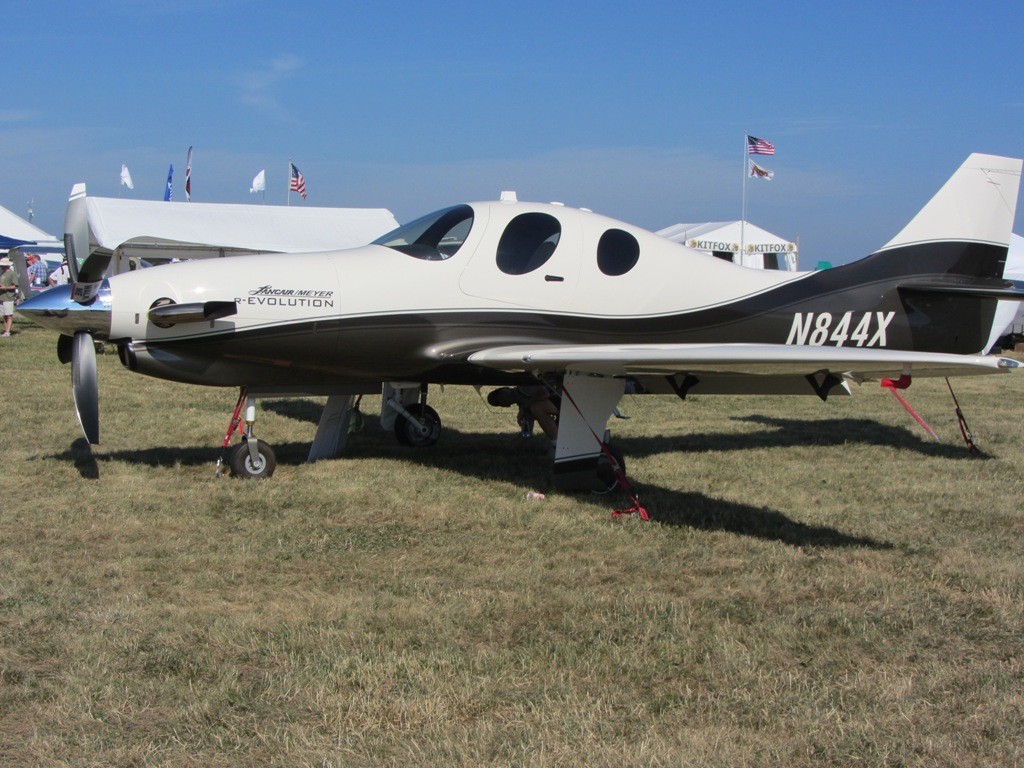
Revolutionary Kit Design
The Evolution marked a dramatic departure from traditional homebuilt aircraft philosophy. Unlike previous Lancair designs that prioritized raw speed over safety margins, the Evolution team engineered the aircraft to meet stringent FAR Part 23 standards typically reserved for certified aircraft. The design incorporated a 6.5 psi cabin pressure differential, maintaining an 8,000-foot cabin altitude while flying at the aircraft's 28,000-foot service ceiling.
Lancair International developed the Evolution using advanced 3-D CAD software, making it the first completely digital design in the company's history. This represented a significant technological leap from the drafting-table origins of earlier Lancair models like the IV-P. The digital design process enabled precise manufacturing tolerances and reduced part counts, streamlining assembly for amateur builders.
The Manufacturer's Evolution
Lancair International emerged in the early 1980s under founder Lance Neibauer, establishing itself as a pioneer in composite kit aircraft. The company's earlier designs, particularly the Lancair IV-P with its 320-knot cruise capability, had earned respect among speed-focused builders but also garnered attention for challenging flight characteristics.
Interestingly, Neibauer himself was not directly involved in the Evolution's design, marking a generational transition within the company. The Oregon-based manufacturer operated the Evolution program from 2008 through 2017, delivering the first customer kit on July 22, 2008, and beginning full production in July 2009.
Following Lancair International's completion of Evolution production in October 2017, Evolution Aircraft acquired the design rights and manufacturing capability. This transition ensured continuity for the approximately 88 aircraft already flying and provided ongoing support for the type.
Powerplant Excellence
The Evolution's primary powerplant, the Pratt & Whitney PT6A-135A, delivers 750 shaft horsepower through a proven turboprop design. This engine selection provided the aircraft with exceptional performance parameters: 300-knot maximum cruise speed while burning 39 gallons per hour of Jet-A fuel. The PT6A's legendary reliability, backed by decades of service across thousands of aircraft, gave Evolution operators confidence in single-engine turbine operations.
Lancair also offered alternative PT6 variants producing 550 and 867 horsepower, with the latter configuration achieving cruise speeds up to 330 knots. For builders seeking lower operating costs, a piston variant featuring the Lycoming TEO-540-A or fuel-injected iE2 engine became available in April 2016, offering 350 horsepower with significantly reduced fuel consumption.
Advanced Safety Features
The Evolution incorporated numerous safety innovations unprecedented in experimental aviation. Energy-absorbing seats protected occupants during emergency landings, while the aircraft's benign stall characteristics provided a 61-knot stall speed with flaps deployed. The wide flight envelope, spanning from 61 knots to over 300 knots, gave pilots exceptional operational flexibility.
Critical components arrived pre-built from the factory, reducing opportunities for builder errors that had occasionally plagued earlier kit aircraft. This approach, combined with sidestick controls and comprehensive flight testing support, helped the Evolution achieve a notably clean safety record during its operational history.
Operational Capabilities
With a maximum gross weight of 4,550 pounds and 168-gallon fuel capacity, the Evolution provided impressive payload-range performance. The turbine variant carried 773 pounds with full fuel, while piston variants achieved ranges exceeding 2,500 nautical miles in economy cruise configuration.
The four-seat cabin, pressurized to airline standards, enabled true high-altitude operations. Pilots could routinely cruise at flight levels typically reserved for turbine aircraft, avoiding weather and traffic congestion while achieving remarkable time savings on cross-country flights.
Production Legacy
By September 2016, approximately 70 turbine-powered Evolutions had entered service, with total production including both variants reaching 88 aircraft by 2023. The typical builder invested roughly 1,000 hours completing their kit, significantly less than earlier Lancair designs due to improved manufacturing processes and pre-built components.
The Evolution's influence extended beyond its production numbers. It demonstrated that experimental aircraft could achieve certification-level safety standards while maintaining the performance advantages that drew builders to homebuilt aviation. This philosophy influenced subsequent high-performance kit designs and elevated expectations across the experimental aircraft community.
Today, Evolution Aircraft continues supporting the type while exploring future production possibilities, ensuring this groundbreaking design remains viable for pilots seeking turbine performance in an experimental aircraft package.