
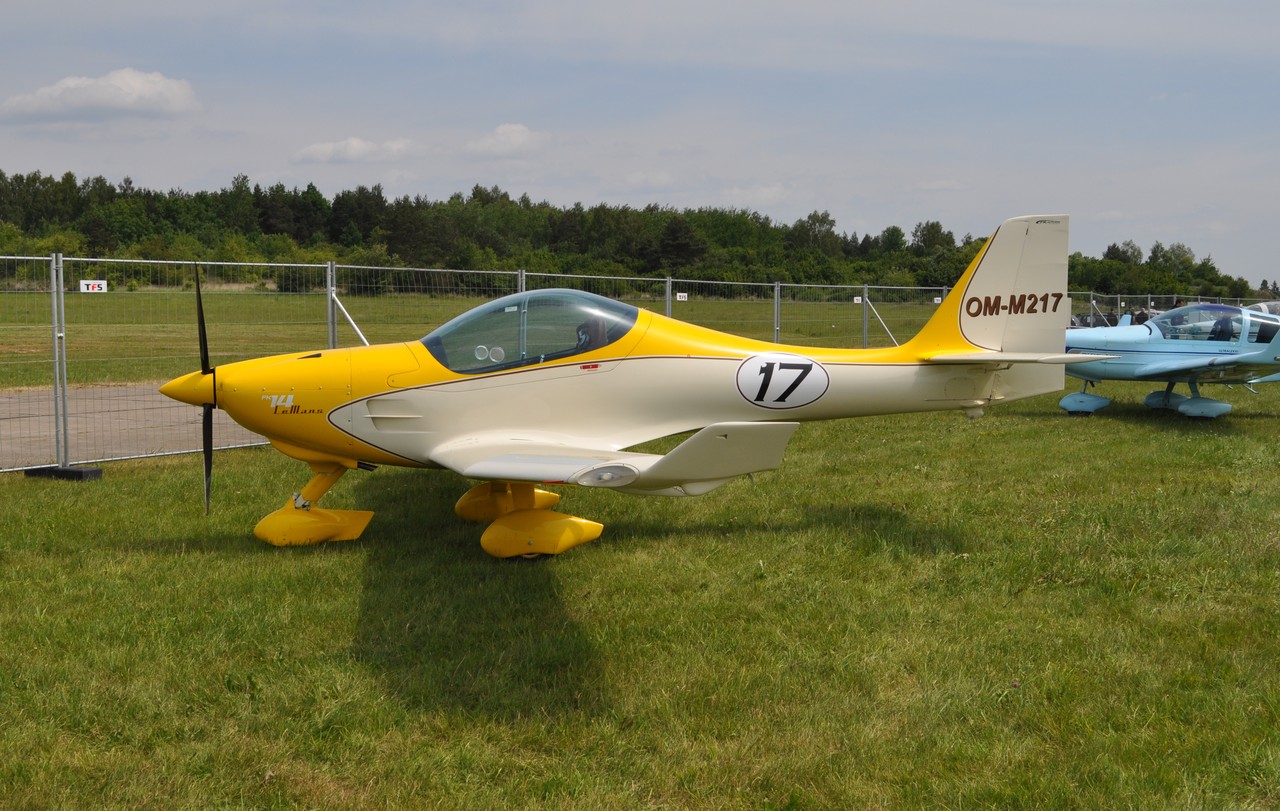
Development and Design Philosophy
The FK-14 Polaris emerged from the vision of Otto Funk and his son Peter Funk, who began the design process in 1997 with ambitious goals for ultralight aviation. Otto Funk brought decades of aeronautical experience, dating back to his 1959 Heinkel Greif 1a glider design, while establishing B&F activities between 1984 and 1990. The project aimed to create a high-performance cruiser that would complement the existing B&F range, utilizing FK9 Mk3 components wherever feasible to reduce development costs and complexity.
Working with the University of Stuttgart's laminar wind tunnel, Otto Funk developed the aircraft's main wing and distinctive Fowler flap system. The design objectives included creating an efficient side-by-side two-seat ultralight with enclosed cabin protection, achieving 250 kilometers per hour cruise speed while maintaining short-field takeoff and landing capabilities. The low-wing configuration featured upturned wingtips and incorporated a crash-resilient steel cockpit frame within mixed aluminum-fiberglass composite construction.
Manufacturing and Production
B&F Technik Vertriebs GmbH established an innovative international production model for the FK-14 Polaris. Production airframes originated in Krosno, Poland, before final assembly at the company's facility in Speyer, Germany, where B&F had relocated from Hofheim in 1995. The company operated FK-Lightplanes as a subsidiary dedicated to composite and metal light aircraft production, maintaining output rates of four to five aircraft monthly across various designs.
The prototype, registered D-MVFK, made its public debut at AERO Friedrichshafen in April 1999, though it remained unflown at that exhibition. Following its maiden flight in May 1999, production commenced in 2000 with steady growth. By January 2003, thirty FK-14 aircraft were actively flying, and the company completed its 90th aircraft by September 2008. European registrations, excluding Russia, totaled approximately 72 aircraft by mid-2010.
Technical Innovation
The FK-14 Polaris incorporated several advanced features uncommon in ultralight aviation. The electrically-driven aluminum Fowler flaps provided exceptional low-speed handling characteristics, while aileron spoilers reduced adverse yaw during turns. These innovations built upon the FK lineage's early adoption of enclosed ultralight cabin design, a concept B&F had pioneered since 1989.
Powerplant options centered on proven Rotax engines manufactured by BRP-Rotax of Austria. The standard Rotax 912UL delivered 59.6 kilowatts (79.9 horsepower), while the upgraded 912ULS provided 73.5 kilowatts (98.6 horsepower). Both four-cylinder horizontally-opposed engines featured air and water cooling, driving Junkers three-blade ground-adjustable carbon fiber propellers. The aircraft carried between 65 and 78 liters of fuel depending on configuration.
Variants and Evolution
B&F developed three primary variants to address different market segments. The baseline FK-14 entered production in 2000, establishing the fundamental design principles. Around 2003, the FK-14B introduced a carbon fiber wing, increased range and endurance capabilities, expanded luggage space, and an improved canopy design.
The FK-14B2 variant, introduced in 2005, represented the most comprehensive redesign with a completely new fuselage and composite construction. This version featured slotted flaps, spoilers, and significant aerodynamic refinements that enhanced overall performance. Light Sport Aircraft versions accommodated increased maximum takeoff weights up to 580 kilograms, expanding the aircraft's utility for different regulatory environments.
Operational Success
The FK-14 Polaris found its primary role in private ultralight touring, serving two occupants in side-by-side seating configuration. The aircraft proved its capabilities in competitive environments, outperforming rivals in air races despite lacking variable-pitch or retractable propellers. This success demonstrated the effectiveness of the fundamental aerodynamic design and manufacturing quality.
B&F offered the aircraft through multiple delivery methods, including both kit form and factory-built options. Customers could specify either taildragger or nosewheel landing gear configurations to suit their operational preferences and airport requirements.
Current Status and Legacy
The FK-14 Polaris design continues under FK-Aircraft, which evolved from the original B&F organization and maintains active promotion of updated variants. Current marketing materials highlight new wing designs, fuselage improvements, winglets, and modern powerplant options aimed at enhancing efficiency and speed capabilities.
While exact numbers of currently airworthy aircraft remain unclear, the approximately 72 European registrations recorded by 2010 suggest a modest but dedicated operator base. The aircraft's significance extends beyond production numbers, representing an important bridge between traditional ultralight design limitations and the performance touring capabilities that would later influence Light Sport Aircraft regulations. The FK-14 Polaris demonstrated that innovative composite construction and careful aerodynamic optimization could deliver airline-like cruise speeds in the sport aviation category.