
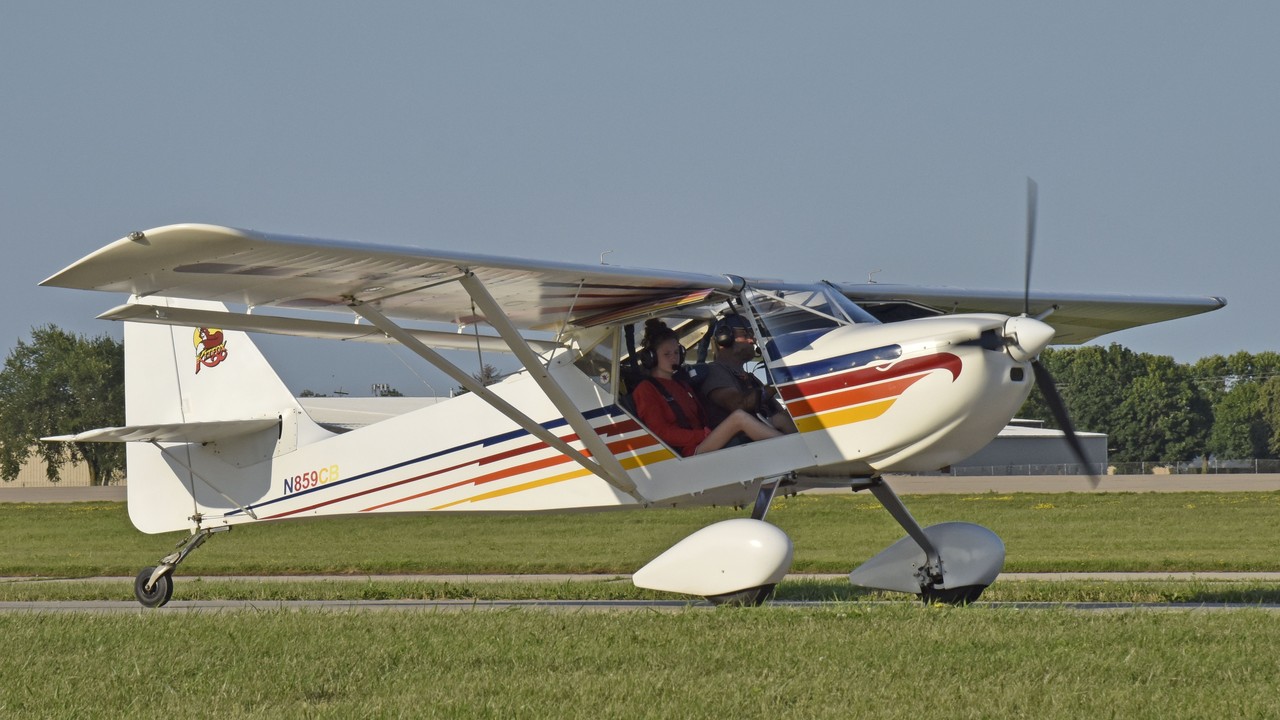
The Kit Aircraft Revolution
When Dan Denney's prototype Kitfox lifted off from Boise, Idaho in November 1984, it launched what would become a 40-year production run that fundamentally changed homebuilt aviation. The aircraft filled a critical gap in the experimental aircraft market, offering builders an affordable, capable design that could be constructed in approximately 1,000 hours and operated from virtually any grass strip or dirt road.
Denney Aerocraft delivered six Model 1 kits in 1984, but demand quickly accelerated as word spread about the aircraft's remarkable short-field performance. The original design achieved a stall speed of just 31 knots and could take off in under 200 feet, making it ideal for backcountry flying and operations from private strips. By the time production shifted to SkyStar Aircraft Corporation in June 1992, Denney had produced over 1,500 aircraft across four distinct models.
Design Evolution and the Radial Cowling
The Kitfox's most distinctive feature—its retro radial engine cowling—originated from an ambitious engineering miscalculation that became a marketing triumph. Dan Denney originally designed the aircraft around a new radial engine then in development, creating the characteristic round cowl with bumps to accommodate protruding cylinder heads. When the radial engine project collapsed and Denney adapted a 64-horsepower Rotax 532 two-stroke engine instead, the anachronistic cowling remained.
Far from being a liability, the radial-style cowling proved enormously popular with buyers who appreciated its nostalgic appearance reminiscent of 1940s aircraft like the Cessna 195. This distinctive styling became a Kitfox trademark, retained across most subsequent variants despite the use of modern flat engines that required no such accommodation.
Manufacturing Success and Model Progression
The Kitfox evolved rapidly through its first eight years under Denney Aerocraft. The Model 2, introduced in 1989, featured a larger fuselage and increased gross weight to 950 pounds, powered by the more reliable 64-horsepower Rotax 582. The Model 3 of 1990 marked a significant advancement with structural improvements and the option of the 80-horsepower Rotax 912 four-stroke engine, which dramatically improved reliability over earlier two-stroke powerplants.
Denney produced 257 Model 1 aircraft, 490 Model 2s, 466 Model 3s, and 322 Model 4s before selling the design rights to SkyStar Aircraft Corporation. The Model 4, introduced in 1991, incorporated a new airfoil and redesigned flaperons with metal brackets, representing the culmination of Denney's original design philosophy.
The SkyStar Era and Series 5 Revolution
Under Phil Reed's direction, SkyStar immediately began developing the Series 5, a clean-sheet redesign that maintained the Kitfox's essential character while dramatically expanding its capabilities. The Series 5 featured increased gross weights ranging from 1,400 to 1,550 pounds, accommodated certified Continental and Lycoming engines in addition to Rotax powerplants, and introduced convertible landing gear allowing transformation between taildragger and tricycle configurations.
The Series 5's adjustable stabilizer and enlarged cabin provided significantly improved load-carrying capacity and passenger comfort. More importantly for the kit aircraft market, it demonstrated that homebuilt designs could evolve beyond their original limitations while maintaining the essential characteristics that made them popular.
Engine Technology and Performance
The progression of Kitfox engine options reflects broader changes in light aircraft powerplant technology. Early models relied on two-stroke Rotax engines—the 532 and 582—that provided adequate power at light weight but suffered reliability concerns. The introduction of the Rotax 912 four-stroke engine on the Model 3 represented a watershed moment, offering 80 horsepower with dramatically improved reliability and fuel efficiency.
Typical performance for a Model 2 Kitfox included an empty weight of 426 pounds, useful load of 524 pounds, cruise speed of 74 knots, and the remarkable stall speed of 31 knots that enabled operations from strips under 300 feet long. These specifications made the Kitfox competitive with factory-built aircraft costing three times as much.
Legacy and Continuing Production
With over 7,000 kits delivered to builders in more than 40 countries, the Kitfox represents one of the most successful kit aircraft designs ever created. The aircraft's combination of folding wings, trailer ability, excellent short-field performance, and distinctive appearance created a unique market position that competitors have struggled to match.
The Kitfox Classic IV enjoyed one of the longest production runs in kit airplane history, testament to the enduring appeal of Dan Denney's original concept. Current production continues with the Series 7, incorporating four decades of incremental improvements while maintaining the essential characteristics that made the original Kitfox successful.
Thousands of Kitfoxes remain actively flying worldwide, serving roles from weekend recreational aircraft to serious bush planes operating in remote locations. The design's influence extends beyond its own production numbers, inspiring numerous similar designs and helping establish the short takeoff and landing kit aircraft as a distinct market category.