
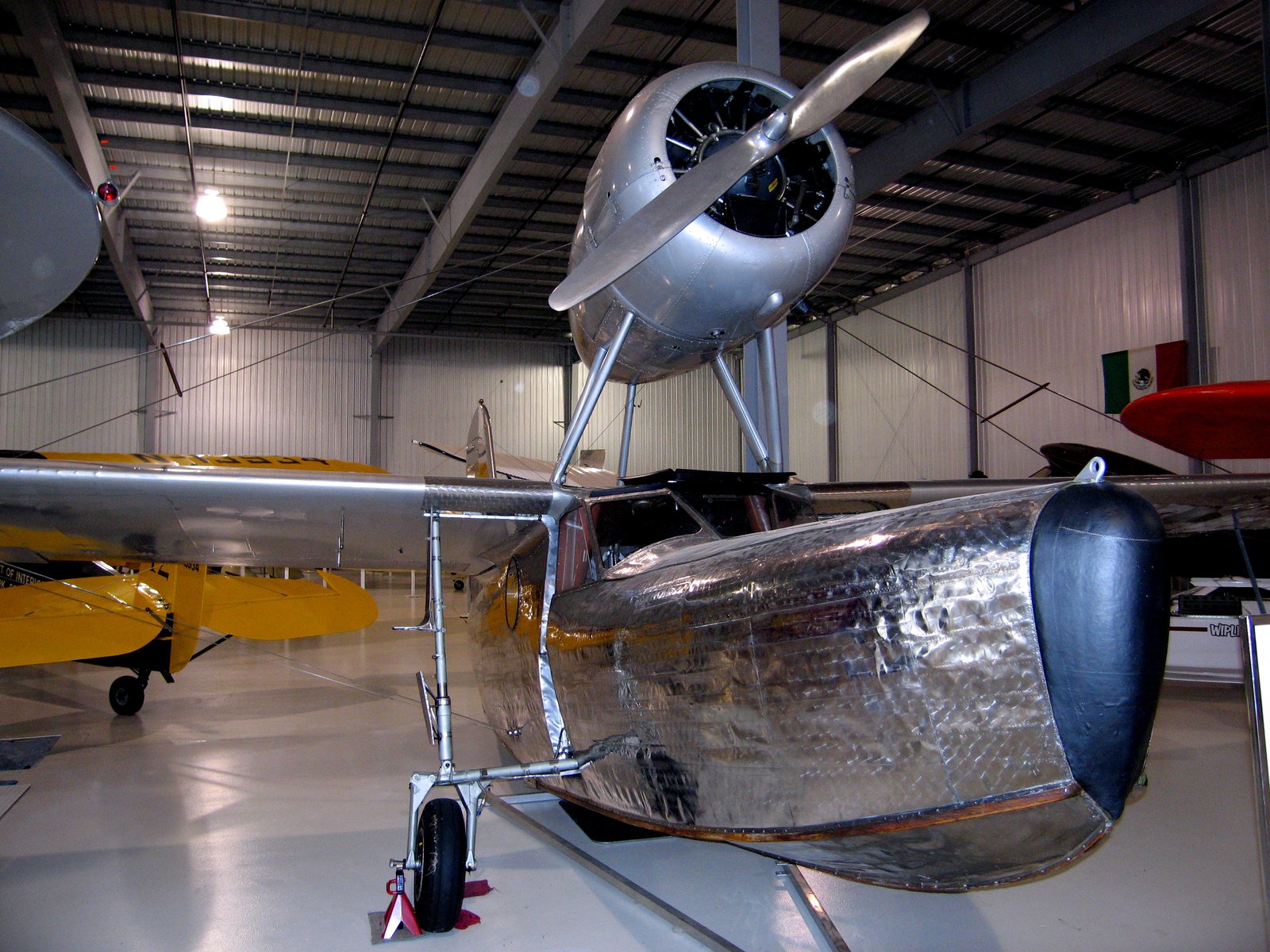
The Fleetwings F-4 Sea Bird was a pioneering amphibious aircraft developed in the mid-1930s by Fleetwings, Inc. of Bristol, Pennsylvania. Designed under contract between 1934 and 1935 by James C. Reddig, the aircraft was intended to serve as a durable utility vehicle for saltwater sportsmen and oil exploration firms operating in the Gulf of Mexico. The Sea Bird is historically notable for its spot-welded stainless-steel construction, a highly unusual choice for the era designed specifically to combat the corrosive effects of saltwater. This innovation led to the Sea Bird becoming the first stainless-steel aircraft to be granted approved certification in the United States.
The prototype was completed in early 1936, with the first flight occurring later that year. Power was provided by a Jacobs L-5 seven-cylinder, air-cooled piston radial engine producing 285 hp (213 kW). In terms of performance, the aircraft reached a maximum speed of 150 mph at sea level, with cruise speeds ranging between 133 and 135 mph. It possessed a rate of climb of 900 ft/min and a service ceiling between 14,500 and 15,000 ft. Depending on the specific configuration, the aircraft's range was estimated between 400 and 540 miles, and its gross weight varied between 3,450 lb and 3,750 lb.
Production of the Sea Bird was extremely limited. While Fleetwings initially planned to manufacture 50 units, the aircraft's high price tag of approximately $25,000 proved prohibitive during the Great Depression. Consequently, only six aircraft were ever built: one F-4 prototype and five F-5 production models. Despite the low production numbers, the aircraft found a niche in the Louisiana oil support industry, where it was operated by J. Ray McDermott & Co. and other private owners.
Following the commercial failure of the Sea Bird, Fleetwings, Inc.—which had previously acquired the Keystone Aircraft Corp. in 1934—eventually folded. Today, the legacy of the Sea Bird survives through a few preserved examples. Notable survivors are held at the Golden Wings Flying Museum and the Mid America Flight Museum; the latter aircraft was flown by Channing Clark of Los Angeles from 1963 until 2004.