
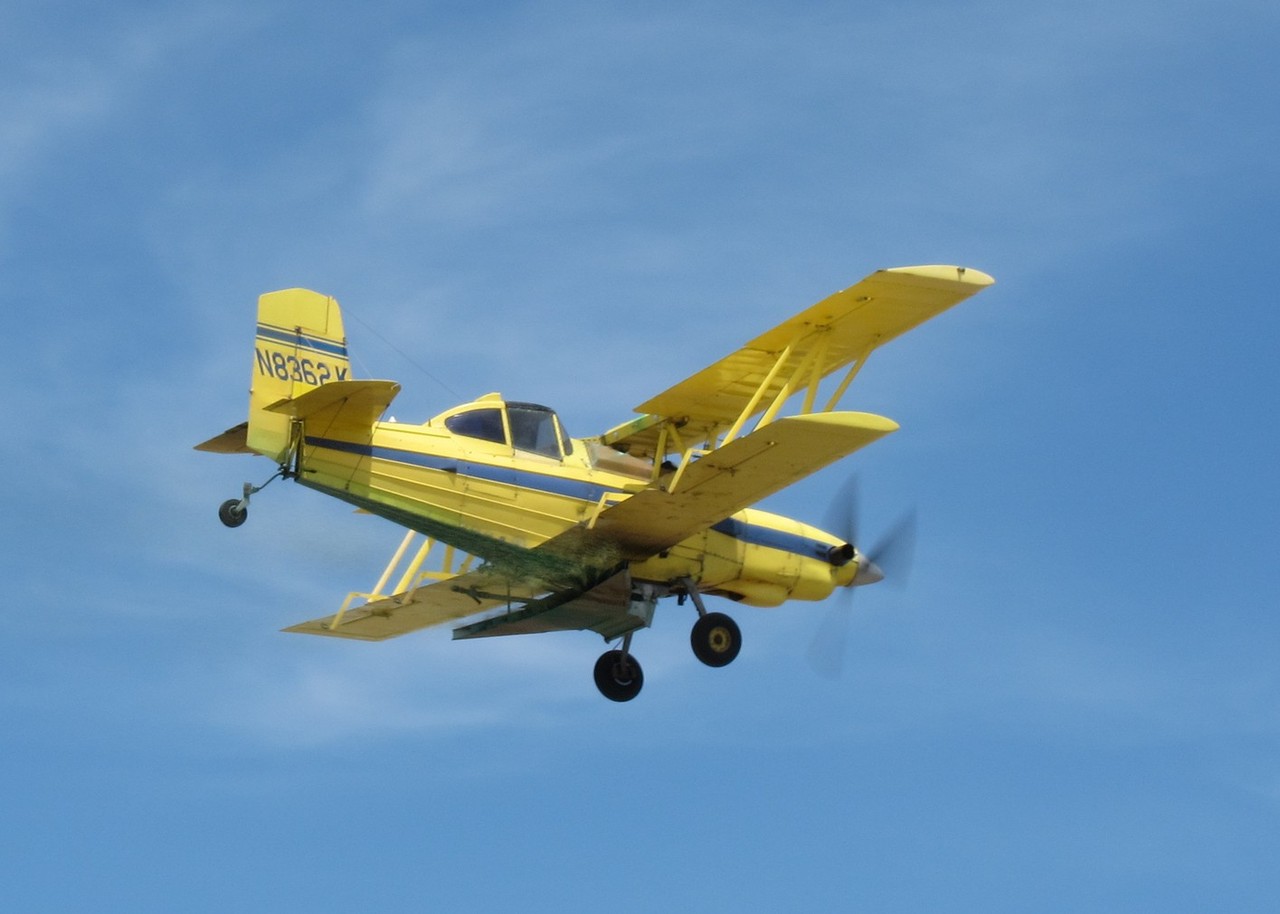
Agricultural Aviation Heritage
The G-164A Super Ag-Cat emerged from Schweizer Aircraft Corporation's expansion beyond their sailplane roots into the specialized world of agricultural aviation. Founded in 1930 by brothers Ernest, William, and Paul Schweizer, the company had established itself as America's oldest privately owned aircraft manufacturer by the time they entered agricultural aircraft production. The G-164A represented part of an impressive agricultural aircraft legacy that would ultimately encompass 2,650 airplanes designed for crop dusting and aerial application work.
The Schweizer Manufacturing Legacy
Schweizer Aircraft Corporation operated as an independent entity for over seven decades, building a diverse portfolio that extended far beyond agricultural aircraft. By 2004, the company had produced 2,160 sailplanes, 2,650 agricultural airplanes including the G-164A Super Ag-Cat, more than 60 special-purpose fixed-wing aircraft and UAVs, and over 900 helicopters. The company celebrated its 60th anniversary in December 1999, marking six decades of continuous aircraft production in Elmira, New York.
The Schweizer brothers incorporated their company in 1939, transitioning from their initial focus on sailplanes to become a major supplier of specialized aircraft for multiple markets. Their agricultural aircraft division served the growing American crop dusting industry, providing pilots and operators with purpose-built aircraft designed for the demanding requirements of low-altitude agricultural work.
Corporate Transformation and End of Production
The independent era of Schweizer Aircraft Corporation ended on August 26, 2004, when Sikorsky Aircraft Corporation, a subsidiary of United Technologies, acquired the company. The acquisition occurred just one week after the death of Paul Schweizer, marking the end of family control over the enterprise. Under Sikorsky ownership, Schweizer operated as a wholly owned subsidiary until 2012, when Sikorsky liquidated the company and absorbed its various product lines.
This corporate transformation effectively ended production of agricultural aircraft like the G-164A Super Ag-Cat. Sikorsky's primary interest lay in Schweizer's helicopter operations, particularly the light helicopter lines that had become profitable segments of the business. The agricultural aircraft division, which had served American farming for decades, was discontinued as Sikorsky focused resources on rotorcraft development and production.
Industry Context and Agricultural Aviation
The G-164A Super Ag-Cat served in America's agricultural aviation sector during a period of significant growth in crop dusting and aerial application services. Agricultural aircraft of this era typically employed single-engine configurations optimized for low-altitude operations, heavy payload capacity, and the ability to operate from short, unprepared airstrips near farming operations. The biplane design philosophy prioritized lift capacity and maneuverability at low speeds over high-altitude performance or speed.
Schweizer's agricultural aircraft competed in a specialized market segment that demanded rugged construction, reliable powerplants, and aircraft systems designed to handle the corrosive effects of agricultural chemicals. The company's manufacturing expertise, developed through decades of sailplane and specialty aircraft production, translated effectively to agricultural aviation requirements.
Post-Sikorsky Developments
Sikorsky itself underwent ownership changes following its acquisition of Schweizer. On November 6, 2015, Lockheed Martin purchased Sikorsky for $9 billion, bringing the former Schweizer operations under new corporate control. However, by this time, agricultural aircraft production had long ceased, and the G-164A Super Ag-Cat existed only in the used aircraft market.
In January 2018, Schweizer RSG (Rotorcraft Services Group) acquired certain light helicopter lines from Sikorsky and restarted production in Fort Worth, Texas. This development represented a revival of the Schweizer name in aviation, though focused exclusively on rotorcraft rather than the fixed-wing agricultural aircraft that had characterized much of the company's middle period.
Legacy in Agricultural Aviation
The G-164A Super Ag-Cat contributed to Schweizer's substantial impact on American agricultural aviation, forming part of the 2,650 agricultural aircraft that served farming operations across the United States. While specific production numbers and service records for the G-164A variant remain undocumented in readily available sources, the aircraft represented Schweizer's commitment to serving specialized aviation markets beyond their famous sailplane operations.
Today, the G-164A Super Ag-Cat exists as part of aviation history, with agricultural aviation having evolved toward more modern designs and powerplants. The end of Schweizer's agricultural aircraft production in 2004 marked the conclusion of a significant chapter in American agricultural aviation manufacturing, leaving operators to maintain existing aircraft or transition to alternative manufacturers for their aerial application needs.